The Supreme Court on Wednesday said that the expansion of the list of documents in the Special Intensive Revision (SIR) in poll-bound Bihar is actually "voter-friendly", and gives the electors more options.
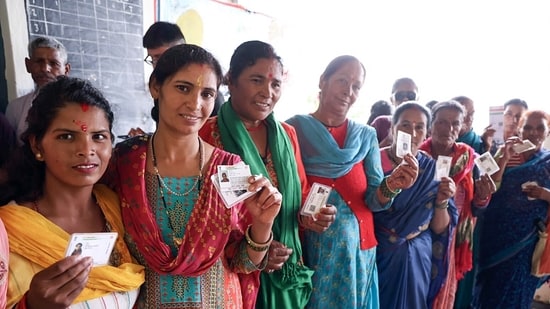
The top court was hearing a batch of petitions challenging the Election Commission's draft voter roll revision in Bihar ahead of Assembly elections in the state.
During the hearing, the Abhishek Manu Singhvi, appearing for the petitioners, argued that the required documents under SIR “have minimum coverage in Bihar and hence exclusionary”, news agency PTI reported.
Responding to the argument, the Supreme Court Justice Joymalya Bagchi remarked, "...the expansion of documents followed from [summary revision] to SIR is infact voter-friendly and not exclusionary. It gives them more options."
According to LiveLaw, adding to the response, Justice Surya Kant said, “if somebody says all 11 documents are required, then it would be anti-voter. but if it says give any of the 11 reliable documents...?”
'It is exclusionary'
Even as the Supreme Court said the expansion of documents was voter-friendly, Singhvi, appearing for the petitioners, argued that it was exclusionary.
{{/usCountry}}Even as the Supreme Court said the expansion of documents was voter-friendly, Singhvi, appearing for the petitioners, argued that it was exclusionary.
{{/usCountry}}Drawing comparisons with an electoral roll revision in Jharkhand, Singhvi said, "(1) Aadhaar is out - it is exclusionary. It is the document which has highest coverage. (2) Water electricity, gas connection - not there (3) Indian passport - coverage of less than 1-2% retained. In number terms, they are retaining to impress. but by nature, it's the minimum coverage document (4) all other documents have between 0-2-3% coverage. If one does not have land, documents 5,6,7 are out. I wonder in Bihar, how many will qualify? Residence certificate does not exist in Bihar. Form 6 only requires a self-declaration."
As the arguments and observations proceeded, Singhvi later said that most of the documents asked for under SIR would not be available with a majority of Bihar's population. "Point is vast majority of Bihar will not have these documents. We are talking of real, genuine sifting. Just under 4 crores birth certificates issued from 2001-24...," Singhvi was quoted as saying by LiveLaw.
He also argued that only 1 per cent of voters would have passports, and that the "exercise is skewed against women".
'Let's not project Bihar as...'
In one of his responses to Singhvi's arguments against the electoral roll revision, Justice Surya Kant said, "Let's not project Bihar as...in terms of IAS, maximum representation is by this state...it can't happen unless young generation is committed to higher education."
Singhvi later agreed that the state had "extremely bright scientists, etc", but continued to question the rationale behind 11 documents.
The Supreme Court bench's fresh remarks came a day after its observation in agreement with the poll panel, that Aadhaar cannot be treated as proof of citizenship.