The Medical Counselling Committee (MCC) has scheduled a “special stray vacancy round” for NEET-UG 2026 after 944 MBBS seats remained vacant following four rounds of counselling, including the regular stray round that concluded on October 26. Of these, 920 seats are in deemed universities and 24 in government medical colleges, with Tamil Nadu accounting for the highest number of vacancies at 686, followed by Puducherry with 186, officials told HT.
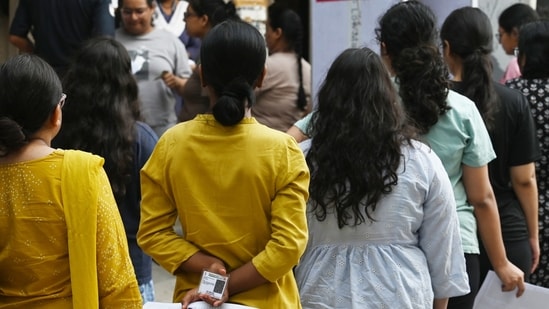
“We decided to float another round of MBBS counselling after 944 seats under MCC’s counselling jurisdiction remained vacant despite four rounds, including the stray vacancy round. Of these, 920 seats are in deemed universities and 24 in government colleges,” an official aware of the counselling process told HT.
Also Read | NEET-UG 2027 may remain in pen-and-paper mode as Nilekani-led panel gets extension
Apart from Tamil Nadu, vacancies in deemed universities are concentrated in Puducherry (186), Karnataka (25), Maharashtra (10) and Telangana (4) among other states, according to data provided by officials. Among government medical colleges, Andhra Pradesh accounts for a maximum of 5 out of the 24 vacant seats.
Also Read | TN orders withdrawal of cases against 1,800 anti-NEET protesters
{{/usCountry}}Also Read | TN orders withdrawal of cases against 1,800 anti-NEET protesters
{{/usCountry}}The special round will be held from November 2 to 16. Registration will close on November 4 at 3 pm, with payment open until 6 pm. Choice filling and locking will continue until 11am on November 5, followed by seat-allotment processing on November 5 and 6. Results will be declared on November 7, and candidates will have until November 16 to report to their allotted colleges.
Special round not unprecedented
The special round is not unprecedented. MCC has conducted additional rounds in previous admission cycles, including 2021, 2023, 2024 and 2025, to fill seats left vacant after regular counselling. The 2026 process has also unfolded against the backdrop of the NEET-UG paper leak controversy, which led to the cancellation of the May 3 examination and a re-test on June 21.
MCC, under the Directorate General of Health Services (DGHS), conducts counselling for 15% All India Quota (AIQ) seats in state government medical colleges, 100% seats in deemed universities and all MBBS seats in designated central institutions, including AIIMS, JIPMER and BHU. State authorities conduct counselling for the remaining state-quota seats in government colleges and seats in private medical colleges affiliated with state universities.
According to the National Medical Commission’s (NMC) 2026-27 seat matrix, India has 1,40,664 MBBS seats, including 64,121 in government medical colleges and 76,543 in private institutions. MCC’s counselling pool comprised 27,292 seats, including 16,975 in deemed universities and 10,317 in other institutions.
Also Read | SC asks exam body to explain insistence on limited disclosure of answer keys for NEET-PG exams
Fee at private medical colleges
The high number of vacancies in deemed universities has renewed concerns over the affordability of medical education. Annual tuition fees at several such institutions range between ₹25 lakh and ₹35 lakh, with students paying tuition for 4.5 years of the five-and-a-half-year MBBS programme, which includes a one-year compulsory internship.
Dr Lakshya Mittal, chairperson of the United Doctors Front, said the wide disparity in fees was forcing even high-scoring NEET candidates to forgo seats they could otherwise secure on merit. “In one state, MBBS fees are around ₹5 lakh, while in another state like Tamil Nadu, they are around ₹20 lakh. Why is there such a huge difference when the education is the same?” he said, calling for rationalisation of fees through an effective regulatory mechanism.
Amulya Nidhi, national convenor of Jan Swasthya Abhiyan India, said the vacancies reflected a growing affordability crisis. “These vacancies are not simply a demand problem but they reflect the inability of students to pay exorbitant fees,” he said, adding that effective implementation of the Prime Minister’s 2022 announcement on fee parity remained a concern.
Private medical colleges are generally run by trusts or societies and affiliated with state universities, with their fees regulated by state fee committees. Deemed-to-be universities, on the other hand, are privately managed institutions granted university status by the Centre under Section 3 of the UGC Act, allowing them to conduct examinations and award degrees independently. They generally enjoy greater academic and administrative autonomy, including greater flexibility in determining fees, subject to regulatory requirements.
The difference can have a significant financial impact on students. For instance, Dhanalakshmi Srinivasan Medical College, Perambalur, established in 2011, was earlier a self-financing institution affiliated with the Tamil Nadu Dr MGR Medical University. After obtaining deemed-university status under Dhanalakshmi Srinivasan University for the 2026-27 academic session, its annual MBBS tuition fee rose to ₹24 lakh, compared to the earlier state-regulated fees of ₹5.4 lakh for state-quota seats and ₹16.2 lakh for management-quota seats. The total tuition cost of the 4.5 years duration MBBS programme is estimated at ₹1.09 crore, excluding hostel and mess charges.
In March 2022, Prime Minister Narendra Modi announced that fees for half the seats in private medical colleges would be at par with government colleges. The NMC had issued the underlying guidelines on February 3 that year, and separately directed deemed universities on July 20 to implement the fee provisions from the 2022-23 academic session. The guidelines provide for government-college-equivalent fees for 50% of sanctioned seats, with preference to candidates allotted government-quota seats.
However, the guidelines have faced a legal challenge. The Association of Health Sciences Institutes (AHSI), representing unaided private medical colleges and nursing institutions in West Bengal, filed a petition in the Supreme Court on August 8, 2022, arguing that the NMC had exceeded its powers and that fee fixation was the responsibility of state-level regulatory committees. On January 5, 2024, the Supreme Court transferred several similar petitions pending before high courts to itself. The matters were admitted on April 1, 2024, and declared ready for final hearing, but proceedings have since been deferred.
In a separate case on June 24, 2026, the Supreme Court refused to entertain an EWS medical student’s plea seeking a reduction in his ₹18.9-lakh annual tuition fee at a private Rajasthan medical college. However, it left the larger question concerning the NMC’s 50% fee-parity guidelines open, as the issue was pending in the AHSI case.
The NMC did not respond to HT’s queries on the implementation of fee guidelines in deemed universities. A senior NMC official, however, said fee fixation was ultimately a state-level matter and that its recommendations had not been adopted uniformly. “Among the states, only Telangana is following the recommendations, with 50% of seats being charged at par with government medical colleges in the respective state,” the official said, requesting anonymity.