The Supreme Court on Wednesday directed the Union government to grant a ‘war injury pension’ to an Indian Army veteran who had developed “rheumatoid arthritis” during his posting at Kargil, ruling that the government cannot interpret its own policy in a way that “contradicts its plain wording” or leads to “arbitrary, irrational or discriminatory outcomes.”
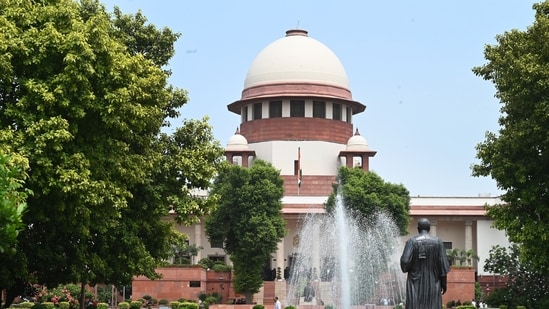
A bench of Justices PS Narasimha and Alok Aradhe dismissed an appeal filed by the Union government challenging previous orders of the Armed Forces Tribunal (AFT) and the High Court that had directed it to pay the veteran, Narendra Kumar, a war injury pension instead of disability pension.
The bench said the government must go by what its policy actually says and not what it intended it to mean.
“While interpreting the plain language of the policy, Courts will simply declare what a policy says it is and not what is in the imagination of the policymaker,” the Court said.
Kumar joined Army in 1996
As per the order, Kumar joined the Army in 1996. While posted at Kargil between 2003 and 2005 as part of ‘Operation Rakshak,’ he was diagnosed with Rheumatoid Arthritis. After his discharge in 2013, he received a Disability Pension. He later approached the Armed Forces Tribunal, seeking War Injury Pension instead of the disability pension.
Kumar cited a policy letter of the Ministry of Defence from 2001, which covers disability arising from “operations specially notified by the Government.”
{{/usCountry}}Kumar cited a policy letter of the Ministry of Defence from 2001, which covers disability arising from “operations specially notified by the Government.”
{{/usCountry}}The Tribunal allowed his claim in April 2024, finding that the ailment originated at Kargil where Kumar was posted. The High Court upheld this in August 2025.
The Union government, however, moved the Supreme Court challenging the orders and arguing that the 2001 policy letter covered only “specifically notified operations such as Operation Sindoor or Operation Snow Leopard,” and not ongoing operations like ‘Rakshak” in Jammu and Kashmir or “Rhino” in Assam.
The government also argued that Kumar's reading of the policy letter would make other clauses redundant and entitle “every soldier posted in J&K to the benefit.”
The Court, however, refused to accept such submission. It said that Category E(i) of the policy letter that dealt with the pension and notified operations was an “enabling provision, meant to give the government flexibility to cover war-like situations.”
It also said that once an operation was notified, the provision applies to it unless the policy or the notification says otherwise. The Court also said that apart from the Union government’s “oral submissions,” it found nothing to exclude Operation Rakshak.
The Court also declined to rely on Army Order 01 of 2003, which the Union cited to argue that battle casualty reports are not initiated in ongoing operations. It said the order “causes more confusion than it clarifies.”
The Court asked the government to be explicit in future. When notifying operations under Category E(i), it said, the government must declare in “clear terms” which pensionary benefits apply to whom.
“When the language of the Policy is unrestrictive, it is not the burden of the Court to limit its application through an interpretative process, particularly when the policy relates to grant of pensionary benefits. A liberal interpretation is compelling, and this Court has adopted such an approach while interpreting such policies,” SC said.
The Court also noted that there existed “continuing uncertainty” over which Defence Ministry rules and policies apply and when. It suggested that the Ministry issue “comprehensive, clearly identifiable subordinate legislation” governing the services, in the interest of “fairness and good governance.”