The Supreme Court on Tuesday refrained from directing the Election Commission of India (ECI) to preserve its files, internal notings and communications in the controversy over alleged unilateral decisions concerning the special intensive revision (SIR) of electoral rolls, even as it assured petitioners that it would examine the records.
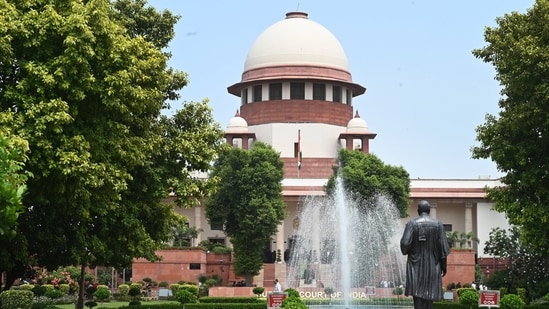
A bench comprising Chief Justice of India Surya Kant and justices Joymalya Bagchi and V Mohana adjourned the hearing on a batch of petitions challenging the functioning of the poll panel and allegations that chief election commissioner Gyanesh Kumar took key decisions without the concurrence of the other two election commissioners.
The court allowed the petitioners time to respond to a counter-affidavit filed by ECI on Monday, which maintained that all decisions relating to SIR were taken unanimously.
‘Talking about a constitutional body’
When senior advocates Abhishek Manu Singhvi and Menaka Guruswamy sought an order directing the poll panel to preserve all files, file notings and communications, solicitor general Tushar Mehta and senior advocate Maninder Singh, appearing for ECI, opposed the request. “The request is unfair. We are talking about a constitutional body,” they submitted.
Singhvi said the petitioners were seeking only an “innocuous order”. The bench responded: “We are aware of everything. Do not worry, we will examine.”
{{/usCountry}}Singhvi said the petitioners were seeking only an “innocuous order”. The bench responded: “We are aware of everything. Do not worry, we will examine.”
{{/usCountry}}The court, however, did not expressly direct ECI to preserve the records. It tentatively posted the matter for November 17, giving the petitioners, including senior counsel Vikas Singh who appeared for lead petitioner Rakesh Kumar Singh, time to file their rejoinders to the poll panel’s affidavit.
The hearing also saw the court issue notice on a fresh petition filed by Rajya Sabha MP Dola Sen, represented by Guruswamy, challenging aspects of ECI’s functioning, including alleged changes to the online Form 6 used for voter enrolment. The petition also takes issue with a press note issued by the poll panel stating that the Supreme Court had authorised the alleged changes.
“It pertains to functioning of ECI including tampering with online Form 6 and EC releasing a press note saying that your lordships have authorised such tampering,” Guruswamy told the bench. “We will examine,” responded the court. Guruswamy urged the court to issue notice, arguing that ECI’s latest affidavit accepted several of the petitioners’ allegations. “Please see the audacity of the institution,” she said, referring to the poll panel’s defence of the changes to Form 6.
Singh, appearing for ECI, objected to what he described as “rhetoric intended for another purpose”, saying it should not be permitted. The bench proceeded to issue notice and asked the petitioners to file their rejoinders, with the senior lawyers seeking time to respond to ECI’s submissions.
Election Commission denies ‘unilateral decisions’ charge
The latest hearing follows ECI’s joint counter-affidavit filed on Monday on behalf of the commission, Kumar and election commissioners Sukhbir Singh Sandhu and Vivek Joshi. The affidavit rejected allegations that the CEC acted unilaterally, asserting that the three orders governing SIR, issued on June 24, 2025, October 27, 2025, and May 14, 2026, were based on unanimous decisions and complied with Article 324 of the Constitution and Section 18 of the Chief Election Commissioner and Other Election Commissioners (Appointment, Conditions of Service and Term of Office) Act, 2023.
The commission also denied amending the statutory Form 6, arguing that the declaration required during SIR was a separate document prescribed through its orders and not part of the form laid down under the Registration of Electors Rules, 1960. It said the declaration was modified to facilitate the linking of applicants or their relatives with earlier electoral rolls, potentially allowing applicants to avoid furnishing other supporting documents.
Also Read I All SIR decisions unanimous, Form 6 not amended: Election Commission to Supreme Court
The Form 6 dispute had earlier prompted the Supreme Court to clarify that it had neither approved nor disapproved the alleged modification and that it wanted to examine the original records to establish what changes had been made and by whom.
The challenge has drawn on allegations that Sandhu and Joshi raised objections to decisions relating to the SIR and other aspects of electoral-roll management, and that disagreements within the commission were not reflected in the manner in which decisions were implemented.