The Supreme Court on Tuesday cautioned public authorities against arbitrary terminations of contracts, noting that such actions create uncertainty and unpredictability, discouraging public participation in the tendering process. The court emphasised that failure to protect the binding nature of lawful and valid tenders would erode public faith in contracts and tenders, ultimately harming public interest.
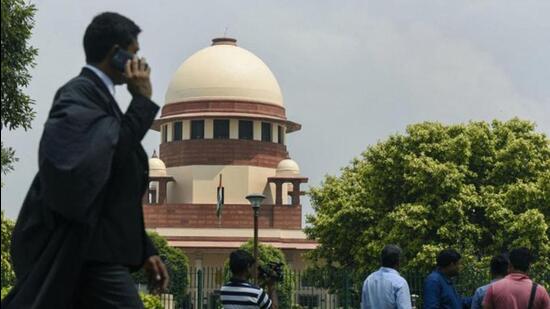
A bench, comprising Chief Justice of India Dhananjaya Y Chandrachud, and justices JB Pardiwala and Manoj Misra, reinforced the importance of maintaining the sanctity of public tenders in public-private partnership procurement processes.
The judgment, authored by justice Pardiwala, highlighted the crucial role of transparency, competition and fairness in the allocation of public resources, emphasising that these principles are fundamental to upholding the “doctrine of public trust”.
“Public tenders are a cornerstone of governmental procurement processes, ensuring transparency, competition, and fairness in the allocation of public resources. It emanates from the ‘doctrine of public trust’, which lays down that all natural resources and public use amenities & structures are intended for the benefit and enjoyment of the public. The State is not the absolute owner of such resources and rather owns it in trust and as such it cannot utilize these resources as it pleases,” said the bench.
As a trustee of the public resources, the court noted, the state owes a duty to ensure that community resources are put to fair and proper use that enures to the benefit of the public along with an obligation to not indulge in any favouritism or discrimination with these resources.
{{/usCountry}}As a trustee of the public resources, the court noted, the state owes a duty to ensure that community resources are put to fair and proper use that enures to the benefit of the public along with an obligation to not indulge in any favouritism or discrimination with these resources.
{{/usCountry}}Public tenders are essential in ensuring that government procurement processes remain transparent and fair, the bench said, adding that such processes are designed to create a level playing field for all potential bidders, fostering competition and securing the best value for public funds. “The principles of transparency and fairness embedded in public tender processes also help to prevent corruption and misuse of public resources,” it held.
The judgment, stemming from a wrongful cancellation of a tender by the West Bengal government for the maintenance of two underpasses on public-private partnership basis in Kolkata, stressed that the integrity of public tenders is vital for the efficient and effective delivery of public projects and services, which ultimately benefit society as a whole.
“The sanctity of public tenders lies in their role in upholding the principles of equal opportunity and fairness. Once a contract has come into existence through a valid tendering process, its termination must adhere strictly to the terms of the contract, with the executive powers to be exercised only in exceptional cases by the public authorities and that too in loathe,” noted the bench.
When public authorities enter into contracts, there is a legitimate expectation that the State will honor its obligations, held the bench, emphasising that arbitrary or unreasonable terminations undermine these expectations and erode the trust of private players in public procurement processes.
While acknowledging the State’s power to alter or cancel contracts, the court stressed that such decisions must be made in good faith and should be clearly reflected in the decision-making process.
“We caution the public authorities to be circumspect in disturbing or wriggling out of its contractual obligations through means beyond the terms of the contract in exercise of their executive powers,” underscored the bench, setting aside the 2023 order of the tender cancellation.
On the facts of the case, the bench held that it was “a classic textbook case of an arbitrary and capricious exercise of powers by the respondent to cancel the tender that was issued to the appellant on the basis of extraneous considerations and at the behest of none other but the concerned minister-in-charge,” who was the chairman of the Kolkata Metropolitan Development Authority.