The Supreme Court on Monday sought the response of the Centre on a petition challenging the government’s decision to introduce a Merchant Discount Rate (MDR) on UPI person-to-merchant transactions over ₹2,000.
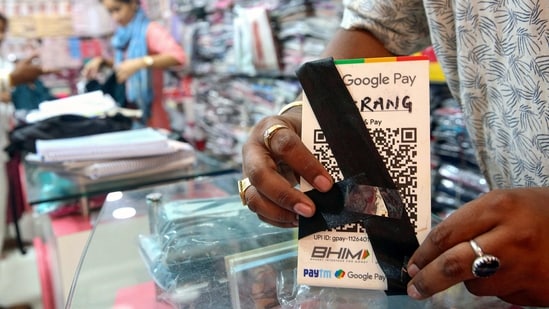
Hearing a public interest litigation (PIL) filed by advocate Anjan Datta, a bench headed by Chief Justice of India (CJI) Surya Kant said, “This is less of a legal and more of a technical issue. We need you (Centre) to state the facts on a short affidavit.”
The petition filed and argued by Datta along with advocate Ashutosh Dubey challenged the September 14 notification issued by the Ministry of Finance that will take effect from October 15. Under the proposed framework, the Centre proposed a 0.4 per cent ₹2000">MDR on UPI payments of over ₹2000 made to merchants. This charge will be capped at ₹300 for transactions above ₹75,000.
The Centre had clarified that the decision will not impact person-to-person UPI transfers that will continue to remain free, regardless of the transaction amount.
{{/usCountry}}The Centre had clarified that the decision will not impact person-to-person UPI transfers that will continue to remain free, regardless of the transaction amount.
{{/usCountry}}Appearing for Centre, additional solicitor general (ASG) N Venkataraman said, “The decision is yet to come into effect on October 15. At the outset, I would clarify that 96 per cent persons using the UPI payment gateway are exempted. Even among the four per cent covered by this decision, essential services are capped.”
SC questions Centre
The bench, also comprising justices Joymalya Bagchi and V Mohana, said it would only like to see the legal source of implementing this charge. It said, “What is the executive scope of imposing this charge? If it is a fee, it cannot be by way of an executive fiat. If not, then what is it?”
ASG said, “Not one rupee from this will go to the government. It is a settlement fee among the two players – bank and the service provider which the National Payments Corporation of India (NPCI) facilitates.”
The court said that once the response comes, it will be better placed to examine in whose hands, it amounts to be an “income”.