We’ve had a stream of this. Just this year, apart from all the incessant noise, Anthropic CEO Dario Amodei, and Sir Demis Hassabis, who is now Chief Scientist of Alphabet, Chair of Google DeepMind, and the Co-founder and CEO of Isomorphic Labs, have given us long-drawn explanations of their vision for AI. In parallel, Sam Altman, Satya Nadella and Jensen Huang also leave no chance to tell us how great artificial intelligence (AI) is. And now Mark Zuckerberg,
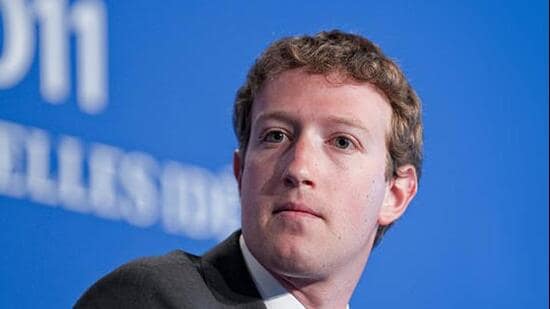
We’ve had a stream of this. Just this year, apart from all the incessant noise, Anthropic CEO Dario Amodei, and Sir Demis Hassabis, who is now Chief Scientist of Alphabet, Chair of Google DeepMind, and the Co-founder and CEO of Isomorphic Labs, have given us long-drawn explanations of their vision for AI. In parallel, Sam Altman, Satya Nadella and Jensen Huang also leave no chance to tell us how great artificial intelligence (AI) is. And now Mark Zuckerberg, Founder, Chairman, and Chief Executive Officer (CEO) of Meta, wants to be the adult in the room, telling us all will be okay. Will it? I’m not so sure.
I write this column on this theme, because a few hours ago, Mark Zuckerberg posted what can only really be classified as a manifesto. And typical to all AI companies and AI bosses, it must tick the boxes of being self serving and in a way telling the world’s citizens they’ve understood the impacts of AI all wrong. Either Mark hasn’t been tuning in to social media, or was too busy interviewing the next million dollar pay check hire—but we’ve been told by almost all AI bosses I’ve name-checked above have regularly told us there will be unusually painful (the exact words of Amodei, if I’m not mistaken), the world must plough in trillions of dollars for AI development, and we’ll run short of electricity and clean water (but that’s supposed to be okay). Altman, earlier this year in India, compared the food humans eat in a lifetime versus the energy AI models need.
Also Read: Tech Tonic | Big AI keeps making the same mistake about Chinese AI companies
“Humanity has witnessed many transformative advances. Each time there is fear that people will be left behind. But each time humanity has come out with more people sharing greater prosperity, health, and freedom. We believe this will be true with AI as well, and the abundance of the future can be shared by everyone,” beautiful words penned down by Mark, but they would probably have been believable 24 months ago. Not now.
I’ve decoded four key takeaways from Mark’s manifesto attempt, and let you judge whether it’s self serving, or reality for the greater good.
Assuage fears about data centers: There is a concerted attempt to counter the counter the reality of AI infrastructure. “Sustainable infrastructure development means that communities must benefit significantly from each project,” he writes. The realities of staggering local energy and water demands, as well as the cost of setting up AI data centres, isn’t lost on anyone—and that scale is true, irrespective of geography, but underlying conditions may further worsen impact.
And of course, if I was to collect a ₹ for every time I’ve heard the railroad, highways and electrification argument given by AI bosses and their megaphones lower down the ecosystem hierarchy, I’d probably have a million much needed bucks in my bank account. Mark repeats the same too, and since he’s the wise adult in the room apparently, he also mentions broadband for some reason. I don’t want to get into that.
A Gartner analyst recently told HT that “India’s data-centre capacity is already around 1.5 GW and could reach about 6.5 GW by 2030, with water use around 150 billion litres annually in 2025 and expected to more than double by 2030.” When Mark says that water-efficient data centres will restore more water than they use by 2030 and “with high water stress, our goal is to restore 200% of the water we use,” it is scarcely believable. As scarce, as clean water will be in data centre regions by that timeframe.
AI will fight for good against evil: Of course, and we’ve heard this before particularly from Amodei. “With AI, the defenders will also have more compute to generate significantly more intelligence from the same models — and in some cases they’ll have more advanced models as well,” writes Mark.
Zuckerberg’s manifesto argues that if everyone has a cybersecurity AI, all systems become hardened and safer. This relies on the flawed assumption that offence and defence scale equally. In cybersecurity and biotechnology, they often do not. It only takes one malicious actor with “invention superpowers” to engineer a novel bioweapon or a catastrophic computer virus. A million benevolent AI tutors and personal assistants cannot retroactively stop a pandemic or a collapsed power grid. By democratising capabilities, Meta and Mark downplay the fact that destructive power is inherently easier to unleash than to contain.
To that point, Zuckerberg also writes that “While there are risks to releasing capable models, the most dangerous scenario from this perspective would be leading AI labs training powerful models and keeping them for themselves.” I’m sure he has Altman’s phone number.
OpenAI this week said it must slow down development of its upcoming Astra model, because it showed “significant advancements in agentic coding and cybersecurity,” which means OpenAI cannot exactly “rule out critical cyber capabilities.”
Everyone is an entrepreneur, apparently: To address the fear of AI taking jobs, the manifesto claims that because everyone will have the tools to build businesses, there will be more employment. “If people can use AI to invent incredibly valuable new things, then it will make more sense to allocate it towards that rather than automating existing jobs. The more superintelligence serves as a tool of invention, the more likely that individual capability outpaces automation and the future is better for people,” he writes, gently mentioning Superintelligence too.
This is a remarkably Silicon Valley-centric view of human nature and the economy. Not everyone can be an entrepreneur (there are often societal and financial conditions that define a human’s professional trajectory), nor is a society made up entirely of solo founders truly sustainable. None of the AI companies seem to acknowledge the existence of millions of people who rely on stable, routine work and therefore income. Handwaving away a massive societal transition of mass unemployment by simply saying everyone can start a business now, simply ignores the shockwaves that are headed our way.
Importance of open source AI: This is one aspect where Zuckerberg is saying all the right things, and Meta for the most part, has been walking the talk. “Open source is a positive and important force for empowering people and preventing centralisation that is detrimental for both safety and the economy. Meta continues to be strongly supportive of open source, including open source AI models. The current open source ecosystem is strong, and we think it would be a mistake to restrict it,” he clearly pens his thoughts.
Meta has been countering a push to closed ecosystems from the likes of OpenAI and Anthropic, with open-source architecture. Meta’s latest open models include the Muse Glimmer, Muse Spark 1.2 and the previous flagship Llama series. The Muse Glimmer is a 30-billion parameter dense model featuring a 120K+ context window, and released under an Apache 2.0 license. It is trained using distillation from larger proprietary systems, optimised for a single consumer GPU, and tailored for always-on local AI agent workflows. The Muse Spark 1.2 is Meta’s high-performance multimodal reasoning and agentic model, whose weights Meta plans to make publicly available to developer.
Vishal Mathur is the Technology Editor at HT. Tech Tonic is a column that looks at the impact of personal technology on the way we live, and vice versa. The views expressed are personal.
One Subscription.
Get 360° coverage—from daily headlines
to 100 year archives.
Archives
HT App & Website