E-Paper



Tech Tonic | Time will tell if Nothing’s AI pivot is revolutionary or delusional
Success will depend on Nothing’s ability to solve fundamental user problems, because everyone’s now fatigued with AI chatbot generated castles in the sky

 Prefer HTon Google


Carl Pei’s Nothing has officially entered unicorn territory with a $200 million Series C funding round led by Tiger Global featuring Nikhil Kamath and Qualcomm Ventures, GV, Highland Europe, EQT, Latitude, I2BF and Tapestry, valuing the London-based tech company at $1.3 billion. When Nothing arrived on the scene in 2020, in the midst of that tumultuous pandemic era, many dismissed it as just another smartphone focused brand.
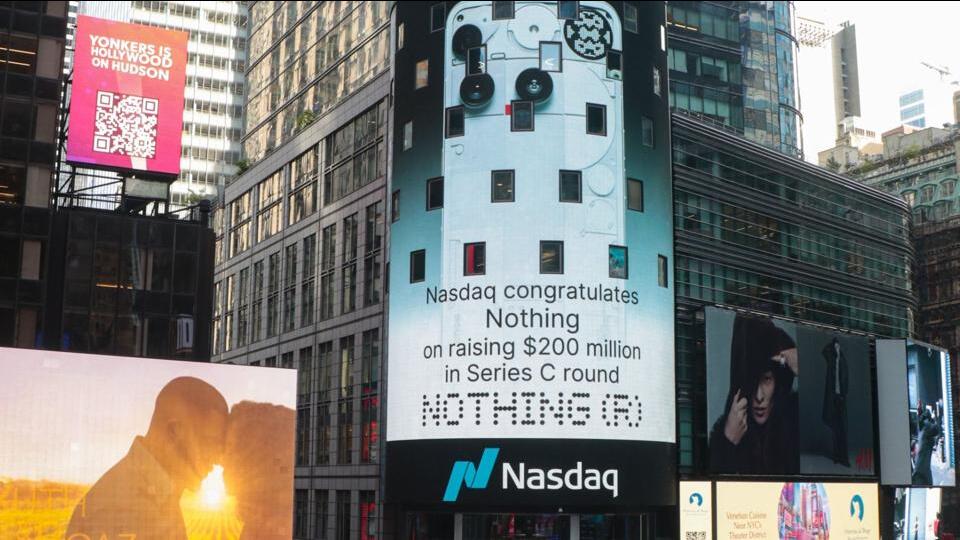
Nothing (no pun intended) could be further from the truth. For a company that started with transparent earbuds and distinctive smartphone designs, this milestone marks more than just financial validation. With it also comes the need for a transformation, from being design-focused product company to hopefully an ambitious AI platform builder. But that’s easier said than done.
Nothing’s journey to unicorn status hasn’t followed the typical startup playbook. Where most tech companies either chase mass market appeal or remain niche players, Nothing has carved out something more interesting: a design-conscious brand that perhaps resonates better with a younger audience in the way most other players in the Android phones and true wireless earbuds spaces don’t. Nothing’s design language, across their flagship phones and the CMF product lines, have certainly caught my attention in the most positive manner, every time. And I’m certainly not young, going by common metrics.
Also Read:Tech Tonic | Why are Meta’s million dollar AI hires already walking away?
But what’s next? Pei takes us back in time, detailing a vision that was clear to him from the outset, not a puzzle pieced together hurriedly. “From the start, we knew that the foundation had to be an end-to-end value chain capable of delivering products at speed, scale, and quality. As we’ve seen from many others that have tried, building a hardware company is hard. There are many potential failure points and almost no room for error,” he says. Pei insists that in the near term, smartphones will remain the only device that’ll ship at a billion-unit scale annually. But he says something, that essentially pulls back the curtain on Nothing’s roadmap. “The smartphone, while powerful, can’t always be there for us.”
This is where Nothing’s insistence on making an AI device, may either be an absolute genius move, or hurtle towards disaster. AI hardware has been spotted before, such as that Humane AI Pin which many on this planet couldn’t stop obsessing over pre-funding and pre-ordering, and then couldn’t wait to return it. Not all AI hardware has been a disaster, but that’s a category which is still very, very niche.
The Ray-Ban Meta smart glasses, is an example of AI hardware, which well, somewhat works. You could toss Samsung’s latest Galaxy Watch8 series smartwatches too in that basket, considering the deep integration of Google Gemini. Success, variable.
They’re clear — the first AI-native devices launch next year. This represents a fundamental shift in the company’s DNA, to one that reimagines how we interact with technology entirely.
Nothing’s AI strategy doesn’t for now seem to be about plastering ChatGPT or an existing AI chatbot onto existing devices and calling it innovation. Or so it may seem. Instead of juggling dozens of separate applications or devices, the company envisions a single AI interface that understands context, anticipates needs, and seamlessly handles everything from messaging to productivity tasks. What sort of models, what sort of device, how much will it cost, all questions that don’t (understandably) have an answer just yet. It’s the kind of vision that sounds either revolutionary or delusional, depending on your faith in AI’s near-term capabilities.
Crucial to this would be Nothing building its own operating system, one that’ll understandably be underlined by an AI of their choice and laced with ‘agents’ that will do tasks on our behalf. “In the future, our OS will carry into smart glasses, humanoid robots, EVs, and whatever comes next,” the vision is grand. But many of you may remember my views about AI and agents — I’ll just leave it at that.
The timing of this funding round is particularly intriguing. While the broader tech industry grapples with AI capabilities not delivering on the hype and investors understandably growing more cautious (this summer has been a revelation, showing the world what some of us had been saying for months), Nothing has still secured some serious funding. A leap of faith, or did the investors see something the world hasn’t, yet?
Also Read: Nothing is now a unicorn and building ‘AI-native’ devices that are not phones
That said, Nothing faces formidable challenges. Building an operating system from scratch is extraordinarily difficult — just ask Microsoft how Windows Phone worked out. Creating truly useful AI experiences requires not just software sophistication but also deep integration with cloud services, something that demands either massive infrastructure investment or strategic partnerships with tech giants who might view Nothing as a competitor.
Secondly, the smartphone market itself remains brutally competitive, and distraction is unadvised. While Nothing has found success with design-conscious consumers, expanding beyond this niche while simultaneously reinventing the entire software experience represents an enormous risk. Rather than aiming for mass adoption, the company has focused on targeting specific communities, including creative professionals, but unicorn valuations typically require broader market appeal.
Nothing’s $1.3 billion valuation places enormous pressure on the company to deliver meaningful innovation, not just incremental improvements. The fresh capital that would likely be used to develop a new generation of AI-native devices, leaves the team with not much time to prove their thesis. But absolutely nothing tells me Nothing doesn’t understand the magnitude of this challenge.
Success will ultimately depend on Nothing’s ability to solve fundamental user problems rather than just showcasing clever technology. The latter, many have already done, and everyone’s now fatigued with chatbot generated castles in the sky. If their AI-native approach can genuinely simplify complex workflows, reduce cognitive load, and anticipate user needs better than traditional interfaces, they could establish a meaningful competitive advantage. If it ends up feeling like a gimmick, even another $200 million won’t save them from market reality.
Also Read: Nothing Phone 3(a) series’ graceful evolution blends AI with pristine refinement
Nothing’s bet is that being built from the ground up with this vision, rather than retrofitting existing products, will provide a decisive advantage. Whether Carl Pei’s vision proves prescient or premature, Nothing’s $200 million war chest does give them a chance to spring a surprise, to reimagine fundamental assumptions. But one must pause for a moment and wonder, does this latest funding give Nothing the legs to deploy ideas that have completely evaded the mighty Google, OpenAI, Microsoft, Apple, Samsung and others?
(Vishal Mathur is the Technology Editor at HT. Tech Tonic is a weekly column that looks at the impact of personal technology on the way we live, and vice versa. The views expressed are personal)