
 E-Paper



Nothing is now a unicorn and building 'AI-native' devices that are not phones
Nothing now wants to build 'AI-native' devices, and the company's latest Series C funding is a big step in that direction.

 Prefer HTon Google


Nothing has officially entered the Unicorn Club, crossing the $1 billion valuation mark after announcing it had raised $200 million in Series C funding at a $1.3 billion valuation. Alongside existing investors, the round saw the entry of new backers, including Zerodha founder Nikhil Kamath and Qualcomm Ventures. Notably, Kamath is not the first Indian to invest in Nothing. Back in 2021, the company raised $50 million with contributions from Indians such as producer Karan Johar, cricketer Yuvraj Singh, and YouTuber Ranveer Allahbadia.
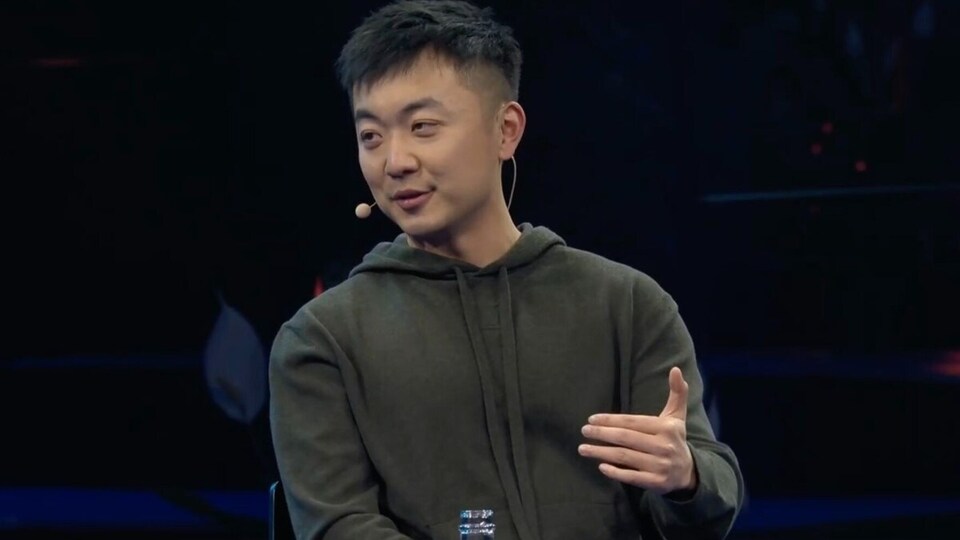

As part of its release, Nothing has said that this funding is going to be used to accelerate product innovation and deepen the company's investment into “AI-native” products, which would be separate from smartphones, bringing hardware and software together into a single intelligent system, the brand said.
MOBILE FINDER: iPhone 17 LATEST Details
This is what Nothing CEO Carl Pei said
Carl Pei, through a press release, said that the brand is building an AI-native platform which brings together hardware and software, converging into a single intelligent system. This would mark the shift from being the only independent smartphone company to emerge in the last decades towards building this AI-native platform.
He also acknowledged that over the last four years, the brand has shipped millions of devices. And, in 2025, it crossed $1 billion in total sales, while also growing 150% in 2024.
“Today, we’re in a position that will be very hard to copy: The ability to launch any consumer hardware product from start to finish within months, go-to market operations that can ship and service worldwide, a global user community that co-creates with us, all without the innovator’s dilemma or bureaucratic constraints that the incumbents face. On to chapter 2,” Pei added.
“Smartphone will remain one of the most important devices in the AI era,” but innovation is lacking, Pei says
Pei says that while AI at large has made revolutionary progress in the last three years, the smartphone experience surrounding this AI has barely evolved. He says it is limited to incremental improvements in photo editing, translations, and assistant features that barely work, and that for AI to fully reach its potential, consumer hardware must be reinvented alongside it. This is where Nothing comes in, according to him.
“This is the opportunity we see for Nothing. We see a future where operating systems are significantly different from the ones today. Each system will know its user deeply, and be hyper-personalised to each individual. Interfaces will adapt to our context and needs. Suggestions will surface naturally, and once we confirm an intent, agents will execute on our behalf. The system will handle the non-essential for us, allowing us to focus on what truly matters, which will be different for every person. Unlike today’s one-size-fits-all solution, a billion different operating systems will be rendered for a billion different people,” Pei said.
So clearly this means that Nothing is going all in on building its operating system which will, according to the company, be transversal across all form factors. He says Nothing is starting with smartphones, audio products, and smartwatches, which are of course devices that people have already been using, but over time it will carry forward to smart glasses, humanoid robots, EVs, and whatever comes next.
Nothing to build AI-native devices that it wants you to carry "additionally" alongside phones
Now it is rather ambiguous what Nothing means by “AI-native” devices, but Pei says he expects to launch the company’s first AI-native devices next year, which is 2026.
He says, “we’ll all be carrying an additional device that will be just as important,” and that more context will be fed to AI and, as a result, it will become more useful.
He also says that while the smartphone is powerful, it cannot always be there for us. Sometimes it is in our pocket, or we might be on the move with our hands full.
It remains to be seen what Nothing is hinting at so far, but these AI-native devices are not smartphones, according to the company. The company also says that this Series C funding is going to help with this vision.


