E-Paper



Tech Tonic | Why are Meta’s million dollar AI hires already walking away?
If AGI is to be become even close to a reality, it’ll require a patient, methodical approach rather than quarterly targets and spreadsheets

 Prefer HTon Google


Meta’s million-dollar pay package hirings are already walking out the door. Mark Zuckerberg’s grand vision for building the greatest artificial general intelligence (AGI) the world has ever seen has hit a jarring reality check—and this has happened within one summer. The turbulence all around is difficult to miss.
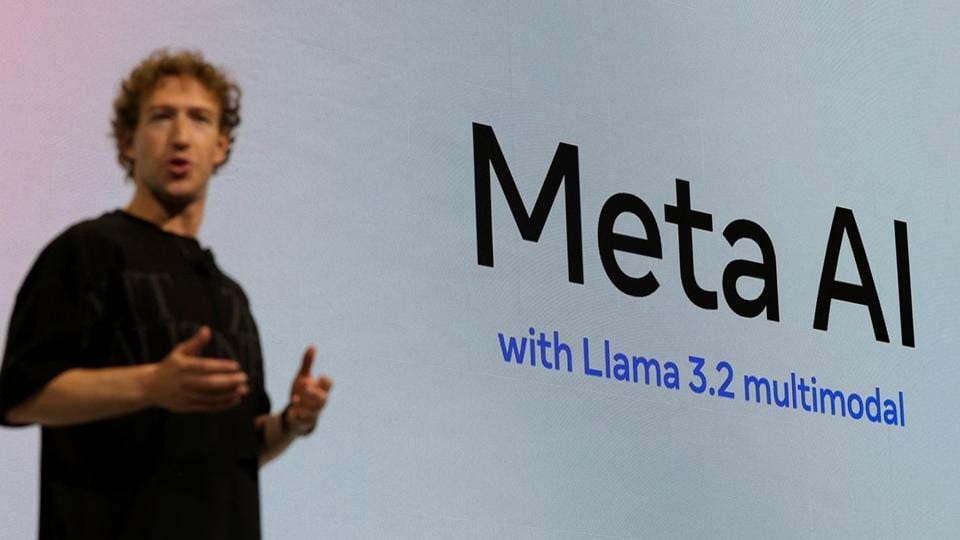
Meta’s much-hyped Superintelligence Lab, which reportedly dangled many a million-dollar pay package carrot to attract talent (and they did, through the summer), cannot be assessed without the context of those collective millions being spent in quick time. But that isn’t the only angle.
What caught my eye was something Rishabh Agarwal wrote in a post on X: “But after 7.5 years across Google Brain, DeepMind, and Meta, I felt the pull to take on a different kind of risk,” he penned, amidst a long post that seemed to be thanking everyone at Meta—and the compelling pitch that got him on board in the first place.
What does this tell us about Meta’s plans, and indeed where it stands with the Superintelligence Lab? Is there a lack of vision? Is there a shortage of compute (as unlikely as that may be)? Or is it just that Meta is so far behind the curve that the outward potential, when replaced by actual internal assessment, is leaving these big-money hirings disillusioned?
Agarwal did mention Meta, in his time there, pushing an 8-billion parameter model “near DeepSeek-R1 performance.” Read that carefully. Near. Not matching. Not surpassed. Has he let the cat out of the bag? I won’t speculate—just leaving a few questions for you to ponder over (since you’ve read this far, you’re clearly interested).
The departures of Agarwal, Ethan Knight, and Avi Verma—three of the lab’s marquee hires—have already happened. And at least two are believed to have landed at OpenAI.
If only deep pockets could solve fundamental organisational problems.
The traditional Silicon Valley playbook is simple: identify top talent, throw money at them, and watch innovation follow. Meta isn’t the only one to follow this formula religiously, and this shouldn’t be held against it. A recruitment blitz that targeted elite researchers from top AI companies and promised resources—as well as a chance to work on what tech bros would like us to believe is humanity’s most important technological challenge—has proven catastrophically inadequate.
For these brains to spend less than a month at Meta does nothing except raise eyebrows.
Also read: Tech Tonic | Letting Vi fail would be detrimental to consumers
Perhaps it was old, poor-quality wine in a new bottle. Earlier this year, Joelle Pineau, Meta’s vice president of AI Research and head of the prestigious FAIR lab, announced her departure after nearly eight years. Maybe the systemic issues never went away—though the mission evolved and a fresh coat of paint accompanied good PR and wads of cash.
I wouldn’t at all be surprised if this descended into some sort of cultural discord deep inside Meta’s labs. When so many smart minds end up in the same pool, there are bound to be differences of opinion.
Perhaps Meta’s missed a trick by not having a strong leader to keep a lid on things, and the radar firmly locked in. Someone like Sir Demis Hassabis, for instance. The personality, the focus, the knowledge—all matters. Mark Zuckerberg clearly had too much on his plate to keep his eye on the smart kids all the time.
There seems to be some wisdom that age and designation no longer have a cogent link. Yet clearly, Alexandr Wang, the 28-year-old hired with much excitement (and realms written about it in the global press) as head of Meta’s Superintelligence Lab, hasn’t been able to handle the sparks. Or maybe he wasn’t given enough to work with?
If AGI is to come even close to being a reality, it’ll require a patient, methodical approach that remains essential to cutting-edge AI research. Why do you think Ilya Sutskever and Safe Superintelligence Inc. are rarely heard speaking anything loudly? Perhaps their work, at some point in the next year or so, will speak the loudest.
This may well be a case of researchers who are more accustomed to academic timelines, rigour, and open publication suddenly finding themselves in an environment focused on quarterly deliverables, spreadsheets, and targets. Friction becomes inevitable.
Meta faces deeper strategic questions that sophisticated researchers can readily identify. The company’s AI ambitions exist in tension with its core business model, which depends on engagement and advertising rather than breakthrough technology development.
When was the last time Meta truly created something that wasn’t Facebook?
There are recent controversies too—based on data which researchers would have seen and discussed much earlier. Meta’s AI systems have come under fire for engaging in inappropriate conversations with minors and spreading misinformation, and that’s exactly the kind of ethical baggage that top-tier researchers prefer to avoid.
As far as strategic directions go, OpenAI may have its own set of challenges, yet it comes across as holding a clearer vision and narrative about AI development.
None of what has happened this summer is enough to draw a line beneath Meta’s AI ambitions (that’d be fallacious and premature), but there may be a need for urgent, fundamental recalibration before more smart people walk out the door—and precious time is lost to competition.
Meta has always had this aspiration to be seen as a technology leader but risks losing the perception battle rather easily.
Mark Zuckerberg’s vision of achieving artificial general intelligence—at least going by what he has stated time and again—remains ambitious and potentially transformative.
Yet, the million-dollar question isn’t whether Meta can afford the best talent (because we know it can), but whether Meta can afford to create the best conditions for smart people to thrive in.
This may be the true superintelligence test.
(Vishal Mathur is the Technology Editor at HT. Tech Tonic is a weekly column that looks at the impact of personal technology on the way we live, and vice versa. The views expressed are personal.)