E-Paper



India again distances itself from Sheikh Hasina’s remarks
MEA said India had no role in Sheikh Hasina’s New Delhi news conference and did not endorse remarks targeting Bangladesh’s government.

 Prefer HTon Google


The Indian government on Friday again distanced itself from former Bangladesh prime minister Sheikh Hasina’s news conference in New Delhi, which triggered a strong response from Dhaka, and said it had no role in the event and did not endorse anything said against the Bangladesh government.
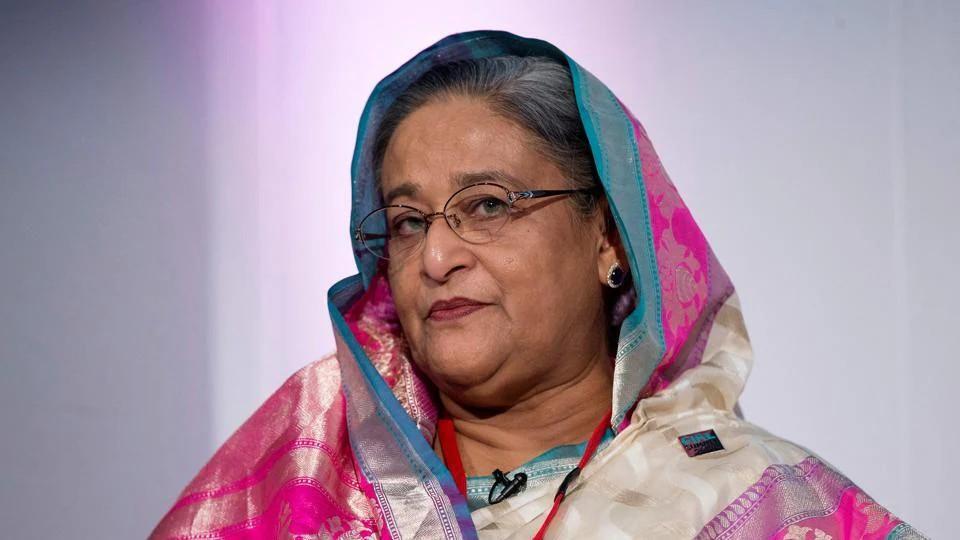
Hasina, who has lived in India since she fled Dhaka in August 2024 in the face of a student-led uprising, used the virtual news conference on Wednesday to signal her determination to return to Bangladesh by December despite the risk of being arrested or facing a death sentence. Bangladesh’s foreign ministry expressed outrage that an “absconding convicted genocider” was allowed to hold such an event on Indian soil.
When external affairs ministry spokesperson Randhir Jaiswal was asked about the Bangladesh government’s unusually strong response at a regular media briefing, he reiterated the position taken by the Indian side ahead of the news conference — that New Delhi had no role in arranging the event and did not endorse anything said by Hasina.
“Let me say that I have already stated the government’s position on the issue before the press conference happened. I’m reiterating it here,” he said.
“The government had no role to play in what was an event by a private media entity and the government does not endorse anything said at the forum, especially with regard to the duly constituted government of Bangladesh.”
Responding to a separate question on remarks by Hasina’s son Sajeeb Wazed at the same event that Bangladesh is becoming “another Pakistan” as extremist forces and terror groups have purportedly been given a free hand by the current government, Jaiswal said India keeps a close eye on any developments that can impact the country’s security.
“We continue to closely follow developments that happen in our neighbourhood, keeping in mind our national security interests. And whatever measures have to be taken in that regard, we take those to secure our interests,” he said, without going into details.
Jaiswal responded to yet another question on the Bangladesh government seeking fuel supplies from India to cope with an energy crisis by saying that he did not have an update on the matter. “As you know, with Bangladesh, we have an ongoing relationship in the economic sphere, the energy sphere,” he said.
Bangladesh’s power and energy minister Iqbal Hassan Mahmood sought additional supplies of diesel at a meeting with Indian high commissioner Dinesh Trivedi in Dhaka on Thursday. The two sides had discussed ways to strengthen bilateral cooperation in the power and energy sectors, the Indian high commission said on social media.
Mahmood told reporters after the meeting that a diesel shortage had impacted power generation and led to outages. “We have a pipeline with India through which diesel is supplied. We have asked them to provide more,” he said.