
Delhi and the national capital region (NCR) will experience a drop in temperature from tomorrow morning after western disturbance affecting northwest India move eastward, the India Meteorological Department (IMD) said on Wednesday.
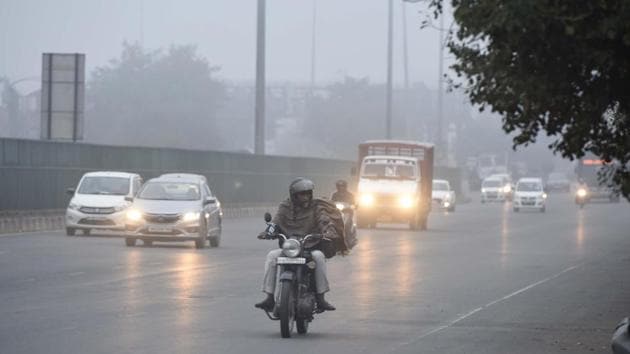
Dense to very dense fog will prevail in most parts of Punjab, Haryana, western Uttar Pradesh, northern Rajasthan and Delhi-NCR. The western disturbance that was effecting northwest India has currently moved eastward, for which the effect will be mostly over western Uttar Pradesh.
Under the influence of western disturbance from January 2 till January 6 (today), significant rainfall occurred in plains of northwest India, due to which, there is a significant amount of moisture across the region.
Kuldeep Srivastava, Head of the IMD’s regional weather forecasting centre, New Delhi told ANI, “Tomorrow morning, 8 degrees Celsius is expected followed by a further decrease in temperature. On 8th morning, 7 degrees Celsius is expected over Delhi-NCR and most part of the plains of northwest India.”
Low temperature is conducive for the formation of fog. From tomorrow morning onwards, we are expecting dense to very dense fog in most parts of Punjab, Haryana West UP, north Rajasthan and Delhi NCR. This condition will prevail for the next three to four days, after which there will be a slight decrease in the fog condition.
{{/usCountry}}Low temperature is conducive for the formation of fog. From tomorrow morning onwards, we are expecting dense to very dense fog in most parts of Punjab, Haryana West UP, north Rajasthan and Delhi NCR. This condition will prevail for the next three to four days, after which there will be a slight decrease in the fog condition.
{{/usCountry}}“Under its influence, the wind direction will change to northwesterly. Wind will come to Delhi-NCR and Haryana from Jammu Kashmir and Himachal Pradesh. A significant amount of rainfall and snowfall has occurred there so cold air will come to Delhi,” Srivastava added.
After the western disturbance moves, cloudiness will decrease significantly and clear sky will prevail on January 7 night and January 8 morning making it colder.
According to System of Air Quality and Weather Forecasting And Research (SAFAR) today’s AQI (PM 10 level) is 124 and PM 2.5 level is 82, both under the moderate category.
As per SAFAR’s AQI forecast, although PM10 level will remain moderate, PM 2.5 level is likely to shift to the poor category, which may further dip into to very poor category.
ABOUT THE AUTHOR
Follow the latest breaking news, major developments and agenda-setting stories from India and around the world with the newsdesk at Hindustan Times. Operating round the clock, the desk brings together experienced editors, reporters and correspondents to deliver fast, accurate and contextual reporting across subjects that influence public policy, governance, business, society and international affairs. The HT News Desk covers politics, elections, government policies, the economy, business and markets, science and technology, the environment, law and order, infrastructure, education, climate issues and geopolitics, while closely tracking developments across states, institutions and global capitals. The team also leads coverage of major breaking news events, policy announcements, court proceedings, natural disasters, public emergencies and significant international developments. Reports published by the newsdesk are based on information gathered from reporters on the ground, official statements, government agencies, court records, regulatory filings, recognised institutions and other authoritative sources. Stories undergo editorial scrutiny and verification processes to ensure accuracy, fairness and relevance, and are updated as events evolve and additional information becomes available. Whether covering a key political decision in New Delhi, an economic policy shift affecting millions, a landmark court ruling or a major global event, the HT News Desk aims to provide readers with reliable, fact-based journalism that delivers not only the latest developments but also the context and analysis needed to understand their wider implications.