
 E-Paper



The economic fallout of Russia’s Ukraine invasion: Explained in 4 charts
Russia’s decision to launch a military offensive against Ukraine has sent shock waves through the global economy

 Prefer HTon Google


Russia’s decision to launch a military offensive against Ukraine has sent shock waves through the global economy. While its immediate impact has been felt in commodity, equity and currency markets, the ripple effects are unlikely to end here.
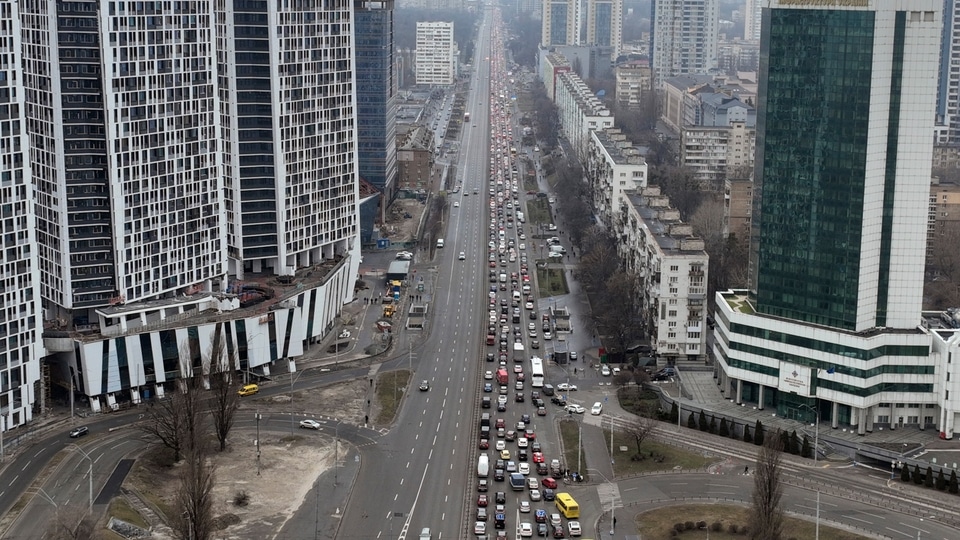
The more long-term consequences will depend on how the North Atlantic Treaty Organization (NATO) members, especially the US react to Russia’s aggression and the situation in Ukraine itself, which is a major transit point for trade in important commodities. For the Indian economy too, the consequences will be far from insignificant. Here are four charts that explain how the situation might unfold.
Fuel markets are headed for a major price shock
Russia is a major exporter of crude oil/gas to the world. If the advanced countries impose major economic sanctions on Russian exports, it can lead to a major spike in fuel prices. According to data from the WITS database of the World Bank, fuel-based commodities had a share of more than 50% of Russian exports. Data from the US Energy Information Administration (US-EIA) shows that Russia accounts for at least a tenth of global crude oil production, which is almost half of the total crude oil production in Organization of Petroleum Exporting Countries (OPEC) in the middle east (west Asia) region. Crude prices breached the $100 per barrel barrier for the first time after 2014 on February 24, a direct fallout of the Russian action.
The impact on European countries could be far higher than what Russia’s headline share in global energy markets suggests as Europe is heavily dependent on Russian gas supplies. There are fears that these repercussions here could be long-term in nature. For example, Germany has put on hold a pipeline deal with Russia to supply gas. To be sure, the inflationary impact of the Russia-Ukraine crisis is likely to go beyond fuel prices as the region is also one of the most important wheat producers in the world.
Higher inflation means more aggressive monetary tightening
Experts believe that the inflationary shock could derail the already slackening post-pandemic recovery in the global economy. “Oil’s surge to $100 a barrel for the first time since 2014 represents a double-blow to the world economy by further denting growth prospects and driving up inflation. That’s a worrying combination for the U.S. Federal Reserve and fellow central banks as they seek to contain the strongest price pressures in decades without derailing recoveries from the pandemic”, a Bloomberg story said. Inflation has already emerged as a major problem even without the latest geopolitical crisis. A more aggressive monetary tightening in the advanced countries will also put pressure on capital and foreign exchange markets in countries such as India. India’s benchmark stock market index, the BSE S&P fell by 4.7% on February 24.
India’s budgetary maths could be jeopardised because of oil price shock
While there was a running debate on the extent of fuel price hike which would come after the ongoing election cycle is over on March 7, the precipitation in Ukraine has made this question even more difficult. Petrol-diesel prices have been kept frozen since November 2021, when the price of India’s crude oil basket was $80 per barrel. This year’s Economic Survey assumes that crude prices will stay in the range of $70-75 per barrel over the next fiscal year. If crude prices continue to stay at even current levels, fuel prices would have to be increased by more than ₹10 per litre, unless the government is willing to reduce union excise duties or increase petroleum subsidies. Both of these decisions will upset the budgetary calculations in a big way. A large hike in prices is bound to push inflation, increase economic pain and most likely political discontent too. The only silver lining is India’s foreign exchange reserves, which stand at around $630 billion (January 2021 figures).
Long-term geopolitical repercussions for global economic balance
The global economic order, as we know it today, changed fundamentally after the collapse of the Soviet Union. After spending decades in a cold war with the Soviet camp, the US and its allies were able to establish not just strategic but also economic hegemony in the global order. The collapse of the Soviet Union also led to a belief that strategic prowess was directly linked to a country’s economic might. This is best seen in the widespread belief that it was only China, the second-largest economy by GDP in the world, which was capable of giving competition to the US. Given the fact that Chinese economic fortunes are deeply linked with the US economy – US is still the largest export market for China and China holds the largest amount of dollar reserves in the world – there has been a good reason to believe that the former will not do anything rash which upsets the global economic apple cart.
Russia’s decision to throw a military challenge to the US and its NATO allies by invading Ukraine can change the fundamental premise of a mutually beneficial but stable global economic order. Russia is amuch smaller player in terms of global GDP (its GDP levels are actually lower than India’s) and it will probably suffer heavy economic loss for its current decision. In fact, experts suggested that Russia had been preparing for the economic fallout of its actions by de-accumulating its dollar reserves. But the collateral damage to the world economy, either in terms of an escalation of military conflict or the global uncertainty that inaction by theUS and its allies will generate for similar actions by countries such as China do not bode well for economic certainty going forward. This has the potential of taking the global economy into uncharted waters.


