
 E-Paper



Theaterisation: Indian Maritime Doctrine 2025 seeks to bolster military jointness
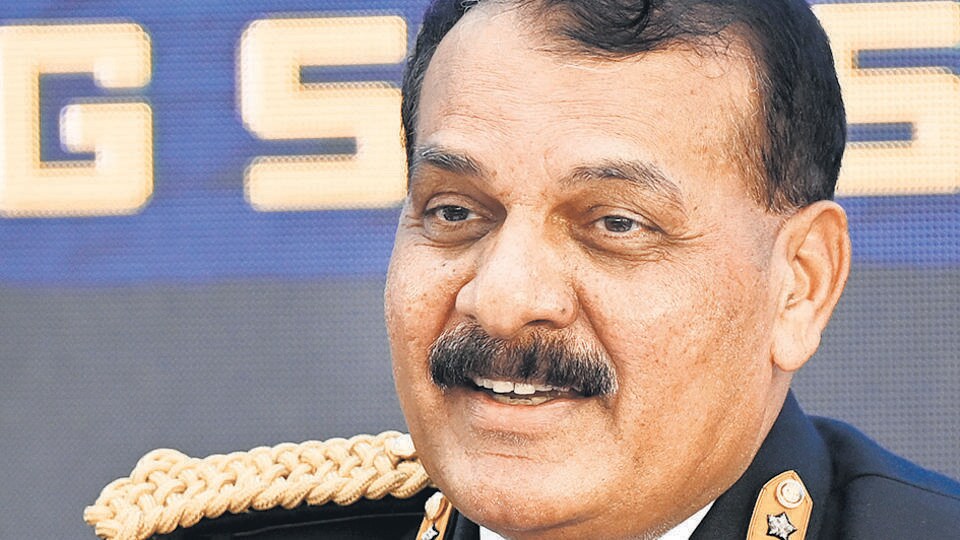
Navy chief Admiral Dinesh K Tripathi on Tuesday released the Indian Maritime Doctrine 2025 that seeks to bolster jointness and integration among the three services, a prerequisite to theaterisation — a long-awaited reform for the best use of the military’s resources to fight future wars.

 Prefer HTon Google


Navy chief Admiral Dinesh K Tripathi on Tuesday released the Indian Maritime Doctrine 2025 that seeks to bolster jointness and integration among the three services, a prerequisite to theaterisation — a long-awaited reform for the best use of the military’s resources to fight future wars.
The document also formalises ‘no-war, no-peace’ as a distinct category between peace and conflict, establishing it as a key facet of the conflict spectrum, the navy said. The doctrine is the apex guidance document of the Indian Navy. It was first published in 2004, revised in 2009, and then published again in 2015 with minor amendments.
“The (latest) doctrine prioritises jointmanship by aligning with tri-service joint doctrines towards ensuring interoperability across the armed forces,” the navy said in a handout.
India recently released three joint doctrines, including one for Special Forces (SF) operations, another for airborne and heliborne operations and a third for multi domain operations, in what was seen as a needed boost for the ongoing drive for jointness and integration of the armed forces as they take steps towards theaterisation.
In September, defence minister Rajnath Singh said jointness in the military cannot be achieved through structural reforms alone but will also require a change in mindset and the challenges involved will have to be tackled through dialogue and understanding, stressing that tri-service integration is a must for survival in a fast-changing security environment.
“The defence minister was re-emphasising that if, at all, people in individual services are thinking of service-specific issues, there is a need for us to change…we have to work together. There has to be jointness and integration. And it all starts with a change in mindset. We have seen in the last 10 years or so that the mindsets have indeed undergone a change. There is a change, an acceptance of views from the other two services. I am sure the services must have taken note of the directives from the Raksha Mantri,” Tripathi said at his annual media briefing ahead of Navy Day on December 4.
The doctrine comes at a critical moment when there are some differences within the three services on theaterisation, which refers to placing specific units of the army, the navy and the air force under a theatre commander. Such commands are led by an officer from any of the three services, depending on the roles assigned to them. The air force strongly feels it should not be confined to a theatre.
“The 2025 edition reflects the major transformations in India’s maritime environment and strategic outlook. It lays the foundation for the navy’s strategy and operations,” the navy said.
The Indian Maritime Doctrine 2025, it said, intends to advance India’s regional role and maritime influence while fostering a maritime-conscious nation that recognises the centrality of maritime power to national security.
It seeks to integrate an enhanced understanding of tactics employed by adversaries, including grey-zone, hybrid, and irregular warfare, and acknowledges the growing importance of the space, cyber, and cognitive domains, while putting emphasis on the integration of uncrewed systems, autonomous platforms, and emerging technologies.
“This new edition reflects the transformation in India’s maritime environment over the last decade and incorporates India’s broader vision of harnessing the oceans as a key pillar of Viksit Bharat 2047. It also recognises the growing maritime security challenges characterised by multi-domain threats, a diverse set of actors, and rapid advancements in technology,” the navy added.


