The Supreme Court on Monday rued the growing tendency of people to seek directions from the top court in every sensitive matter, and emphasised that litigants must trust the judicial hierarchy and allow statutory authorities and trial courts to discharge their functions before invoking the apex court’s jurisdiction.
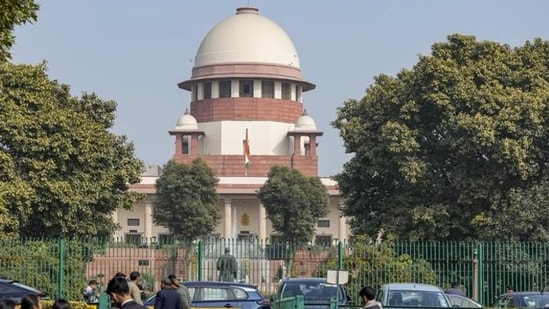
A bench of justices Ahsanuddin Amanullah and Sheel Nagu made the observations when a lawyer sought urgent listing of a public interest petition seeking action against social media influencer Nazia Elahi Khan over her alleged derogatory remarks about Prophet Muhammad, contending that the comments had the potential to disturb communal harmony.
Also Read | ‘Too important to discard, too imperfect to ignore’: The collegium system is flawed but necessary
‘We are here to monitor’: SC
“Have you filed a case? The police are there. Have faith in our system. We are only the apex; we are here to monitor. It is also an eye-opener for us whether our lower functionaries and courts are working or not. If everything is short-circuited here, they will also raise hands because everything is happening at the top…that is what is happening,” the bench told advocate Rajat Kumar, who mentioned the matter on behalf of petitioner Md Anas Chaudhary.
The bench added: “All institutions are going haywire because everything comes from the top,” as it declined to grant immediate listing, stressing that the legal process must first be allowed to take its course.
{{/usCountry}}The bench added: “All institutions are going haywire because everything comes from the top,” as it declined to grant immediate listing, stressing that the legal process must first be allowed to take its course.
{{/usCountry}}“Have faith in the system. There is a procedure. If that procedure does not work, we are here. It’s a grave thing, I agree with you...speaking for myself, I am very sensitive to it... but then there is a procedure. If that doesn’t work, come to us,” Justice Amanullah observed.
The bench also cautioned against sensationalising issues capable of inflaming communal passions.
“In sensitive matters, you are also a citizen of India first; you must understand the implications. You are a counsel. You know the law. You understand the consequences. Don’t sensationalise these things. If one person has made a mistake, pin him down with the full force of the law. But follow the procedure,” said the court.
The petition, filed through advocate Ansar Ahmad Chaudhary, seeks directions for registration of criminal proceedings against Khan for allegedly making blasphemous and inflammatory statements against Prophet Muhammad and also seeks removal of the impugned content from social media platforms including YouTube, Facebook and X.
According to the plea, Khan’s remarks deeply hurt the religious sentiments of the Muslim community and carry the potential to disrupt public order and communal harmony, besides violating the Supreme Court’s repeated directions against hate speech.
Also Read | Failing the Constitution on personal liberty
Viral clip and widespread outrage
The controversy erupted in June after clips from an Instagram podcast featuring Khan and host Divya Singh went viral, triggering widespread outrage and protests across several states. Multiple FIRs have since been registered against Khan, including in Maharashtra and Madhya Pradesh, while complaints have also been lodged in West Bengal and Bihar.
Islamic organisations, including the Raza Academy, organised demonstrations demanding her arrest, while the BJP Minority Morcha publicly distanced itself from Khan, clarifying that she did not hold any official position in the organisation despite claims to the contrary.
Khan, who has also used the moniker “Nazia Sanatani”, has maintained in some public statements that the viral videos were AI-generated and not authentic.
The petition relies heavily on a series of Supreme Court directions mandating prompt police action in hate speech cases. It also cites the court’s judgment in Shaheen Abdulla Vs Union of India, where states and Union territories were directed to register suo motu FIRs whenever speeches disclose offences promoting communal hatred without waiting for private complaints. It also refers to subsequent directions requiring police authorities to take preventive measures to curb hate speech and ensure timely prosecution of offenders.