The Supreme Court on Tuesday urged the Union government to introduce a comprehensive framework for paternity leave, calling it an essential component of social welfare and gender equality.
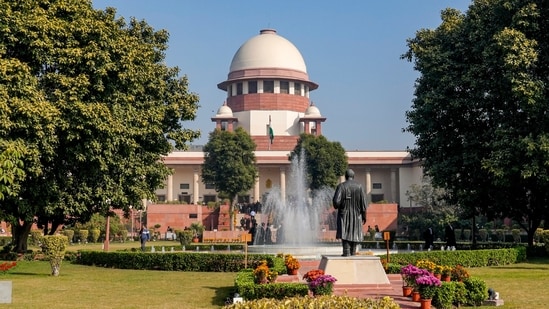
A bench of justices JB Pardiwala and R Mahadevan reflected on what it described as a “deeply rooted” but often invisible imbalance in parenting roles, where caregiving has historically been seen as the mother’s domain, while fathers remain confined to the role of financial providers.
The observations came even as the court expanded maternity benefits for adoptive mothers.
“Society has historically attributed caregiving and nurturing responsibilities almost exclusively to mothers. While the role of a mother is undeniably central to a child’s emotional, physical, and psychological development, it would be incomplete and unjust to overlook the equally significant role of a father,” said the bench.
{{/usCountry}}“Society has historically attributed caregiving and nurturing responsibilities almost exclusively to mothers. While the role of a mother is undeniably central to a child’s emotional, physical, and psychological development, it would be incomplete and unjust to overlook the equally significant role of a father,” said the bench.
{{/usCountry}}The court noted that this imbalance is not always deliberate, but stems from long-standing social assumptions that have come to be accepted as the “natural order,” leaving fathers at the margins of early childcare and depriving them of the opportunity to participate meaningfully in the formative stages of a child’s life, even as it placed more demands on mothers.
Emphasising that parenthood is inherently a shared responsibility, the bench underscored that the early months and years of a child’s life are critical for emotional bonding, attachment, and psychological development. The absence of a father during this period, often dictated by workplace constraints rather than choice, was described as a loss that cannot be compensated later.
The court observed that while fathers may remain physically present, the lack of institutional support in the form of leave often keeps them disengaged from everyday caregiving. This, in turn, reinforces traditional gender roles and places a disproportionate burden on mothers, who are left to navigate both professional obligations and intensive childcare without adequate support.
“The absence of a father is rationalized by the hope of making up for lost time through devoted weekends. For the child, who needed to hear the voice and feel the warmth of a father in those early moments, the absence is not merely a matter of memory. It affects the foundation upon which the child begins to build emotional security and attachment. The absence of a father during the formative years of a child’s life, particularly due to employment constraints, deprives both the child and the parent of the opportunity to form these early bonds,” it added.
The bench further highlighted that the absence of paternity leave produces a dual consequence -- it entrenches gendered expectations within the family, and at the same time, denies willing fathers the opportunity to contribute to caregiving in a substantive way.
ALSO READ | SC urges govt to consider enacting comprehensive law governing end-of-life care
Enabling fathers to take time off following the arrival of a child, the court said, would allow them to support the mother, participate in upbringing, and share household responsibilities during a demanding phase.
The bench also linked the issue directly to child welfare, observing that the best interests of the child are most effectively served when both parents are present and engaged in the early stages of development. Emotional security, attachment, and a sense of belonging are shaped during this period, and the role of a father, the court stressed, is neither peripheral nor replaceable.
While acknowledging that certain provisions, such as limited paternity leave for government employees, already exist, the court said the concept remains under-recognised in the broader legal framework. It took note of recent legislative efforts, including proposals to formalise paternity benefits, but emphasised the need for a more comprehensive and responsive approach.
Urging the Centre to act, the bench said a statutory framework for paternity leave would not only promote gender equality within families and workplaces, but also align with the broader objectives of social welfare legislation. The duration and structure of such leave, it added, must be designed in a way that responds to the needs of both the parent and the child.
The court concluded on a reflective note, observing that a child does not understand the legal or institutional reasons behind a parent’s absence, but experiences only the presence or absence of care and closeness.