
 E-Paper



Top court refuses plea for including madrasas, Vedic schools under RTE
The Court was dealing with a petition filed by Delhi BJP leader and lawyer Ashwini Kumar Upadhyay who challenged the constitutional validity of Sections 1(4) and 1(5) of the Act which contained this exclusion.

 Prefer HTon Google


The Supreme Court on Friday refused to entertain a petition questioning the exclusion of madrasas and Vedic schools from the ambit of the Right of Children to Free and Compulsory Education Act 2009.
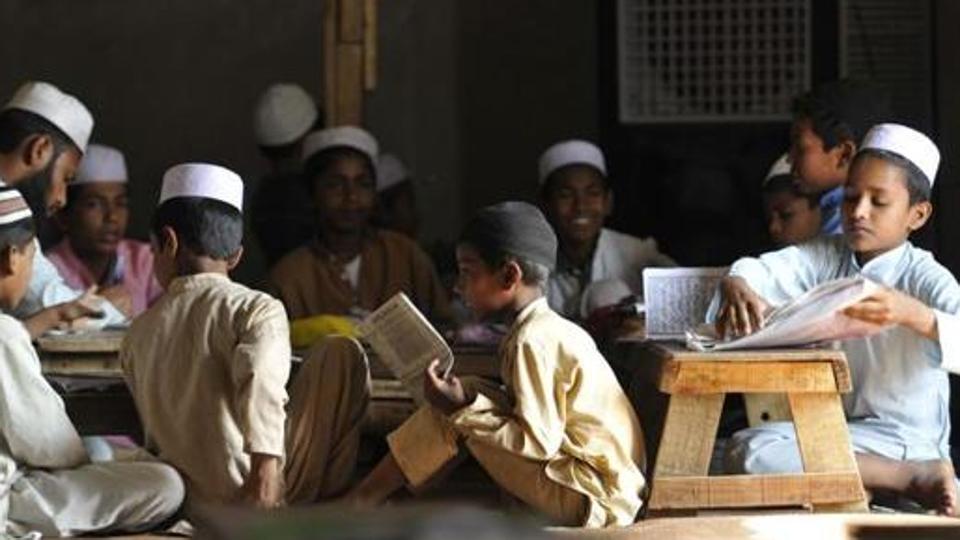
The Court observed that the exclusion of these institutions was specifically inserted into the 2009 Act by an amendment of August 2012 and since then there has never been any controversy in the past decade.
The Court was dealing with a petition filed by Delhi BJP leader and lawyer Ashwini Kumar Upadhyay who challenged the constitutional validity of Sections 1(4) and 1(5) of the Act which contained this exclusion. The petition argued by former solicitor general Ranjit Kumar said that the issue raised serious constitutional questions as children aged 6-14 years studying in these institutions are being kept out of the purpose of the Act to have an inclusive elementary education and common syllabus.
Section 1(5) of the Act states, “Nothing contained in this Act shall apply to madrasas, Vedic pathshalas and educational institutions primarily imparting religious instruction,” while Section 1(4) said, “Subject to the provisions of Articles 29 and 30 of the Constitution, the provisions of this Act shall apply to conferment of rights on children to free and compulsory education.” Article 29 and 30 contain provisions securing rights of minorities and minority-run institutions.
The bench of justices L Nageswara Rao and BR Gavai observed, “For 10 years nothing has happened. Withdraw this petition and go to the high court. We will have the benefit of a high court order.” The bench further observed, “There is no raging controversy about this. You are the one who is raising it.”
Kumar informed the Court that the 2012 amendments are under challenge before the high courts. However, according to him larger issues pertaining to fundamental rights can be decided by this Court that can put a quietus to the whole issue. He said, “Sections 1(4) and 1(5) fail to consider that children aged between 6 and 14 years are in their formative years and such education brings about a religious connotation in the mind of children.”
Upadhyay’s petition said, “Introduction of common syllabus and common curriculum would enable every child to be placed on a level playing field for the challenges of future and meaningfully contribute in achieving the great golden goals as set out in the preamble, particularly fraternity, unity and national integration. Compulsory education without common curriculum is worse than providing no education at all.”
The Court allowed the petition to be withdrawn by granting petitioner the liberty to approach the high court. The bench said, “High Courts are equally competent to decide on constitutional questions.” The Court clarified that it decision not to entertain the matter should not be seen as any expression on the merits of the arguments raised in the petition.


