US President Donald Trump on Friday said the war with Iran will be “over soon”, claiming that the United States had stopped Tehran from acquiring a nuclear weapon. Speaking at a White House event, Trump also predicted that gas prices would fall, saying the conflict would end “one way or the other”.
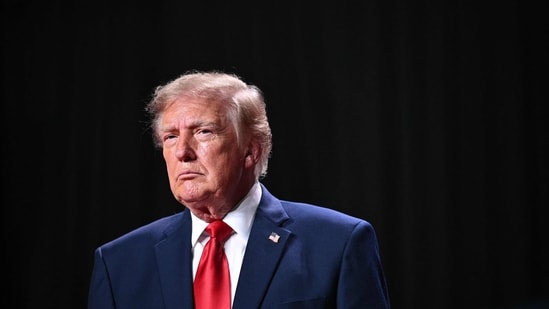
“We stopped Iran from having a nuclear weapon — and the prices will come tumbling and it’s gonna be over soon, one way or the other,” Trump said.
He also said he remained open to direct negotiations with Tehran but rejected its proposal, citing uncertainty over who was leading the country.
“Always open to direct talks; the biggest problem is that nobody knows who is running the country. I reject their proposal,” Trump said.
Trump rules out Iran strikes before November 3 elections
Trump said on Thursday that he would not order the US military to resume strikes against Iran before the November 3 midterm elections.
{{/usCountry}}Trump said on Thursday that he would not order the US military to resume strikes against Iran before the November 3 midterm elections.
{{/usCountry}}In a social media post, he said the US “will not be attacking Iran at any time prior to the Midterm Elections to be held in the United States on November 3rd.”
The president also said his administration had been “having productive discussions with the Islamic Republic of Iran.”
Trump has recently suggested that the war could reach a turning point shortly before or after the midterm elections. At the same time, he has kept open the possibility of restarting full-scale military operations against Iran.
For weeks, Trump has warned that military escalation could follow the elections, despite initially telling Americans that the campaign would last only a matter of weeks. The conflict has now entered its seventh month.
Washington and Tehran signed a temporary agreement in June that was intended to establish a 60-day ceasefire and create a framework for a lasting peace deal.
However, the agreement between Trump and Iranian President Masoud Pezeshkian fell apart within weeks as military action resumed and disagreements over control of the Strait of Hormuz continued.
The strategic waterway is a key route for global oil supplies, with around one-fifth of the world's oil passing through it before the war.
Negotiations appeared to have stalled after Trump rejected an Iranian proposal late last month. Tehran had offered to reopen the strait within seven days if Washington agreed to certain conditions.
(With inputs from agencies)