The Supreme Court on Tuesday ruled that the Unlawful Activities (Prevention) Act (UAPA) does not impose a blanket prohibition on granting bail to foreign nationals accused under the anti-terror law, clarifying that the statutory bar applies only when a foreigner has entered India unauthorisedly or illegally, and not merely because their subsequent stay in the country becomes unlawful.
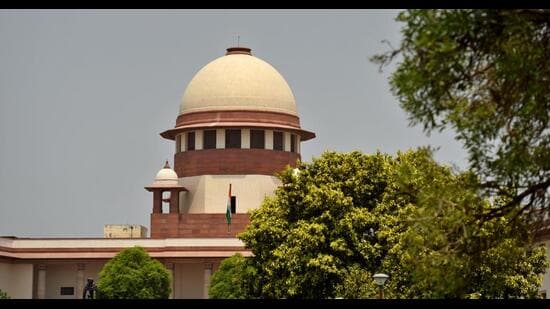
A bench of Justices Aravind Kumar and Vipul M Pancholi held that the prosecution must prima facie establish that an accused is not an Indian citizen and that their initial entry into India was unauthorised or illegal to trigger the stringent restriction under Section 43D(7) of the UAPA. A foreign national who entered India legally on a valid visa cannot be brought within the provision merely because the visa subsequently expires or the person’s stay becomes illegal, held the court.
The ruling came as the court dismissed an appeal by the Union government challenging a Madras high court order that restored bail to Mohamed Rifas, a Sri Lankan national accused in a case being investigated by the National Investigation Agency (NIA) over an alleged conspiracy to disturb communal harmony, wage an armed struggle against the government and to liberate their associates lodged in prisons.
“The appellant has failed to place any material on record to prima facie establish the entry as unauthorized or illegal,” said the bench, noting that the allegations in a separate FIR against Rifas indicated that he had entered India on a valid visa and that his stay became illegal only after the visa expired.
{{/usCountry}}“The appellant has failed to place any material on record to prima facie establish the entry as unauthorized or illegal,” said the bench, noting that the allegations in a separate FIR against Rifas indicated that he had entered India on a valid visa and that his stay became illegal only after the visa expired.
{{/usCountry}}The court underscored that Section 43D(7) imposes a high threshold for bail where its conditions are met, given considerations of national security, public interest and India’s sovereignty. The provision allows bail in such cases only in “very exceptional circumstances”, with reasons recorded in writing.
“The legislative intent warranting such high threshold is primarily backed by considerations of national security, larger public interest and sovereignty of India,” said the bench, adding that the burden of establishing very exceptional circumstances would lie on the accused.
Section 43D of the UAPA imposes stringent restrictions on bail in terror-related offences, including a bar on anticipatory bail and a requirement that courts deny bail in certain cases if the accusations are prima facie true; Section 43D(7) sets an additional, higher threshold for foreign nationals who entered India illegally or without authorisation, permitting bail only in very exceptional circumstances and for reasons recorded in writing.
The case arose from an FIR registered in Tamil Nadu in April 2018, accusing Rifas and others of conspiring to incite communal discord and engaging in activities punishable under the UAPA and other laws. He was granted default bail in July 2018 after the investigating agency failed to file a chargesheet within the prescribed statutory period.
The NIA subsequently took over the investigation and filed a chargesheet in January 2021. A separate FIR was registered in November 2019 alleging that Rifas was a Sri Lankan national who had overstayed his visa and fraudulently obtained Indian identity documents, including a voter ID card and Aadhaar.
In April 2022, the Union government sought cancellation of his bail, arguing that he had concealed his foreign nationality when seeking release and that Section 43D(7) barred bail to foreign nationals accused under the UAPA. The special court cancelled his bail in July 2022, but the Madras high court reversed that decision in December 2023.
The Supreme Court rejected the Centre’s contention that the alleged suppression of nationality justified cancellation of bail. It emphasised that Rifas had been granted statutory default bail under Section 167(2) of the Code of Criminal Procedure, a right that also applies to UAPA cases through Section 43D(2) of the Act.
The bench held that the overriding effect and restrictions of Section 43D(7) do not override the provision governing default bail. Consequently, even if the foreign-national restriction were otherwise attracted, it would not displace the statutory entitlement to default bail.
The court also found that the Centre had failed to establish a compelling basis for cancelling the bail after the chargesheet was filed. While the chargesheet was submitted in January 2021, the application seeking cancellation was moved only in April 2022, and the government had not satisfactorily explained the delay.
The bench reiterated that cancellation of bail is distinct from setting aside an order granting bail. While bail may be cancelled for post-release misconduct or supervening circumstances, a superior court can also interfere with an original bail order if it is legally unsustainable, perverse or based on irrelevant considerations. Such powers, however, must be exercised with caution because personal liberty carries substantial constitutional value.
Finding no merit in the Centre’s appeal, the court affirmed the Madras high court’s order restoring Rifas’s bail.