New Delhi: The University Grants Commission (UGC) has asked universities and colleges to integrate electoral literacy in the curricular framework, evolve a robust mechanism to fulfil the aspirational goal of the Election Commission of India (ECI) of handing over voter IDs to every eligible student, organise mock polls and administer a pledge to vote by students.
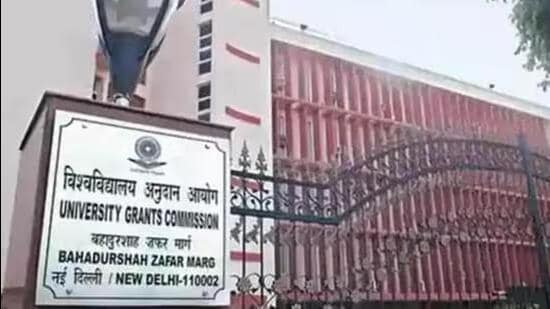
The higher education regulator on Tuesday wrote to the Vice Chancellors of all Universities and principals of all colleges in the country informing that a Memorandum of Understanding (MoU) was signed between the Union ministry of education and ECI on November 2, 2023 to incorporate voter education and electoral literacy formally into the University/ and College education system to prepare future and new voters for greater electoral participation.
Incidentally, the MoU has been signed ahead of the 2024 Lok Sabha elections.
“The ECI is implementing its flagship programme called Systematic Voters’ Education and Electoral Participation (SVEEP) that aims at universal and enlightened participation of all eligible citizens in elections inter alia by addressing urban and youth apathy. Continuous Electoral and Democracy Education (CEDE) is an important component of SVEEP strategy which needs to be formalised and grounded in the school and higher education system in order to motivate future voters for greater electoral participation that would enable them to be responsible citizens who take pride in being a part of our democratic system in an informed manner with a sense of duty and purpose to strengthen our democracy,” the Commission said in its letter.
The Commission also shared a list of activities to be carried out under the MoU, and requested the higher education institutions to disseminate the information and take necessary steps to take up the suggested activities mentioned for “deepening the spirit of democracy in the country”.
{{/usCountry}}The Commission also shared a list of activities to be carried out under the MoU, and requested the higher education institutions to disseminate the information and take necessary steps to take up the suggested activities mentioned for “deepening the spirit of democracy in the country”.
{{/usCountry}}Among the activities suggested in the letter included integration of voter education and electoral literacy appropriately in the curricular framework for all colleges and universities in a manner and to the extent of credit and hours suitable for different disciplines; training of teachers in imparting electoral literacy in the classrooms; co-curricular activities for imparting voter awareness amongst students; mobilisation campaigns and participatory activities in schools and colleges, administer a pledge to vote by students, organising mock polls, and demonstrations of EVM-WPAT demonstrations and ECI mobile apps.
The higher education institutions have also been asked to develop an institutional framework for using anonymised and aggregated UDISE (Unified District information System for Education), All India Survey on Higher Education (AISHE) and other databases of students who have attained I7+ years of age with due regard to data privacy and protection with a view to facilitating online voter registration of eligible and prospective students.
“Evolve a robust mechanism to fulfil the aspirational goal of ECI to handover the Voter ID card to every student of the country immediately after their attaining the age of 18 years,” the Commission said.
Besides, the higher education institutions have also been asked to organise intensive activities on the occasion of the National Voters’ Day, celebrated on January 25th, and undertake voter awareness drives by students during the election time.
“Implement the above-mentioned activities and issue necessary directions to all the Universities / Colleges for making it an integral part of the routine functioning of their relevant authorities and personnel. Report and document action taken and lessons learnt in the matter and appropriately disseminate success stories,” the Commission added.