
The government’s decision to propose a special sitting of Parliament has brought back the focus on a Constitution Amendment Bill to expand the size of the Lok Sabha and fast-track 33% reservation for women.
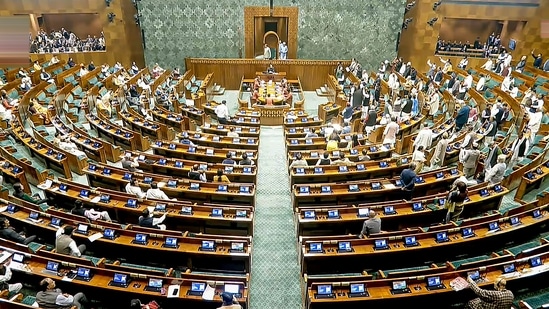
In April, the bill failed to garner the required two-thirds majority in the Lok Sabha. It was the first time a constitutional amendment brought by the government had been defeated since the National Democratic Alliance (NDA) came to power in 2014.
Subsequently, the government withdrew two other linked bills. One mandated delimitation on the basis of the latest available census, effectively the 2011 one. The other implemented the changes in union territories.
Also Read | Parliament session reconvened: How women’s reservation bill failed in April
Constitution amendment bills can be introduced in either House of Parliament. While motions for introduction of such bills are adopted by simple majority , a majority of the total membership of the House and a majority of not less than two-thirds of the members present and voting is required for adoption of effective clauses and motions for consideration and passing of these bills.
While proposing a special sitting of Parliament on Thursday, the government did not mention the agenda. But speculation has been rife that a special sitting could be arranged to push through the 131st constitution amendment bill and the delimitation bill.
{{/usCountry}}While proposing a special sitting of Parliament on Thursday, the government did not mention the agenda. But speculation has been rife that a special sitting could be arranged to push through the 131st constitution amendment bill and the delimitation bill.
{{/usCountry}}What fuelled the buzz was the fact that the government did not prorogue the Monsoon Session, which was adjourned sine die on August 13.
Govt vs Opposition
The 131st constitution amendment bill sought to raise the Lok Sabha ceiling to 850 and implement 33% reservation for women in time for the 2029 polls. It lost the Parliament test in the face of a united Opposition, which did not waver despite a dramatic last-minute offer by Union home minister Amit Shah to incorporate a 50% proportional rise for all states into the bill.
While the ruling side hit the streets in protest against the bill’s defeat, the Opposition said it favoured women’s reservation but opposed delimitation, and questioned the government’s timing and intent.
Reserving a third of seats in legislative assemblies and the Lok Sabha has been debated since the Constituent Assembly, which rejected the idea. Previous attempts to pass the bill were repeatedly thwarted in the 1990s and 2000s as regional parties opposed the move. In 2010, the bill passed the Rajya Sabha but was stalled in the Lok Sabha. Finally, in 2023, the Nari Shakti Vandan Adhiniyam passed the Parliament test, mandating that 33% reservation for women will be rolled out based on a fresh census and delimitation.
Also Read | Ministers, lawmakers put travel plans on hold amid uncertainty surrounding Parliament session
To be sure, the 2023 women’s reservation act still stands. It came into force in April this year.
In the budget session, the government introduced three bills aimed at delinking the women’s quota from the next census and tying it instead to a delimitation based on the 2011 census. The government’s legislative push involved raising the cap on seats in the Lok Sabha, with the allocation of seats to states, the reserved constituencies and their boundaries being defined by a delimitation commission on the basis of the latest census, which would mean the 2011 one in this case.
North-South debate
The Opposition and leaders of southern states flagged concerns over the exercise, with critics calling it a flawed, unconstitutional and anti-federal exercise.
One of the biggest points of contention was a North vs South divide. A section of critics argue that North India could gain more seats in proportion to its population, while South India, which contributes around 30–31% of the GDP, could lose out because of the population factor. Southern states have time and again flagged that population alone shouldn’t be the criterion for such revisions or additions. The government countered that under a uniform 50% increase, the southern states’ share of Lok Sabha seats would rise slightly, from 23.76% to 23.87%. Critics pointed out that the bill itself did not guarantee that formula.
ABOUT THE AUTHOR
Follow the latest breaking news, major developments and agenda-setting stories from India and around the world with the newsdesk at Hindustan Times. Operating round the clock, the desk brings together experienced editors, reporters and correspondents to deliver fast, accurate and contextual reporting across subjects that influence public policy, governance, business, society and international affairs. The HT News Desk covers politics, elections, government policies, the economy, business and markets, science and technology, the environment, law and order, infrastructure, education, climate issues and geopolitics, while closely tracking developments across states, institutions and global capitals. The team also leads coverage of major breaking news events, policy announcements, court proceedings, natural disasters, public emergencies and significant international developments. Reports published by the newsdesk are based on information gathered from reporters on the ground, official statements, government agencies, court records, regulatory filings, recognised institutions and other authoritative sources. Stories undergo editorial scrutiny and verification processes to ensure accuracy, fairness and relevance, and are updated as events evolve and additional information becomes available. Whether covering a key political decision in New Delhi, an economic policy shift affecting millions, a landmark court ruling or a major global event, the HT News Desk aims to provide readers with reliable, fact-based journalism that delivers not only the latest developments but also the context and analysis needed to understand their wider implications.