A day after his surprise inclusion in the Union cabinet, career diplomat Subrahmanyam Jaishankar didn’t raise quite as many eyebrows when he returned to the external affairs ministry on Friday as minister, ready to take on a slate that includes tricky trade issues with the US and building closer ties with China. It is widely known the former foreign secretary enjoys Prime Minister Narendra Modi’s confidence, and his inclusion in the Cabinet Committee on Security will add heft and strategic depth to India’s efforts to forge a robust foreign policy in the backdrop of the US-China trade war and rising protectionism.
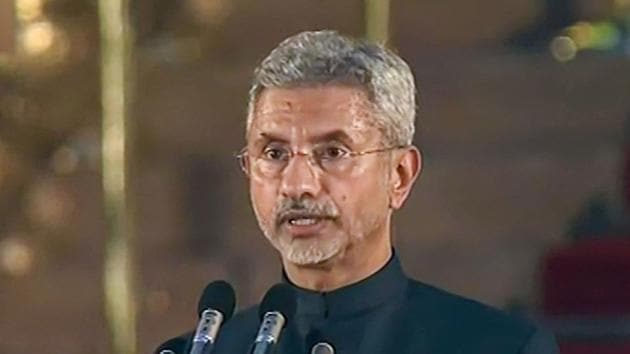
Jaishankar, 64, is the second career diplomat to become foreign minister after Natwar Singh. His appointment means the government will have to either nominate him to the Rajya Sabha or he will have to be elected to one of the Houses of Parliament.
His elevation again sets up the troika of Modi, Jaishankar and National Security Adviser Ajit Doval that oversaw foreign policy during the NDA government’s previous term, helping forge stronger ties with the US, end the military standoff with China at Doklam and embark on an ambitious outreach to West Asia.
Jaishankar’s approach fits in well with Modi’s pursuit of aggressive diplomacy that leverages India’s influence and stature as an emerging power. Given his stints as India’s envoy to China (2009-13) and the US (2014-15), Jaishankar is well placed to steer ties with the two major powers.
While India and the US have developed very close political and security ties, trade issues have emerged as irritants, with President Donald Trump repeatedly criticising New Delhi for what he describes as high tariffs. The suspension of benefits under the US Generalized System of Preferences programme is all but certain and US sanctions on Iranian oil imports have become a challenge.
{{/usCountry}}While India and the US have developed very close political and security ties, trade issues have emerged as irritants, with President Donald Trump repeatedly criticising New Delhi for what he describes as high tariffs. The suspension of benefits under the US Generalized System of Preferences programme is all but certain and US sanctions on Iranian oil imports have become a challenge.
{{/usCountry}}Jaishankar played a key role in negotiating the end of the 2017 standoff with China at Doklam, but the two countries are grappling with a host of issues ranging from the border dispute to India’s trade deficit of over $50 billion. Jaishankar will also be involved in preparations for Modi’s second informal summit with Chinese President Xi Jinping, expected to be held in India on October 11.
“He (Jaishankar) knows the two poles of India’s foreign and strategic policy... he’s been ambassador in both countries [US and China], he knows how they work, particularly the US,” Neelam Deo, director of think tank Gateway House, told Reuters. China also welcomed his appointment. “China is willing to work with India to implement the consensus of the leaders of the two countries and promote new progress in China-India relations,” a statement from the Chinese foreign ministry read.
A senior official, who didn’t want to be named, said the bigger challenge for Jaishankar would be protecting India’s strategic autonomy in decision-making at a time when world powers want the country in their corner at multilateral forums or in tackling pressing issues on the global stage such as the US-China trade war. “That will be the real tricky issue for this year and Jaishankar’s reputation as a negotiator will be put to the test here,” the official said. Jaishankar will also have to handle India’s troubled relationship with Pakistan against the backdrop of the tensions over the February 14 suicide attack at Pulwama.