
 E-Paper



Washing away of dam brings focus on Sikkim’s hydel projects
All projects in Sikkim are run of the river projects, in which a channel is created off the river to direct water to run the turbine, with the water then flowing back into the river

 Prefer HTon Google


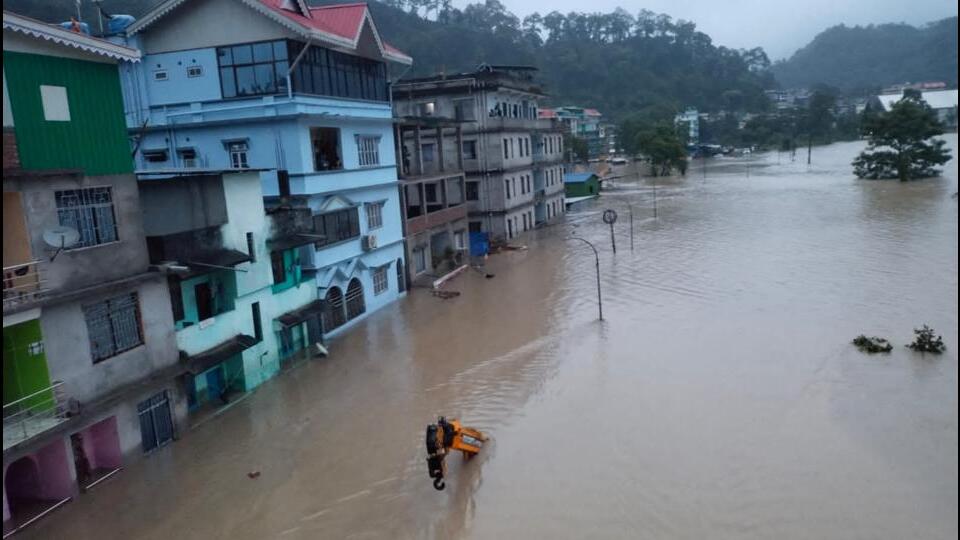
The washing away of the dam of Teesta-III project and damage to the Teesta-V dam in Sikkim because of the Glacial Lake Outburst Flood (GLOF) from Lhonak Lake in north-west Sikkim has again centred attention on the series of hydel projects that have been, are being, and proposed to be built on one of the most dammed rivers in the country.
In 2004, the Central Electricity Authority prepared a preliminary feasibility report of 162 hydel projects in the country with installed capacity of 50,000 MW of power generation of which 10 were to be built in Sikkim with installed capacity of 1469 MW.
As the years passed more projects were added and as per National Hydropower Development Corporation, 47 hydropower projects are in different development stages on Teesta river in Sikkim and West Bengal. Of them, nine have been commissioned, work on 15 is ongoing and another 28 are in the pipeline.
According to a paper on hydel projects in Sikkim published in the journal of the World Water Council, more than half of the hydel projects in the state are in northern Sikkim, the area most affected by the Wednesday floods. Experts have pointed out that north Sikkim is prone to landslides triggered by extreme rain events, whose frequency has increased in recent years across the Himalayan belt, according to various studies by Pune based Indian Institute of Tropical Meteorology.
All projects in Sikkim are run of the river projects, in which a channel is created off the river to direct water to run the turbine, with the water then flowing back into the river. Dams built are primarily for channelising the water to turbines with limited irrigation potential unlike big hydro-projects like Bhakra Nangal in Himachal and Sardar Patel Sarovar in Gujarat where the primary purpose is storage for irrigation.
The dams are being built by the Sikkim government in partnership with private operators. The Teesta-III project, which was badly damaged in the flash flood on Wednesday, was built in collaboration with private partners and was commissioned in 2017. It is the biggest run of the river hydel project in Sikkim.
Local activists in Sikkim have for long have warned of the adverse environmental implications of the series of run of the river projects on the 414 km long Teesta river that originates from Punhunri Mountain in north Sikkim.
Jeta Sankrityayan a retired professor of Economics in North Bengal University and member of the West Bengal Landslide Expert Committee, said historical records show that the Teesta River sees major flooding every 50 years and claimed that the Wednesday event was the biggest after the 1968 one in which around 1,000 people died following around 1,000 mm of rain in 52 hours between October 2 and 5.
“The impact of rain fury got accentuated due to construction of dams along the river that block the natural flow. The complete washing away of the dam at Teesta Urja hyro-power project is an example of that,” he added.
He said the Sikkim and the Central government should learn a lesson from the tragedy, which has been declared as a disaster by the state government.
Gyatso Lepcha, general secretary of Affected Citizens of Teesta (ACT) said claims by the state government that the dam of Teesta Urja hydro-power project would be an engineering feat and among the strongest in the world has turned out to be a joke.
“We knew that this was coming . We have been warning about this for long but nobody listened,” he said.
Vijay Bhusan Pathak, Sikkim chief secretary refused to comment on efficacy of the dams and said the spill over from the lake caused extensive damages to both human live and properties. “We will review the safety of all dams,” he added.


