
 E-Paper



Wearing masks at home can limit spread: Study
Close daily contact, such as eating meals at a table or watching TV together raised chances of others getting infected 18-fold while diarrhoea as a symptom in patient zero quadrupled infection risk, showed the review of behavioural and hygiene factors in the home environment.

 Prefer HTon Google


Wearing face masks at home before symptoms develop helps prevent the spread of Covid-19 among people living in the same house, irrespective of the family’s size or crowding, according to a new study that suggests masks be worn all the time in areas with high community transmission.
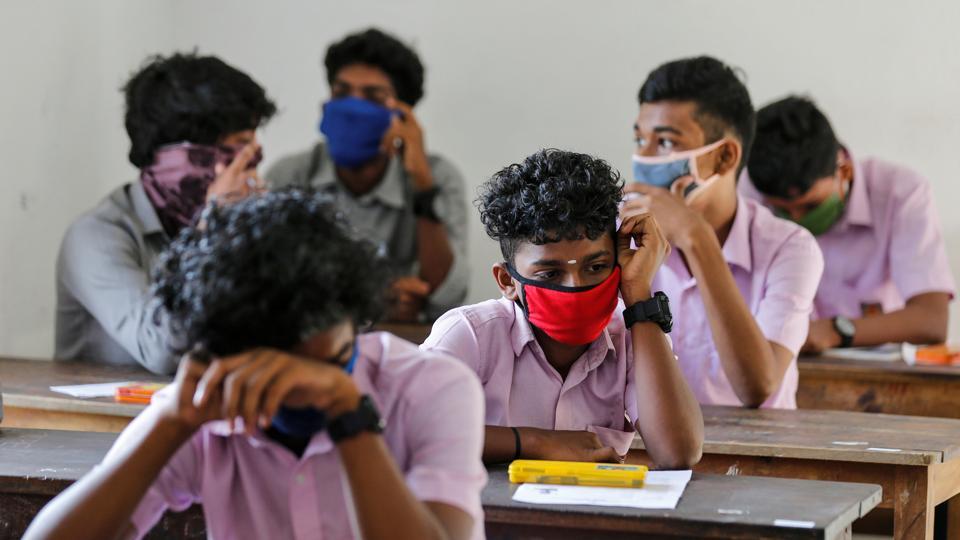
A face mask worn before symptoms started was 79% effective at stopping the virus from infecting others, but masks offered no protection if used after symptoms had appeared, according to a peer-reviewed observational study of Chinese families in Beijing, accepted for publication in BMJ Global Health, an online journal. Disinfection was 77% effective in preventing transmission, the study found.
Close daily contact, such as eating meals at a table or watching TV together raised chances of others getting infected 18-fold while diarrhoea as a symptom in patient zero quadrupled infection risk, showed the review of behavioural and hygiene factors in the home environment.
“Airborne infection is the main source of infection, the best way to stop the spread of infection is for the sick person to wear a mask. But with around 80% people being asymptomatic or having mild disease, wearing a mask in areas where Covid-19 prevalence is high can help prevent transmission of infection,” said Dr GC Khilnani, chairman of PSRI Institute of Pulmonary and Critical Care and a member of the Delhi chief minister’s advisory committee on Covid-19 preparedness.
According to the US Centers of Disease Control’s latest update, Covid-19 primarily spreads between people in close contact through respiratory droplets produced when an infected person coughs, sneezes, or talks are inhaled.
“Infection can also spread if an infected person contaminates a surface or object, which is then touched by others who then touch their own mouth, nose, or eyes, but this is not the main source of infection,” said Dr Khilnani.
Studies from China show that most of the person-to-person transmission of Sars-CoV-2, the coronavirus that causes Covid-19, happens within families. To understand how effective face masks are in preventing infection, the researchers questioned 460 people from 124 families with at least one Covid-19 patient in Beijing about their household hygiene and behaviour during the pandemic. The average family size was four, but ranged from two to nine, and comprised three generations in most homes.
The study tracked infections from the incubation period of 14 days from the start of patient zero’s symptoms and found secondary infections in 41 families, where 77 adults and children were infected. Infection occurred in 36% (13 out of 36) children, compared to 69.5% (64 out of 92) adults. Twelve children had mild symptoms, one had none. Most (83%) adults had mild symptoms, with symptoms being severe in around one in 10 people. One adult became critically ill.
Daily use of disinfectants, opening widows for ventilation and keeping at least one metre apart were associated with a lower risk of spreading infection even in crowded homes, while daily contact raised risk, the study found.
The findings back universal face mask use, not just in public spaces, but also at home, especially for families living with someone in quarantine, and for the families of health workers who have high risk of infection. “Masks also serve the purpose of reminding others to continue practicing physical distancing,” said Dr Khilnani.
“Household transmission is a major driver of epidemic growth...This study confirms the highest risk of household transmission being prior to symptom onset, but that precautionary [non-pharmaceutical interventions], such as mask use, disinfection and social distancing in households can prevent COVID-19 transmission during the pandemic, independent of household size or crowding,” concluded the study.
How coronavirus spreads
Sars-CoV2 spreads very easily and sustainably between people.
Spreads more efficiently than influenza but not as efficiently as measles.
It spreads between people in close contact (within 2 metres).
People get infected by inhaling respiratory droplets produced when an infected person coughs, sneezes, or talks.
People without symptoms also infect others.
Covid-19 can also spread by people touching a surface or object contaminated with the virus and then touching their own mouth, nose, or eyes, but this is not thought to be the main way the virus spreads.
Source: US Centers for Disease Control & Prevention


