The short answer is, it has passed on the baton to the private sector, which the government believes is already on the job. “Now that the private investments are happening at scale, the lower borrowings by the central government will facilitate larger availability of credit for the private sector,” the finance minister said in her speech.
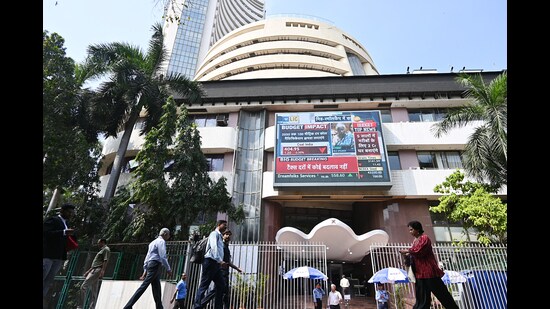
The confidence on this front comes from the fact that the Indian economy is expected to grow at an impressive 7.3% in 2023-24 and economic conditions for private investment, and therefore future growth, are likely to improve further on account of various favourable factors aligning. The Reserve Bank of India is expected to begin cutting interest rates in the next fiscal which will bring down borrowing costs. Bank recapitalisation has restored the health of bank balance sheets which will boost supply of credit. Deleveraging of corporate balance sheets and easing global commodity prices have boosted profitability and created private sector appetite for investment. Last but not the least, growing confidence (as seen in the January update to the IMF’s World Economic Outlook) about the global economy’s soft landing is making global economic prospects slightly better than what they were even a couple of months ago.
While the budget might not have expressed it explicitly, a document released by the chief economic adviser’s (CEA) office on Tuesday clearly expresses the bullish sentiment within the government about the Indian economy’s future growth prospects. “It is eminently possible for the Indian economy to grow in the coming years at a rate above 7% on the strength of the financial sector and other recent and future structural reforms”, the document said, adding, “under a reasonable set of assumptions with respect to the inflation differentials and the exchange rate, India can aspire to become a $7 trillion economy in the next six to seven years (by 2030).”
{{/usCountry}}While the budget might not have expressed it explicitly, a document released by the chief economic adviser’s (CEA) office on Tuesday clearly expresses the bullish sentiment within the government about the Indian economy’s future growth prospects. “It is eminently possible for the Indian economy to grow in the coming years at a rate above 7% on the strength of the financial sector and other recent and future structural reforms”, the document said, adding, “under a reasonable set of assumptions with respect to the inflation differentials and the exchange rate, India can aspire to become a $7 trillion economy in the next six to seven years (by 2030).”
{{/usCountry}}To be sure, the budget also shows that the government will continue to pitch in where it is needed. The fact that the share of capital spending by the central government in GDP has increased by 20 basis points – one basis point is one hundredth of a percentage point – to 3.4% shows that it will continue to boost infrastructure from the supply side. The share of central government capex in GDP has increased from 1.7% (2019-20) to 3.4% (2024-25) under the second Narendra Modi government. Talk of subsidising rooftop solar panels for 10 million households -- this is expected to reduce their power bill and also generate surplus electricity which can be sold to discoms -- and providing viability gap funding for projects such as offshoring wind energy shows that the government’s capex focus is also targeted at harvesting synergies with both households and corporates in the economy for creating critical productive infrastructure. The talk of mandated blending of biogas with piped natural gas makes a similar effort in building an organic link between India’s overwhelmingly rural livestock economy and its energy economy. While it remains to be seen whether such initiatives reach a critical scale, they are welcome ideas.
Will all these yield results for India’s medium-term growth? Can we take a sustained 7% growth trajectory for granted? The answer to this question depends on where one stands in the supply side and demand side debate in economics. This government in its decade in office has established itself as a committed supply side manager of the economy where the government’s job is to provide critical infrastructure while making sure that there is no acute distress among the poor. The approach has worked well for infrastructure creation and boosted the political fortunes of the government, but the evidence on a sustained private demand revival is still far from conclusive.
Consumer confidence data shows a large asymmetry in sentiment among the rich and the poor with the latter being largely pessimistic. The private consumption engine of the economy is still underperforming despite headline GDP growth doing very well. There is good reason to believe that improvement in headline labour market numbers such as fall in unemployment rate despite a rising labour force participation rate hide a growth in unpaid employment. More importantly, learning indicators such as those highlighted by the Aser report show that India’s young suffer from crippling learning deficiencies and is ill-equipped to partake in the dynamism of a modern knowledge economy which the government wants India to become. Solving these challenges will require short-term and medium-term investment in supporting incomes of the poor and increasing state spending in the education sector. While there are genuine concerns of fiscal capacity to take up this task, resource deficiencies persist.
Does this mean that the government’s hopes of a private investment-led revival in growth are misplaced? Not necessarily. Even though a minority in terms of people employed, there is a large modern (or organised) sector in the Indian economy which is at the cusp of harvesting the economic tailwinds which the government and many independent experts believe exist at the moment. This government’s growth strategy seems to be one where it has decided on facilitating this limited but far from insignificant growth potential, which it believes will kick-start a virtuous cycle while guarding against fiscal slippage. Its political ability to do so is contingent on factors outside the realm of the economic.