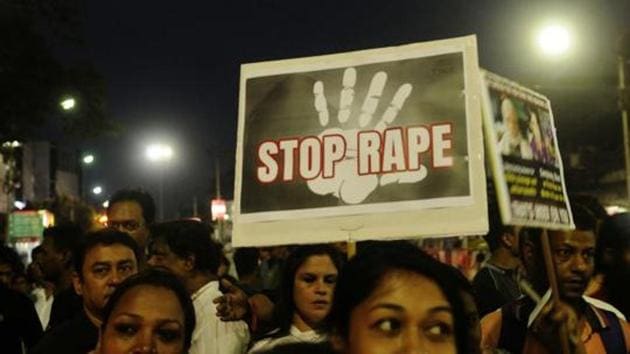
In the aftermath of the rape and murder of an eight-year-old in Jammu’s Kathua district and the gang-rape of a 16-year-old in Uttar Pradesh’s Unnao, the government on April 21 approved an ordinance to amend laws to award the death penalty to anyone found guilty of raping a girl below the age of 12. The Centre is also considering a similar amendment for sexual assaults against boys below 12.
Children are not just vulnerable to sexual offences committed by adults, but by children too. The matter came into sharp focus in 2012, when one of the accused in the Delhi gang rape was a 17-year-old. Until then, the maximum punishment that could be awarded to juveniles was three years of detention in a remand home irrespective of the crime.
The Juvenile Justice (Care and Protection of Children) Act, 2015, was amended to allow 16-18-year-olds to be tried as adults for heinous crimes such as rape and murder.
Punitive laws aside, we need to ask why these crimes are taking place.
Experts, including Enakshi Ganguly, co-director of Delhi-based non-governmental organisation HAQ: Centre for Child Rights point out that sexual offences by young people should be seen within the context of an increase in sexual crimes committed as a whole in society.
{{/usCountry}}Experts, including Enakshi Ganguly, co-director of Delhi-based non-governmental organisation HAQ: Centre for Child Rights point out that sexual offences by young people should be seen within the context of an increase in sexual crimes committed as a whole in society.
{{/usCountry}}An analysis of offences committed by juveniles in the past four months reveals that many of the accused have easy access to mobile phones and know their victims. In Bharatpur, a 14-year-old allegedly raped a five-year-old. His father blames the “video clips on his mobile phone” that he watched with his friends. In Assam’s Nagaon, a 12-year-old girl was raped and set ablaze by three youths, including two minors one of whom was her cousin.
“It is important to locate this in the fast changing environment children are growing up in. One example is of children recognising their sexuality earlier because of so much exposure to information, whether to the internet or through cellphone, which everyone has now. But society as a whole needs to talk to children on how to use these tools and process the information they receive. So then, when they behave inappropriately, how can we lay the whole blame on them?” asked Ganguly.
Sexual offences by and against children do not occur in a vacuum.
There is little conversation about sexuality within homes and schools, but the media is rife with sexualised imagery that dehumanises women and places unfair expectations of machismo among men. All forms of sexual experience between adolescents are criminalised.
Thus, a number of those apprehended under Protection of Children from Sexual Offences Act (POCSO) are in consensual relationships with other older adolescents.
“Nobody is talking to young people to figure out what’s happening in their lives. By reporting only on crimes committed by children, that too of only a particular class, we’re creating a fear of young boys and by this we only end up alienating them,” Ganguly added.
This should give us pause to think about how our silence about all things sexual with adolescents will only increase the next victim’s — and accused’s — vulnerability.