A slow trickling stream in what once used to be a raging torrent during the monsoon months is what first prompted puzzlement among those living in the villages of the Sattari taluka located along the lower reaches of the Western Ghats along the Goa border with Karnataka.
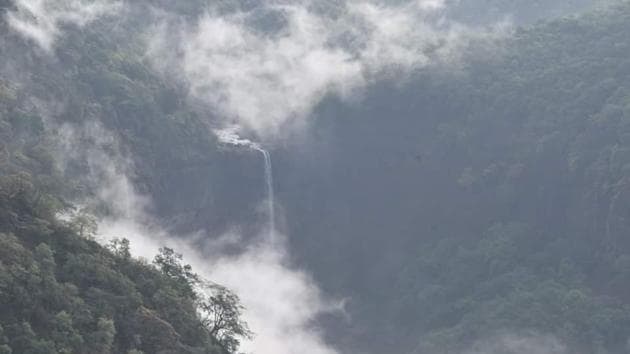
In the village of Surla, the last frontier of Goa located at an elevation of 800 metres on a small plateau atop the Western Ghats the onset of the monsoon used to be a time of roaring waterfalls, fast flowing streams and living amid the clouds as they crash against the Sahyadris.
What makes the village famous is the ‘Ladkyacho Vozar’ sometimes referred to only as the Surla waterfalls as the Mahadayi River comes crashing down the steep cliffs of the Western Ghats and into Goa.
But this year was different.
“This year the river has been reduced to a trickle. There was diversion earlier too but it was not in as much quantity. This year the water has been reduced to a trickle,” Rajendra Kerkar an environmentalist who hails from the village Keri in Sattari and has been an active member of the Mhadei Bachao Andolan, a group of citizens and activists that was formed to lobby for Goa’s share of the Mhadei waters.
Photographs from the site show that Karnataka has completed the digging of trenches and now water that would otherwise flow through the Mhadei now flow eastwards and into the east flowing Malaprabha river in Karnataka rather than westwards into Goa from the point of diversion.
{{/usCountry}}Photographs from the site show that Karnataka has completed the digging of trenches and now water that would otherwise flow through the Mhadei now flow eastwards and into the east flowing Malaprabha river in Karnataka rather than westwards into Goa from the point of diversion.
{{/usCountry}}“They (Karnataka) have been doing work of building canals earlier too, but water has not been diverted like it has been this year,” Kerkar said.
Three streams -- the Kalasa, Bhandura and Haltara and make up the source of the River Mahadayi in Karnataka that flows into Goa as the River Mandovi meets the sea at the state capital Panaji.
The Bhandura stream, the biggest of the three originates at a village in Degaon in Karnataka along with the Kalasa stream and the two along with other smaller streams meet to form the Mahadayi which then flows into Goa. The Haltara also begins in Karnataka but takes another route flowing through Maharashtra and into Goa meeting the river further downstream in Goa.
The Goa government has now filed a plea alleging that Karnataka has begun diverting water from the river in violation of the orders of the Tribunal which has decreed that no work or diversion can begin until fresh project reports are prepared based on the award adjudicated by the Mhadei Water Disputes Tribunal and all the necessary permissions are obtained.
“The Tribunal has passed its order even though the award has been notified and in its order it has said that until all permissions are obtained, no diversion can be done. Karnataka does not have any permissions from the forest or wildlife authorities,” Goa’s Advocate General Devidas Pangam told HT.
“They have been building the canals for the last several years, it is unclear whether they have sped up the work this year,” he added.
The Goa government has filed a separate plea before the Supreme Court challenging the water sharing award that was issued by the Tribunal.
Controversy over the sharing of the water of the Mhadei or Mandovi River (as it is called in Goa) between the states of Maharashtra, Karnataka and Goa is more than 30 years old. Attempts for negotiations have been initiated by the central government as far back as 1985.
The water sharing issue appears to have reached a flashpoint in 2002, when the Karnataka government decided to implement the inter-connecting canal from Kalasa stream to Malaprabha river for diversion of waters of Mahadayi basin to Malaprabha basin.
The Malaprabhha river also begins in the Western Ghats not far from where the Mahadayi begins but flows eastwards.
In its verdict passed in 2018, the Tribunal awarded Karnataka 3.45 TMC (thousand million cubic feet) from their total claims of 7.56 TMC. According to the breakup, Karnataka has been allowed to divert 1.18 TMC from the Kalasa Nala and 2.27 TMC from the Banduri Nala from their claims of 3.56 and 4 TMC respectively. The award is yet to be notified by the central government and all states -- Maharashtra, Karnataka and Goa -- have challenged various portions of the award before the Supreme Court. Goa is opposed to any diversion claiming that the Mhadei is itself a water deficit basin and that the tribunal has incorrectly calculated the total yield of the River.
Goa has claimed irreparable damage on account of the illegal diversion and has sought before the Supreme Court that Karnataka be directed “to take remedial and curative actions to make good the loss of water to the state of Goa pursuant to their acts of diversion and to further restore the natural flow of the Mhadei river towards the state of Goa.”
Karnataka has, however, denied Goa’s claims. Karnataka’s water resources minister Ramesh Jarkhiholi while speaking to media persons in Belgaum in North Karnataka said that Karnataka had done “nothing illegal”.