A Dalit scholar at the University of Hyderabad killed himself on Sunday night, nearly two weeks after he and four other students were suspended by authorities and thrown out of the hostel, triggering charges of casteism. The students were on a protest strike in front of the hostel since the expulsion that followed an argument and scuffle between members of some campus groups and the Akhil Bharatiya Vidyarthi Parishad.
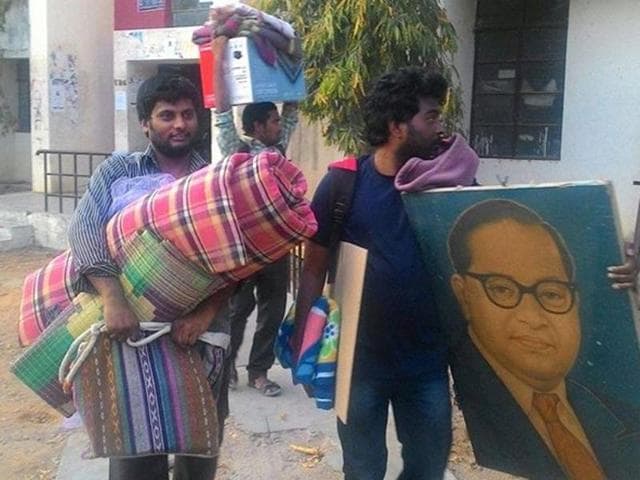
That strike has now erupted in violent protests across the campus, with an outpouring of grief and rage across universities and social media.
The suspension, the ensuing strike and now, the suicide, has been met with a mixture of apathy and silence. Few outlets reported Rohith Vemula’s suicide on a day Delhi chief minister Arvind Kejriwal got ink hurled at him, but the scant coverage still exposed the macabre face of caste that is the daily reality of millions across the country.
Most of us think of caste oppression through the lens of the “outdated” practice of untouchability, violent caste clashes in the distant countryside and in lavish biopics on the silver screen.
But caste is alive in our homes and streets, simmering just underneath the surface of our glitzy malls, in our schools and colleges, in our glass-and-steel workplaces and inside our gentrified gated colonies. It is alive in who we marry and fall in love with, in who we talk to and befriend, in who we employ and who we mourn.
{{/usCountry}}But caste is alive in our homes and streets, simmering just underneath the surface of our glitzy malls, in our schools and colleges, in our glass-and-steel workplaces and inside our gentrified gated colonies. It is alive in who we marry and fall in love with, in who we talk to and befriend, in who we employ and who we mourn.
{{/usCountry}}I presents itself in its most terrifying form in the academia. The erasure of Dalit and Bahujan icons starts right from the primary and middle class textbooks that are replete with references to upper caste leaders and reformers -- think Gandhi, Rammohun Roy, Vidyasagar, Tilak -- but omits anyone else.
Lower-caste students are forced to wear colour-coded bands, made to sit on the floor, served mid-day meals separately, and often bear the brunt of teacher insults. In state after state, studies have shown the drop out rate of Dalit children is way higher than their proportion of the population.
If somehow, they survive schools, the very system of affirmative action designed to work for the benefit of lower-caste students, works against them. Students availing reservation are marked for humiliation in even elite universities and institutes, and with inadequate academic support and a hostile administration, many quota students fail, and some kill themselves.
The caste system has always operated on monopoly of opportunity and knowledge, violently suppressing any attempt to access by lower-caste people over the centuries -- remember the traditional practice of pouring molten lead down the throat of any Dalit person trying to learn Sanskrit. That caste privilege has transformed itself into modern capital today, but the original structure still stands.
That is why any conversation around caste in our colleges end up centreing around reservations, and the response is always to frame quota students as “less intelligent”, “less worthy” -- carrying on the same project of dehumanising lower-caste lives started a millenia ago.
The death of Rohith Vemula has be easily framed as Left vs Right debate, added to the annals of the intolerance debate. But a far-more worthy response would be to start a conversation around the caste discrimination that surrounds us, in the monopolisation of academic spaces, teaching positions and fellowships by upper-caste scholars, in the violence that starts at the anganwadi. Honouring the life of a young student murdered by an oppressive system should mean no less.
The author tweets as @dhrubo127. Views expressed are personal.