As the world’s nations come together to sign the historic Paris climate change agreement at the UN on Friday, India has said that going forward both developed and developing nations will be “tested” on how they “walk the talk” on cutting emissions and eradicate poverty.
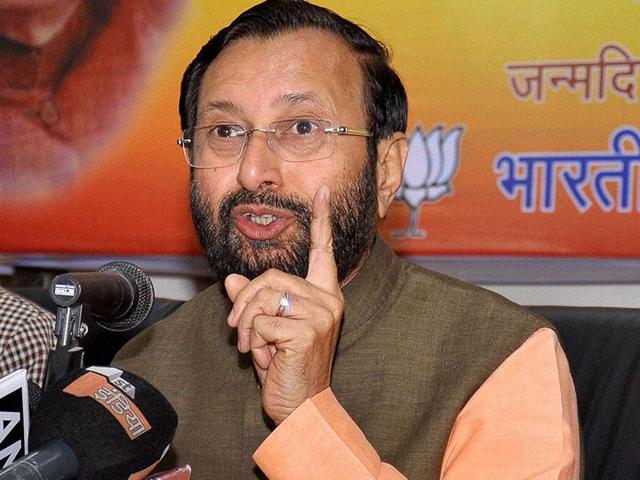
“Developed world will be tested whether it is adopting sustainable consumption in their own countries and provide means of implementation to developing countries or not,” environment minister Prakash Javadekar said at a session on sustainable development at the UN on Thursday.
He added that developing countries too would be tested for planning comprehensively for achieving the Sustainable Development Goals and utilising properly the funds provided to them by the developed world.
“Both groupings will be tested on how they walk the talk and eradicate poverty,” he said.
Javadekar added that as mandated by the 2030 Agenda, the processes for follow up and review must remain voluntary, country-led and should reinforce mutual learning and exchange of best practices.
“The purpose of the review mechanism must be to enhance the implementation of the agenda on the ground and to this extent ensure the provision of enhanced level of financial and technological support to developing countries,” he said.
He stressed that the SDGs will have “very significant” resource implications and the world will require a total investment of $5-7 trillion per year while the developing countries’ need alone could be around $3-9 trillion per year.
{{/usCountry}}He stressed that the SDGs will have “very significant” resource implications and the world will require a total investment of $5-7 trillion per year while the developing countries’ need alone could be around $3-9 trillion per year.
{{/usCountry}}He said according to preliminary estimates for India, the country’s financial requirement is pegged at $500 billion per annum for the next 15 years for food security, infrastructure, climate change, mitigation, adaption, health and education.
More than 165 countries will sign the climate change agreement at the signature ceremony hosted by UN Secretary-General Ban Ki-moon. All of the world’s largest economies, and the largest greenhouse gas emitters, have indicated that they will sign the agreement on Friday.
The signing is the first step toward ensuring that the agreement enters into force as soon as possible.
After signing, countries must take the further national (or domestic) step of accepting or ratifying the agreement.
The agreement can enter into force 30 days after at least 55 Parties to the UN Framework Convention on Climate Change (UNFCCC), accounting for at least 55% of global emissions, ratify the agreement.
There are 13 countries, mostly Small Island Developing States, that are expected to deposit their instruments of ratification immediately after signing the agreement.