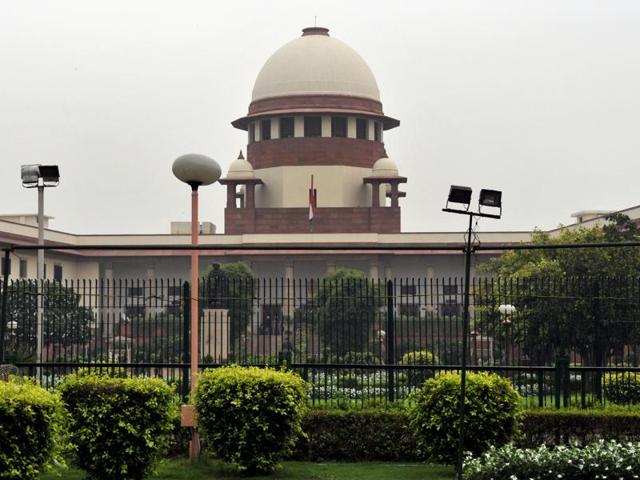
The Supreme Court prodding the Central government to take a quick decision on the uniform civil code to end the confusion over personal laws has triggered a fresh debate over the directive principles of state policy.
Article 44 that talks about uniform civil code falls in Part-IV of the Constitution that deals with the directive principles of state policy — borrowed from the Irish Constitution. Though non-enforceable by any court, the Indian State is duty-bound to apply these principles while enacting laws.
This is not for the first time that the Supreme Court has talked about implementing the directive principles of state policy which are considered to be fundamental in the governance of the country.
“A common civil code will help the cause of national integration by removing disparate loyalties to law which have conflicting ideologies,” then chief justice of India YV Chandrachud had said in the Shah Bano case in 1985.
Often termed as the conscience of the Constitution, these principles were initially ignored by the Supreme Court while interpreting various socio-economic rights. It was only after the landmark verdict in the Keshavananda Bharati’s case in 1973 that the top court said that directive principles must be viewed as the guidelines by which the fundamental rights are realised.
“The Indian Constitution is founded on the bedrock of the balance between Part-III (Fundamental Rights) and Part-IV (Directive Principles of State Policy). To give absolute primacy to one over the other is to disturb the harmony of the Constitution. This harmony and balance is an essential feature of the basic structure of the Constitution,” said Justice PN Bhagwati in the 1980 Minerva Mills case.
{{/usCountry}}“The Indian Constitution is founded on the bedrock of the balance between Part-III (Fundamental Rights) and Part-IV (Directive Principles of State Policy). To give absolute primacy to one over the other is to disturb the harmony of the Constitution. This harmony and balance is an essential feature of the basic structure of the Constitution,” said Justice PN Bhagwati in the 1980 Minerva Mills case.
{{/usCountry}}Even state laws banning cow slaughter draw sustenance from Article 48 which prohibits the killing of cows, calves and other milch and draught cattle.
Over the years, the SC has incorporated them into its judgments. Much before Parliament enacted right to education law, the top court declared right to education— a part of the directive principles — a fundamental right under Article 21, i.e. right to life, says former SC judge AK Patnaik.
How important are the directive principles of state policy?
According to former law minister and senior advocate Shanti Bhushan: “They tell you the direction which all authorities – the legislature, the executive and the judiciary -- have to follow. Courts are supposed to interpret various laws in such a manner that they are in tune with the directive principles of state policy.”
But unfortunately, Parliament and state legislatures are not concerned about giving effect to the directive principles, says justice Patnaik.