
 E-Paper



India ‘confident’ of reducing intensity of carbon emissions by 35%
India has unveiled an action plan to reduce the intensity of its carbon emissions by more than a third by 2030, with environment minister Prakash Javadekar saying on Friday the government is confident of meeting the ambitious target.

 Prefer HTon Google


India has unveiled an action plan to reduce the intensity of its carbon emissions by more than a third by 2030, with environment minister Prakash Javadekar saying on Friday the government is confident of meeting the ambitious target.
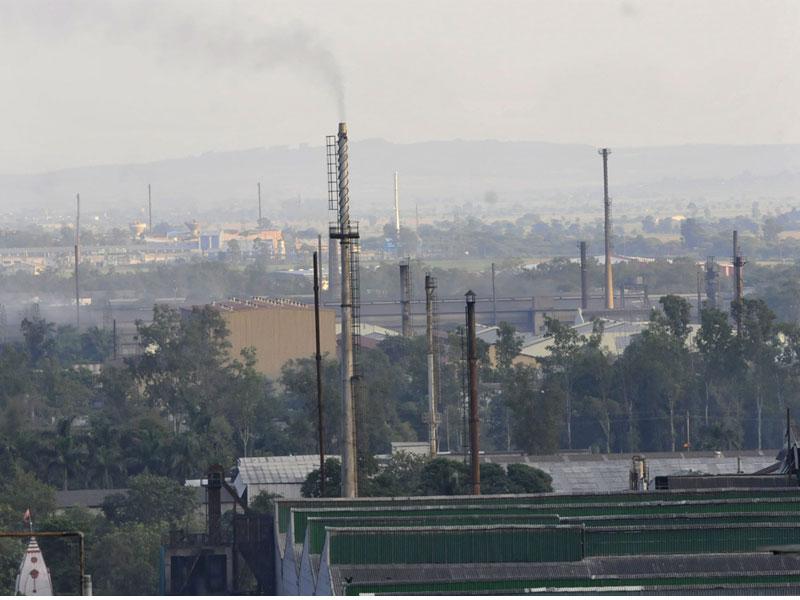
As part of its efforts to counter climate change, the world’s third-largest carbon polluter will cut the intensity of carbon emissions by up to 35% and increase the share of non-fossil fuel based energy sources to 40% by 2030. This will be done at a whopping cost of $2.6 trillion.
India is “confident” it can reduce its emissions intensity – the ratio of a country’s carbon emissions to its economic output – by 2030, Javadekar told a news conference.
As the last major economy to submit a target for a global climate pact that is expected to be adopted at a December conference in Paris, India filed its action plan to the Germany-based UN climate secretariat late on Thursday.
“It is a huge jump for India, therefore, it is a very ambitious target,” Javadekar said.
“We are much too dependent on fossil fuels now,” he said, describing the new goals as “comprehensive, ambitious and progressive”.
Javadekar said India held back its action plan so it could coordinate its filing with the holiday celebrating Mahatma Gandhi’s birth anniversary. “Our every action will be cleaner from here on until 2030,” he said.
As reported by Hindustan Times on September 24, the Intended Nationally Determined Contributions (INDCs) include enhancing the emission intensity reduction target first submitted to the Copenhagen climate summit of 2009, an intention to give a fillip to renewable energy, including hydropower and nuclear energy, and achieving efficiency through different mechanisms.
While there is no specific renewable energy target for 2030, India has reiterated its promise of creating the capacity to generate 175 gigawatts by 2022. The INDCs also talk about creating an additional carbon sink of 2.5 billion tonnes to 3 billion tonnes of CO2 equivalent through additional forest and tree cover by 2030.
The INDCs mention India reserves the right to make additional submissions that ensure room for upgrading and reviewing targets before an entry into force of the climate change agreement, as well as subsequent to the five-year review. India also said meeting the targets is subject to rich countries providing funds and affordable technology.
India’s INDCs are in line with those for most of the developing world and more ambitious on renewable energy than China, which set a target of generating 20% of its energy from non-fossil bases by 2030.
New Delhi, however, is not prepared to go as far as Beijing, the world’s biggest emitter, on the issue of carbon intensity. China pledged at the end of June to reduce carbon intensity by 60% to 65% by 2030, partly through the use of carbon trading. China also said it will bring its absolute emissions to a peak by “around 2030”.
However, the climate action plans of some developing countries such as South Africa, Brazil, Mexico and Indonesia are more ambitious than India’s.
India’s 38-page submission quotes Mahatma Gandhi as saying that people are “trustees” of natural resources and starts with a Sanskrit verse from the Yajurveda that states: “Unto Heaven be Peace, Unto the Sky and the Earth be Peace, Peace be unto the Water, Unto the Herbs and Trees be Peace.”
The INDCs, one of the most comprehensive pledges submitted by any country, raise the lifestyle debate in the context of climate change, saying per capita emissions of Indians are estimated to be just 1.56 metric tonnes in 2020, as compared to the global average of 7.5 metric tonnes.
“This is because Indians believe in nature-friendly lifestyle and practices rather than its exploitation,” said India, adding that resource-rich nations should provide funds to developing countries to improve their Human Development Index (HDI).
The document further said: “It may also be noted that no country in the world has been able to achieve a Human Development Index of 0.9 or more without an annual energy availability of at least 4 toe (tonnes of oil equivalent) per capita.”
India has given a detailed explanation on its national circumstances that differentiate it from other developing countries. It said 40% of its population will be in cities by 2030 – a 10 percentage point jump that will lead to major investment in energy and transport.
It also detailed the actions taken under different missions as part of the National Action Plan for Climate Change and listed over a dozen schemes of the government, including smart cities and Swachch Bharat campaign.
India’s submission quoted Prime Minister Narendra Modi’s speech at the Sustainable Development Goals summit in New York to say that India wants a global partnership to harness technology, innovation and finance to provide clean and renewable energy to all.
“Equally, we must look for changes in our lifestyles that would make us less dependent on energy and more sustainable in our consumption. It is equally critical to launch a global education programme that prepares our next generation to protect and conserve,” Modi was quoted as saying in the INDCs.


