External affairs minister Sushma Swaraj’s two-day visit to Israel from January 17 is expected to give a boost to burgeoning cooperation in areas as diverse as counter-terrorism and water management.
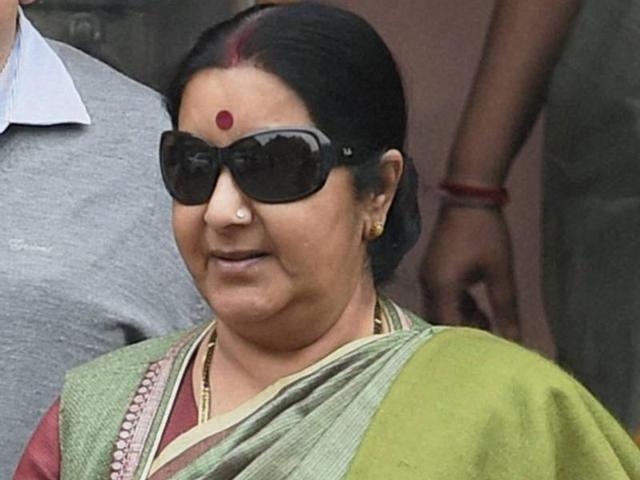
Swaraj’s visit also reflects India’s traditional balancing act between Palestine and Israel. She will first travel to Ramallah for talks with the Palestinian leadership before heading to Israel for her two-day visit.
Though India established diplomatic relations with Israel 24 years ago, things remained firmly in the closet for almost a decade. The first visit by an Indian foreign minister to Israel took place in 2000 under the first NDA government, when Jaswant Singh’s trip led to the formation of a joint anti-terror commission.
For a long time, security and defence cooperation has underpinned the bilateral relationship – India has emerged the largest buyer of Israeli military hardware and only Russia supplies more defence equipment to India than Israel.
BJP-led governments have had fewer reasons to be cautious about the relationship with Israel and Swaraj’s visit is expected to pave the way for a trip by Prime Minister Narendra Modi – the first such visit by an Indian premier.
Israel is rolling out the red carpet for Swaraj, who is no stranger to the country. She visited Israel in 2008 as chairperson of the Indo-Israel Parliamentary Friendship Group.
{{/usCountry}}Israel is rolling out the red carpet for Swaraj, who is no stranger to the country. She visited Israel in 2008 as chairperson of the Indo-Israel Parliamentary Friendship Group.
{{/usCountry}}During the current trip, she will meet President Reuven Rivlin, Prime Minister Benjamin Netanyahu, defence minister Moshe Ya’alon, national infrastructure minister Yuval Steinitz and members of the Jewish-Indian community.
Israeli ambassador Daniel Carmon said this week the greater visibility of the bilateral relationship was no longer “ceremonial” and the two sides are working closely on “similar challenges and joint interests”.
Defence continues to be a “central pillar” of the bilateral relationship – Indian and Israeli warships successfully tested the jointly developed Barak long-range surface-to-air missile system during November-December, which will now serve as a missile defence shield for warships and key facilities such as offshore oil platforms.
But Israel also wants to be a key player in the “Make in India” initiative, especially in defence manufacturing through technology transfers and joint research, technology start-ups and cyber-security.
Swaraj’s visit will also provide the Israeli leadership an opportunity to brief her on the Israeli perspective on latest developments in the volatile Middle East.
Despite the growing convergence, Iran remains an area where the two sides have differing perspectives. Iran is an important source of energy supplies for India but Carmon pointed out that Iran doesn’t even recognise the existence of Israel when he was asked if New Delhi could help improve relations between the two countries.