A plant species, thought to have become extinct, has been rediscovered by scientists in the hills of Machia Biological Park in Jodhpur. The plant has been sighted after 58 years.
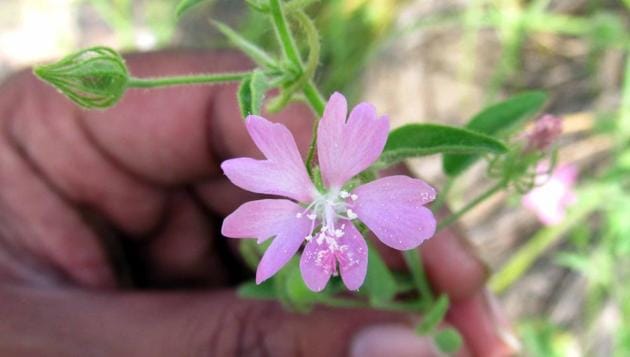
During a survey, scientists from the Arid Zone Regional Centre of Botanical Survey of India noticed at least six to seven plants of the Pavonia arabica variety (massuriensis species) in the hills of the biological park. The scientists have now asked the forest department for the conservation of the rediscovered species.
Dr MM Bhandari, from the department of botany at Jodhpur University, had first sighted the plant in Masuriya hill on August 10, 1959. The study of the plant had revealed that it’s a new species. Dr Bhandari had named the plant Pavonia arabica variety massuriensis. The plant also finds a mention in his book ‘Flora of the Indian Desert’.
Scientists of Botanical Survey of India (BSI) had carried out an intensive survey in the Masuriya hill for the rediscovery of the plant, but it was not visible. After scientists failed to sight the plant for a long time they assumed that it had gone extinct.
Recently, a team of scientists from BSI, comprising Dr Chandan Singh Purohit, Dr Ramesh Kumar and Vinod Maina, surveyed the flora in the hills of Machia Biological Park, about two kilometres from the Masuriya hill. During the survey, the team noticed six to seven plants of the massuriensis variety on the hill.
{{/usCountry}}Recently, a team of scientists from BSI, comprising Dr Chandan Singh Purohit, Dr Ramesh Kumar and Vinod Maina, surveyed the flora in the hills of Machia Biological Park, about two kilometres from the Masuriya hill. During the survey, the team noticed six to seven plants of the massuriensis variety on the hill.
{{/usCountry}}“Across the globe, the plant species naturally occurs only in the Masuriya hill of Jodhpur,” said Dr Purohit adding that the plant species falls under the rare category.
The species is generally found in stony and hilly areas, where there is scanty rainfall and sprouts naturally. Other plants like Kumat, Bhurat, Hul – Hul, Gagren, Ber, Shankhpushpi, Dhaman etc are generally found around the rediscovered species.
“The massuriensis variety had died because of encroachment, air pollution, human interference, road and house constructions at the bottom line of Masuriya hill,” said Dr Purohit.
“Scarcity of water is likely to hinder pollination of the plants. New plants could not grow due to lack of insects and the plants that were alive could not thrive due to climate change,” added Dr Purohit.