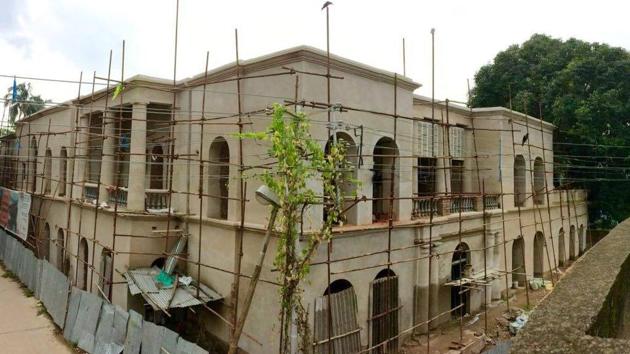
A 235-year-old Danish tavern and hotel in Serampore, a former colony of Denmark in West Bengal, has been resurrected from the ruins and is now set for rebirth as a riverside cafe. It will also have a bakery, handicrafts shop and lodging facilities and will be inaugurated early next year.
A Danish colony flourished by the river Hooghly between 1755 and 1845, when Denmark handed it over to the British. The location was Serampore, about 25km from Kolkata and on the western banks of the Hooghly. The town was then known as Fredericksnagore.
Apart from the tavern, the St Olav’s church in the same town has also been renovated with Danish help.
The cafeteria will be able to accommodate about 60-70 people. Of the six rooms, three will be river-view ‘heritage rooms’. “We are trying to throw it open preferably by the end of this year. The lodging facilities may be run by the West Bengal Tourism Development Corporation,” Hooghly district magistrate Sanjay Bansal told HT.
Known as Denmark Tavern, the original look has been restored to this two-storied building. Bente Wolff, curator of Danish National Museum, told HT earlier that they used sketches nearly 200 year old to arrive at the correct frontal view.
{{/usCountry}}Known as Denmark Tavern, the original look has been restored to this two-storied building. Bente Wolff, curator of Danish National Museum, told HT earlier that they used sketches nearly 200 year old to arrive at the correct frontal view.
{{/usCountry}}“Restoration work has reached the final stages. We’re now working on interior design,” Manish Chakraborty, conservation architect who is heading restoration, said on Wednesday.
“This tavern constituted the historic core of Danish Serampore,” Chakraborty added.
The building was lying dilapidated when restoration work started on October 6, 2015.
During her previous visit to Bengal for inspection of the project, Wolff said that people from Kolkata, especially the Europeans, used to visit the place for hanging out and playing billiards. They especially enjoyed the cool breeze by the river.
“We had 20,000 pages of Danish documents in our archives, written in Danish language, from which we got to know many things about this tavern. These helped us know how it looked like,” she had told HT. “It housed a cafe, restaurant and pub.”
The project entailed an expenditure of Rs 4.5 crore, of which Rs 3 crore was provided by the Danish museum authorities. The state government footed the rest of the bill.
Apart from the Danes and state government, West Bengal heritage commission is also involved in the project.