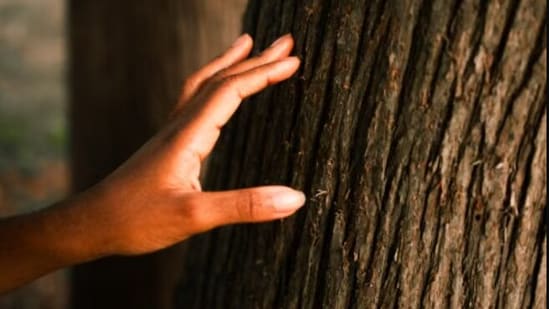
Have you ever mentioned something going well and immediately added “touch wood” to avoid jinxing it? Whether it is hoping to stay healthy, wishing for continued success, or simply trying to keep bad luck away, touching a wooden surface has become a familiar everyday habit. But have you ever wondered where this curious superstition came from? Let's find out how the expression became part of everyday language. (Also read: Everyday explained: Why do jeans have a leather patch on the back? The history behind denim’s iconic detail )
What does ‘touch wood’ actually mean?
The phrase “touch wood” is commonly used after making a hopeful or confident statement, particularly when someone wants to avoid tempting fate. For instance, a person might say, “I haven't fallen ill this year, touch wood,” while tapping a nearby wooden surface.
In the United States, the more commonly used expression is “knock on wood”. Both phrases carry essentially the same meaning: a symbolic gesture intended to protect good fortune or prevent something positive from changing.
According to the language-history website World Wide Words, the expression is used as a superstitious action to ward off possible bad luck or preserve good fortune.
Did the tradition come from ancient tree spirits?
One popular explanation traces the practice to ancient pagan beliefs that spirits or gods lived in trees. Certain trees, including oak, ash and hawthorn, held symbolic or sacred significance in different European traditions.
According to this theory, touching or knocking on a tree was a way of seeking protection, expressing gratitude for good fortune or driving away harmful spirits.
{{/usCountry}}According to this theory, touching or knocking on a tree was a way of seeking protection, expressing gratitude for good fortune or driving away harmful spirits.
{{/usCountry}}Another version suggests that knocking on wood prevented evil spirits from overhearing someone speak confidently about their good luck and potentially taking it away.
Is there a connection with Christianity?
Another explanation links the custom to the wooden cross associated with the crucifixion of Jesus Christ. According to this interpretation, touching wood symbolises seeking divine protection and keeping misfortune away.
Over time, this explanation became another way of understanding the superstition. However, there is no conclusive historical evidence establishing that the modern expression originated from this Christian practice.
The surprising theory: A 19th-century children's game
A more recent explanation comes from British folklorist Steve Roud, who suggests that the modern custom may have originated in a children's playground game called “Tiggy Touchwood”.
The game was a variation of tag in which players could avoid being caught by touching a wooden object, such as a tree or a door. The act of touching wood offered temporary protection from being tagged.
As reported by HISTORY, Roud believes this idea of protection may have carried over into the everyday superstition of saying “touch wood” to avoid bad luck.
When did people start saying ‘touch wood’?
Although the practice is often associated with ancient traditions, written references to the expression are considerably more recent.
According to World Wide Words, an early reference to the British expression “touch wood” dates to 1899, while an early example of the American phrase “knock on wood” appeared in 1905.
Other historical accounts trace the custom to earlier 19th-century usage, particularly its association with children's games. The different records highlight why it is difficult to establish one definitive starting point for the expression.
Despite having no scientific evidence that touching wood can influence future events, the habit continues to be part of everyday conversations. For many people, it is simply a light-hearted way of expressing hope, acknowledging uncertainty or avoiding the feeling of having jinxed something positive.