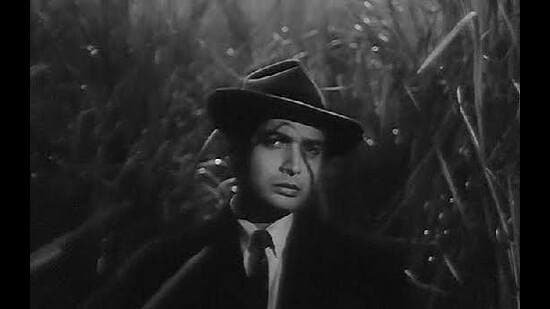
I am a sucker for detective fiction. I have all the translated works of Japanese writers Keigo Higashino and Seicho Matsumoto, hands-down my favourite authors in the genre.
I have all six books in the Hawthorne and Horowitz series (in which author Anthony Horowitz casts himself as the reluctant sidekick to a fictional detective) and his Magpie Murders novels. I have all five books in the Thursday Murder Club series by Richard Osman. You could say I’m obsessed.
Revisiting this
I am a sucker for detective fiction. I have all the translated works of Japanese writers Keigo Higashino and Seicho Matsumoto, hands-down my favourite authors in the genre.
I have all six books in the Hawthorne and Horowitz series (in which author Anthony Horowitz casts himself as the reluctant sidekick to a fictional detective) and his Magpie Murders novels. I have all five books in the Thursday Murder Club series by Richard Osman. You could say I’m obsessed.
Revisiting this precious collection recently got me thinking about early detective-fiction in Hindi. Gopalram Gahmari (1866-1946) is regarded as the first Hindi writer of “jasoosi kahaniyan”. For 38 years, he also edited a literary magazine called Jasoos, with a focus on detective fiction.
This year marks 160 years since his birth, and 80 since his death.
Reading his works is like stepping into a time machine. His stories feature babas as detectives, and characters who travel to Mughalsarai and Kashi by train, wearing elegant dhotis and mirjais, topis and pagdis.
One of my favourite stories by him is the novella Bhojpur ki Thagi, a thrilling, emotionally charged tale of a wealthy zamindar, Hira Singh, who runs a murderous gang of dacoits; and the brave Munshi Harprakash Lal who finally outwits him and brings him to justice. A subplot involves a dramatic love between Singh’s hitman Bhola and a mysterious, fiery woman named Gurji.
Much of the action occurs on boats skimming down the Ganga in the dark, or stormy, moonless nights in eerie jungles; in cavernous dungeons or in the courtyards of stately homes. There are swordfights and lathi fights; priests and dancing girls. Bhojpur ki Thagi recreates the world of rural zamindari estates, with their lust, violence, crime and intrigue.
Gahmari’s stories of Behram, a crafty thief and master of disguise, are delightful too. Behram ki Bahaduri is set on a Colombo-bound steamer and is narrated in first-person by a passenger. A police dinghy intercepts the ship and warns everyone that dangerous criminal Behram is on board, in disguise. Sure enough, money and priceless jewels start to go missing. In a satisfying twist, the culprit turns out to be the narrator himself.
TALES OF A WRITER AND A COP
Gahmari was born in a village in Ghazipur in present-day Uttar Pradesh, and died in Varanasi. He led a peripatetic life, never earning very much.
In his memoir, he wrote of how his father died when he was six months old, and his mother, who raised him with great hardship, gave him only one piece of advice: Go to bed hungry, but never get into debt. It was advice he lived by.
He also recounted, in his memoir, how some of his stories came to be.
He struck up a special friendship, he wrote, with a police inspector named Mohammed Sarvar, who was known for his scrupulous honesty. Because of how dedicated and upright he was, Gahmari once said to him: “Yaar, you will be an inspector general one day”. Sarvar laughed and replied that a Hindustani man “could never become inspector general of police”.
But Gahmari’s words proved prophetic. In 1920, Sarvar wrote to him saying he had been posted in Bhopal, at the request of the Begum Sultana Jahan, and had been elevated to that rank. He then invited Gahmari to Bhopal, saying he wanted to share with him stories of cases he had solved over 40 years. Gahmari accepted the invitation and stayed with Sarvar for a month. After the policeman’s death, he wrote fictionalised accounts of some of those tales.
It is from this sense of close observation and lived experience that his stories get some of their resonance.
Gahmari regarded literature as a chronicle of its times.
Today, his tales illuminate the forgotten world of early-20th-century North India. Though a writer of jasoosi kahaniyan, his books went far beyond that simple description.
(Email Poonam Saxena on poonamsaxena3555@ gmail.com. The views expressed are personal)
One Subscription.
Get 360° coverage—from daily headlines
to 100 year archives.
Archives
HT App & Website