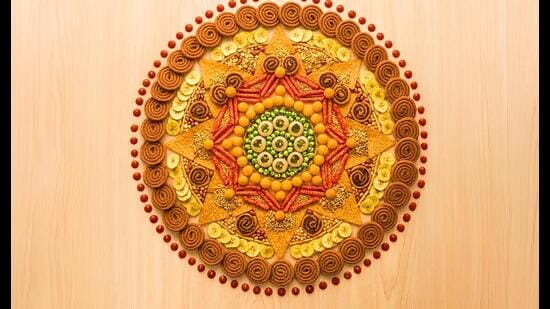
It’s not just you. Snack time is now everyone’s favourite meal of the day. Pick your fighter: ₹10 Lays Magic Masala or American blue-potato Terra crisps for ₹1,500? Buffalo jerky or pao bhaji-flavoured makhana? Tangy Blue Heat Takis or Pizza Hut-flavoured Cheetos? Air-fried bhindi crisps or Thai wasabi peas? Japanese seaweed crackers or chatpata edamame?
Even until the pandemic, snacking was largely a tea-time treat. Now, packets tear open in the middle of a long workday, on the endless commute, on S1E1 of a bingewatch, and in the void between dinner and actual sleep.
It’s a fickle market to begin with. Snacks, unlike meals, are personal, casual, fully prone to our moods and whims. But the competition is getting crunchier. See how familiar flavours and new niches fight to make it to your secret stash (Oh, everyone has one).
Rule #1: Go fun or go home
Jay Mota and Raveena Singh founded Atom Eats in 2023. Their line essentially recreates flavours that consumers remember from their travels abroad. So, brownie nachos; chocolate tiramisu pretzels; and potato chips flavoured with hot honey, salt-and-vinegar, and truffle. Because Indian snack-buyers tend to be young folks, there’s room to experiment, Singh says. “Every time we do limited-edition drops and collaborations, the response is great.”
{{/usCountry}}Jay Mota and Raveena Singh founded Atom Eats in 2023. Their line essentially recreates flavours that consumers remember from their travels abroad. So, brownie nachos; chocolate tiramisu pretzels; and potato chips flavoured with hot honey, salt-and-vinegar, and truffle. Because Indian snack-buyers tend to be young folks, there’s room to experiment, Singh says. “Every time we do limited-edition drops and collaborations, the response is great.”
{{/usCountry}}Even older brands have figured this out. Gurugram brand Om Sweets and Snacks started out in 1960 as a sweet shop, famed for dhoda barfi. It quickly expanded to selling savoury snacks and bakery products. Their packaged range includes the classics (aloo bhujia, masala boondi, mini samosas) and contemporary picks (tomato-flavoured banana chips, edamame, Thai sweet-chilli corn chips). “It is special to see grandparents, who grew up with Om Sweets, return with their grandchildren,” says Karan Kathuria, from the second generation of the family.
There’s room for big risks too. Meat-based snacks “felt like an unhinged idea at the start,” says Bharat Kaushish, who co-founded Doki Foods with Neha Gautam and Bharat Dhody in 2022. “But 70% of Indians identify as non-vegetarians. Combined with the protein wave, we felt that what we were doing made sense.” They started off by selling buffalo and chicken jerky on their socials and at food festivals. The brand now sells chicken chips in flavours such as Amritsari Achari and Tokyo Teriyaki.
Rule #2: Roll with the trends
Perhaps it’s because we were all stuck at home in the lockdowns, with little to do but snack and watch Reels, that we’re so hung up on munchies now. Nosh Gourmet Foods started importing snacks that were unavailable in India, right after the pandemic – TimTam, Chips Oman, Chester’s Fries. Founder Muskaan Chandani says their customer base has already shifted. It used to be Millennials, who viewed imported snacks as occasional indulgences. “Now it’s Gen Zs who want viral snacks such as MrBeast’s Feastables and Flamin’ Hot Cheetos”.
Pivoting quickly to an online food trend is hard enough for established manufacturers. For smaller players, it’s a different challenge: Most manufacturers don’t know how to produce innovative snacks, says Singh. Atom Eats has an idea for munchies made from rice crispies, cornflakes, chocolate and nut clusters. But Singh is struggling to find an Indian co-manufacturer with the expertise to create it. It’s why Doki invested in their own manufacturing unit early on.
Meanwhile, brands are using every packaging trick to reel buyers in. Where established brands spotlight the founder’s photo and the year of establishment, Atom Eats’s pretzels and chips packets have doodles, bright colours, and retro fonts, while the truffle-flavour chips have black-matte packaging to deliver a premium feel. “All the illustrations, sometimes including the type, were made from scratch,” says creative director Roshni Banerjee.
Doki’s products have muted palettes, with colour-coded bands – so they don’t have the dark, rugged look of protein snacks. It communicates “the premium experience, while also remaining true to our fun and vibrant side,” says Kaushish.
Rule #3: Price it right
Americans think nothing of buying 30oz (about 850g) bag of Doritos. Indian snack makers, on the other hand, harness the power of small sizes and trial packs. Even khakra, once big as a dinner plate, now also comes in palm-sized rectangles at local snack shops – just enough product for those who are curious about pizza- and Manchurian- flavoured khakra.
Atom Eats initially sold 100g packets of chocolate pretzels for ₹350. Nine months in, they repackaged to 30g packs for ₹120. “It’s also easier to finish in case you don’t like it,” says Singh.
But if you’re doing what no one else is, there’s no one to undercut. Doki’s chicken jerky, 30g, costs ₹199; the chicken chips, also 30g, are ₹100. Kaushish claims that with 15g of protein for 90 calories, the snacks are a step above “many other protein snacks that taste like chalk”. Hikers, trekkers and fitness enthusiasts – a demographic that usually vilifies snacks – are fans.
#4: Don’t stray too far
At Asian supermarkets, the product of the moment is ice-cream in Lays’ potato chips flavour. There are prawn crackers, crunchy green-pea pops, pork-belly corn balls, sweet-spicy seaweed rolls, air-popped mushrooms, spicy toasted coconut chips, and chewy bites made from the konjac tuber.
India, despite the snack boom, stays resolutely in the desi kitchen. Nielsen IQ’s Winning Flavours 2026 report shows that chaat masala, cream-and-onion, and tomato dominate the category, though Mexican salsa, peri peri, and Thai sweet chilli are gaining appeal.
So, snack makers must walk a tightrope to balance comfort and novelty. At Om Sweets, familiar Indian flavours dominate, “but convenience and variety increasingly influence purchasing decisions,” says Kathuria. They sell quinoa chips and makhana in Himalayan salt and mint flavours. Air-popped millet and brown-rice chips are in the pipeline.
“Indian consumers have always had a strong preference for bold flavours, whether spicy, tangy, chatpata or a combination of all three,” says Chandani. That helps explain demand for imported Cheetos Flamin’ Hot and Takis. Gen Z, however, is picking Korean-inspired spice, lime and guacamole.
Not every experiment succeeds. Atom Eats struggled to market its crunchy, sugar-cube-shaped cake pops in 2023. Customers found the idea hard to understand (“But cake is soft”). At Doki, the pork puffs initially sold well. “But over time, demand dwindled,” says Kaushish. Turns out, there are only so many snackers who’ll take risks.
#5: Walk them down the aisle
The challenge, snack makers say, is not just in developing a flavour and texture that will become India’s next addiction, it’s also in telling them that it exists in the first place. New brands used to find a boost at food festivals and at the prime-shelving section of gourmet stores. But a new avenue has changed the game: Quick commerce. What better way to hook a hangry customer than with a late-evening discount on some crunchy promises?
It’s not a route every brand can afford yet. Atom Eats puts only a small selection of its snacks on Blinkit Gourmet. “We want to be there, but it demands significant marketing spend and strong logistical backing.” Instead, it has collaborated with cafés, dessert bars, even makeup brands to get on young people’s radar. They did a limited batch of snacks tied to singer Adi’s new track earlier this year. They still get enquires about it, says Singh. Nosh Gourmet is seeing value in stocking at airports. “People travelling on holiday are often more willing to pick up products they wouldn’t necessarily consider on their everyday grocery run,” says Chandani. Doki takes the jerky and chicken chips to gyms and rock-climbing spaces.
It means there are new snacks to see at every turn, in places you’d least expect. All the more reason for snack brands, new and old, to keep their head in the game. Kathuria’s challenge at Om Sweets is to consistently maintain quality, manage the extended shelf-life of what is no longer a small local brand, hold on to older and younger customers and “keep prices competitive across different sales channels”.
Ultimately, says Chandani, delicate chips require heavy hustle: “You need people who believe in what you’re doing, have followed your journey and will advocate for your brand”.
From HT Brunch, November 14, 2026
Follow us on www.instagram.com/htbrunch