
 E-Paper



Going the distance: Five celebs who grew up and broke out of small towns

 Prefer HTon Google


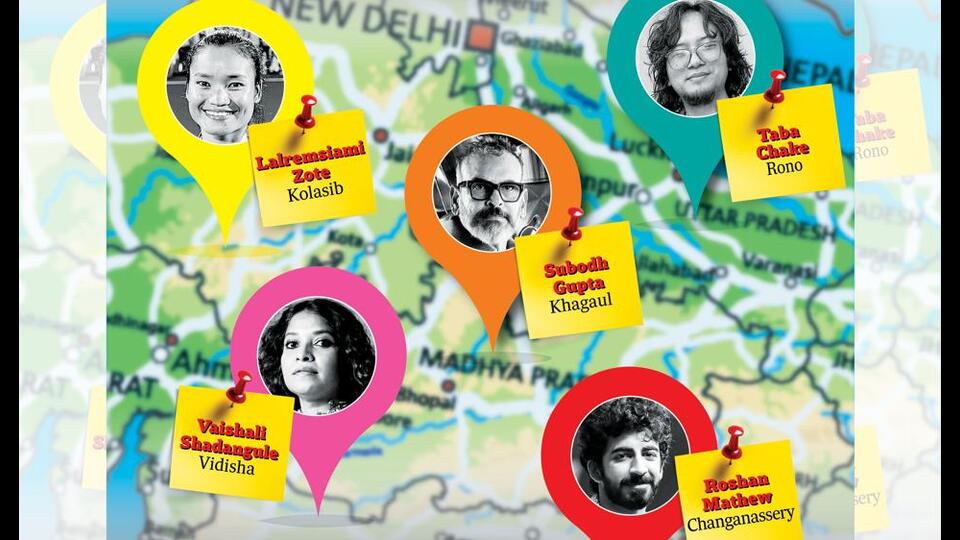
The small-town success story is changing. Distance matters less. See how an artist, an actor, a designer, a musician and a hockey champ celebrate their roots
Over and over, we’ve heard that it doesn’t matter where you come from; that a small town or a big city doesn’t define your success. Yet, city folks tend to be much more visible as they climb ahead. They’re more likely to know someone who knows someone. They’re all up with the trendy ideas of the moment.
Those from small towns, on the other hand, say their determination is free of urban burdens. That growing up away from the buzz means there are fewer side-quests, fewer distractions on the way up. Crucially, they bring with them a voice that’s entirely their own. As our big cites grow bigger and little towns play catch-up, see how five Indians credit their big successes to their small towns.

Vaishali Shadangule, fashion designer
Vidisha, Madhya Pradesh
In 2021, Shadangule, 46, became the first Indian woman to showcase at Paris Couture Week, and the first Indian designer to open a store in Paris, selling haute couture and ready-to-wear pieces made from Indian handlooms. With or without connections, it’s hard to get here. It was perhaps harder for Shadangule, who fled her home in Vidisha, Madhya Pradesh at age 17. Determined not to spend her life in the kitchen, she ran to the railway station in the middle of the night – no money, just a bag – and hopped on to the first train she saw. It took her as far as Bhopal, before she was forced to get off because she didn’t have a ticket.
It was 1996. Bhopal came as a shock. “Roads! Crossing the roads, all that noise, even seeing TVs everywhere was a big deal,” Shadangule recalls. Restaurants felt new too. “We never went out to eat.”
But it was dealing with people that felt like the biggest hurdle. “In Vidisha, I didn’t speak. Forget English or any language, I was told to do this, do that and stay quiet. So, I would shake like a leaf when someone asked me something,” she says. Moving to Mumbai in 1999 was an even bigger shock. “The funniest thing is that I wasn’t aware until then that people eat meat. You should have seen my face!”
The early years were tough. She’d seen her mother wear old saris at home, saving the new ones for outings. They’d turn torn saris into curd sieves or frocks. “People in small towns treat new clothes like precious things,” Shadangule says. “But in Mumbai, people used to make fun of me in my studios, saying I’m stingy. That I don’t even throw away fabric scraps. But I knew that every bit represented the effort of a weaver who’d been sitting at the loom for months and weeks. How could I just throw it away?”
In an industry hungry for the next new trend, Shadangule’s thriftiness became her asset. Her handloom designs make the most of scraps and edges, systems are geared to minimise waste, packaging is plastic-free. “I create beautiful things from leftovers,” she says.
She’s done it without posh-school alumni networks or a parent calling in a favour. “When people get things through their connections, have back-up, support and money, they think differently,” she says. “When you come from nothing, you’re not afraid of losing. You can go back to zero because you’ve been there.”
See Vaishali Shadangule’s Vidisha
When to go: “November, when winter is just starting. Try all the seasonal fruits and vegetables.”
Do try: “The local dal baati.”
Insider tip: “Head to one of the rivers at night to see the stars. The sky is clear because there isn’t much pollution. And connect with the people. You’ll feel like you’ve gone back 50 years.”
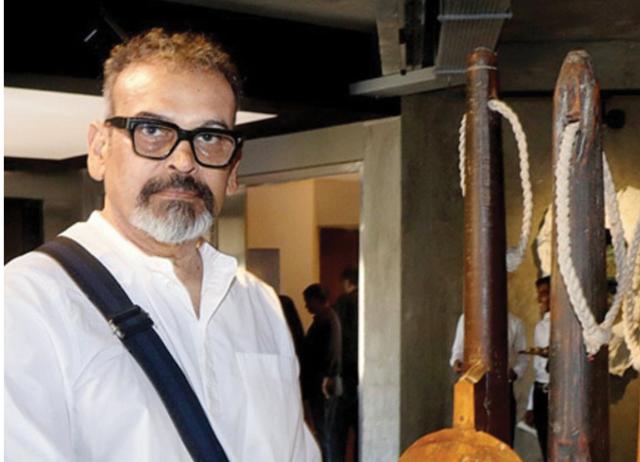
Subodh Gupta, artist
From Khagaul, Bihar
Gupta was 12 when his father passed away. The family moved from their small town, Khagaul, to an even more remote village in Danapur, Bihar. Danapur had a railway station, a railway colony, an office, a movie theatre and not much else.
“What was there, when it came to visual art? Calendars,” says Gupta, 60. “If you went to somebody’s home, you’d see images of Ram, Sita, Hanuman, Krishna on a swing.” As a child, Gupta would copy the works he’d seen.
He studied at the railway school, then at Patna’s College of Arts & Crafts. He took trips to Delhi, Bombay and Kolkata in the 1980s, watching goggle-eyed as Indian art was starting to capture the world’s attention. In 1985, Gupta and his classmates even camped near Delhi airport, where MF Husain was painting a 100-foot-long canvas. He graduated penniless in 1988 and moved into lodgings in Delhi’s Lalit Kala Akademi. Guests are allowed to stay for a week. “I stayed for a year,” says Gupta. “I knew I didn’t want to go back.”
Thirty-six years on, Gupta’s signature sculptures, made from everyday kitchen utensils, have been exhibited as far away as the US, Japan and France. His life-size sculpture, Banyan Tree, is permanently displayed at the National Gallery of Modern Art in New Delhi. One show, The Way Home, features 20 life-size sculptures and 10 paintings and is on display at the Bihar Museum in Patna. He’s not sure whether hailing from Danapur has shaped his work or held him back. But he does know one thing: You can’t miss what you didn’t have. “You’re totally cut off. So, you don’t know how the people in Bombay or Delhi or Kolkata are living. You’re in your own world, right? You’re not missing anything.”
He’s happy he left. Now, with no family left there, Gupta hardly returns. Danapur, meanwhile, still lacks good schools and civic amenities. “I know how hard it was to get out of there,” he says
See Subodh Gupta’s Khagaul
When to go: “Anytime. Because there really isn’t much to see.”
Do try: “Litti Chokha, of course.”
Insider tip: “Soak in the mood. Walk to the bazaar, eat a samosa, chat with the shopkeepers. Unfortunately, Danapur’s cinema hall has disappeared, the railway club is gone.”
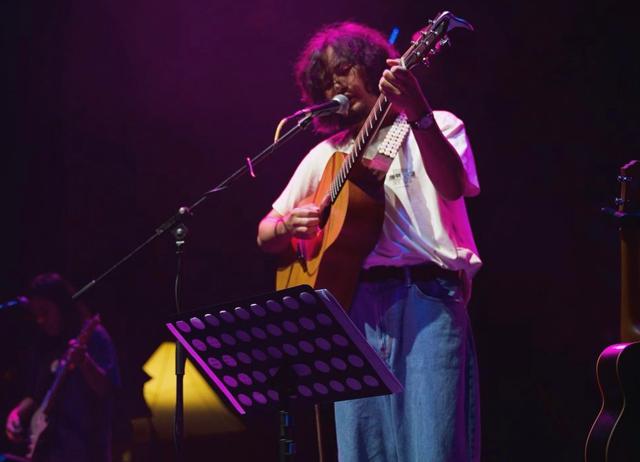
Taba Chake, musician
From Rono, Arunachal Pradesh
Imagine an Indian town so remote, the closest big city is Shillong, Meghalaya. Where there’s still no Metro, only buses and shared taxis.
Luckily for Taba Chake, 31, at least music was everywhere in Rono, Arunachal Pradesh when he was growing up. One uncle brought home cassettes: Michael Learns to Rock, The Eagles. Another listened to Kishore Kumar.
“In school, I was thin, tall, not too good at studies, didn’t play sports, not handsome,” says Chake, wryly. But he was hooked on the guitar since age eight, and played obsessively, showing up late to school, paying little attention to anything else. A teacher told him that a little knowledge is a dangerous thing – that hit hard. He realised that if he wanted his music to find direction, he’d have to leave.
So, in 2010 Chake went to Bengaluru to earn a diploma in music production. The biggest shock for him was, “The language. And I saw so many musicians! So many guitar players, so many drummers. In Arunachal, there were hardly one or two, who’d play Bollywood songs at riverside campfires,” he says. Bengaluru is also where he got interested in jazz, and decided to study music further at Swarnabhoomi Academy in Chennai.
One semester into the course, he dropped out.
“Before going to these classes, my music used to come naturally, in a happy, jolly kind of way,” Chake says. “I never worried about what the next score should be and how it would sound if I played this or that,” he says. His compositions started to reflect how trapped he felt. It’s when he finally acknowledged how much his small-town life, free of commercial pressure, had shaped his music. So, Chake went back home to reset. In 2016, he moved to Mumbai. He released his debut EP, Bond with Nature, in 2016, and a 10-track album, Bombay Dreams, in 2019.
He’s steadily been releasing albums and singles since. This year, he made his Bollywood debut, composing the album and singing for Shoojit Sircar’s I Want to Talk, starring Abhishek Bachchan. It’s a big deal. “Usually, independent artists get to sing or play one song,” Chake says, “ not compose the entire film.”
People do recognise him when he goes back home. But they know him as more than a celebrity. “People respect me because I’ve stayed with my art this long. They see me as a guy who can lead the way for others,” he says.
And in big cities, when people ask him the secret to his songwriting, his melodies, he tells them, “I come from the north east, Arunachal is my home.”
See Taba Chake’s Rono
When to go: “December to February. Come see the snow!”
Do try: “Homemade chicken boil. [Chicken with mustard leaves or bamboo shoots]. The Naga version is different from the one in Arunachal.”
Insider tip: “Skip the pubs. Head to the riverside with friends, make a campfire, buy some chicken and roast it together. Someone will play the guitar, and you can sip on some local wine. You won’t remember a single moment you spent in the pub, but you’ll remember this for the rest of your life.”
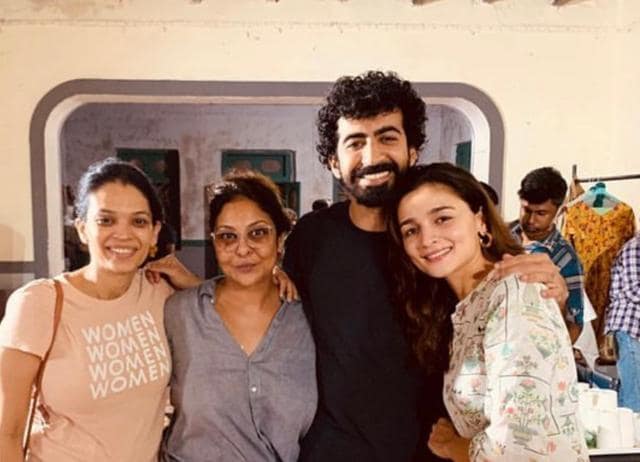
Roshan Mathew, actor
Changanassery, Kerala
OGs know Roshan Mathew as a stage actor and director. Bollywood fans know him from Choked (2020), Darlings (2022) and Ulajh (2024). Cinema goers know his work in Malayalam and Tamil films, too. But in Changanassery, a two-and-a-half-hour drive from Kochi, people know him as one of their own.
Changanassery is small. Everyone knows each other. As a child, Mathew, 32, spent his days outdoors, playing cricket, cycling with friends. Home was a place to go to when it got dark. He went to school in Kottayam, and then to Madras Christian College in Chennai, before heading to Mumbai to enrol at Drama School. With every step, his social circle got wider, more diverse, more complicated. “I met people from all over the country, from cultures that I knew very little about,” he recalls. “They had a better command over English than I did. They had a grasp of pop culture. It was intimidating. I felt maybe my childhood wasn’t as rich. But I was smart enough to realise that the stories I carry from my childhood are just as priceless as the next person’s. And in completely different ways.”
So, it didn’t faze Mathew that he didn’t have a network of contacts when he moved. He just viewed the world as a bigger and bigger classroom. Being from a small town, he believed, is an advantage. “Where you grow up and the childhood you have subconsciously shapes everything you decide to do or not do,” the actor says. “It shapes not just your character but also stories you tell.When I pick a project, I think about the people who’ll watch it. How it’s going to come across to them.”
Besides, cities aren’t that big, really. “They seem huge, but the lives that we live are smaller,” he points out. “We’re all contained within our house and tight social circles. I knew a lot more stories and a lot more people back then.”
See Changanassery with Roshan Mathew
When to go: “Now, actually. After the monsoons, before the next summer sets in. The heat isn’t intense.”
Do try: “A hotel called Elite. It’s one of the oldest. Have whatever you feel like.”
Insider tip: “Watch the sun set in the backwaters. And enjoy the trees, they’ve been standing there for generations.”

Lalremsiami Zote, hockey champ
Kolasib, Mizoram
Zote, 24, better known as Siami, is midfielder on the India hockey team. She’s currently gearing up for the 2024–25 Hockey India League, which starts at the end of December. That means missing another Christmas back home.
In 2011, Siami left Kolasib, a small town in Mizoram, saying goodbye to her parents, paternal grandparents, five sisters and two brothers. She arrived in Aizawl, 200 km away, before travelling another few hours to reach Thenzawl, where the hockey academy was. She was only 11 then. Aizawl was the only city she’d seen.
“I was staring out of the windows of the bus, counting how many floors these buildings had!” she recalls. When she visited Delhi for the Nehru Tournament later that year, she was even more awestruck. “Such big roads, I was just staring, looking at things,” she says.
She was incredibly homesick at the academy. Heading back for visits was expensive, so she’d skip Christmas breaks. Once, she stayed in the hostel for two years at a stretch.
If it wasn’t for hockey, Siami says she probably would have never left Kolasib. Sports have a way of levelling the field, making talent matter more than geography. “I played hockey because I enjoyed it. But once I joined the academy, and they told us we could get jobs, my mind opened up. Could I really play for India? Could I really get a job at the railways and help my parents out?”
So, she endured the homesickness, channeling her energy into playing. By the time the team competed at the Tokyo Olympics in 2020, finishing fourth, people back home began to recognise her. She’d be invited to events, asked to deliver speeches to school kids, be greeted by strangers in the street. For her part, she pushes for kids to be more interested in sports, and to not be limited by the world they know.
And, years after leaving, she’s finally able to return home for longer breaks. Little has changed. “The roads are bad, so it takes about four hours, sometimes five,” she says. Kolasib has only a couple of cafes, very few tall buildings. “I still have to help out at home,” she says. She cleans and cooks. “But my food isn’t very tasty!”
See Lalremsiami Zote’s Kolasib
When to go: “September to November. It’s gets too cold after that.”
Do try: “Mizo bai. Just mention if you want it less spicy.”
Insider tip: “Catch the sunset from the forest. It’s very quiet. Even a morning walk is magical. The only sound you’ll hear is the birds.”


