Listicle: 10 art thefts that weren’t just about the money
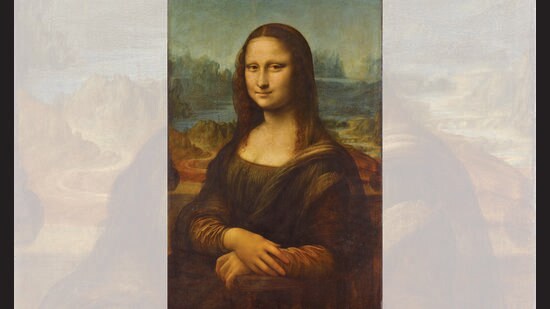
- For the nationWhen Vincenzo Peruggia stole the Mona Lisa from the Louvre in 1911, he was considered a thief in France, but a patriot in Italy. He slipped in, dressed as a museum employee, took the frame off the wall, lugged it into a stairwell, extracted the canvas, hid it under his white smock and slipped out. The theft is what catapulted da Vinci’s work to global fame. When he was caught two years later, he claimed he intended to return it to Italy.
- For the opportunityIn 2003, unidentified thieves stole priceless works by Pablo Picasso, Paul Gauguin and Vincent Van Gogh from UK’s Whitworth Art Gallery. Then, they left them in a nearby public toilet with the message, “The intention was not to steal, only to highlight woeful security”. The slightly damaged works, worth around £4 million, were restored and re-displayed, now under closer watch.
- For the royal tasteWe don’t know if the Nizam of Hyderabad ever ate from his 2kg, three-tier, jewel-encrusted tiffin box. But we do know that the two thieves who made off with a haul from the Nizam’s Museum in 2018 did. The offenders were caught within a week of the theft, and were living it up at a luxury hotel in Mumbai. One man confessed to eating from the box every day.
- For art’s sakeStéphane Breitwieser is no ordinary kleptomaniac. He, with his ex-girlfriend, lifted almost 240 art and antique pieces worth at least $1.5 billion from 170 European museums between 1995 and 2001. The art-obsessed French thief never sold anything, he just wanted to add to his private collection, he says. He’s still under surveillance in case he falls back on old habits.
- For the exchange valueIn 1974, some members of the Irish Republican Army, led by a British millionaire’s daughter Rose Dugdale, stole 19 paintings worth around £8 million from Russborough House, Ireland as a protest against the British government. They held works by Vermeer, Rubens and Goya as ransom to negotiate the release of two women IRA prisoners. The police recovered the paintings and arrested Dugdale. She pleaded “proudly and incorruptibly guilty” and was jailed for nine years.
- For the flexIn 1994, before fleeing from Oslo’s National Gallery with Edvard Munch’s The Scream, Pal Enger left a note mocking the museum authorities: “Thanks for the poor security”. He even sent them false leads. The audacity! Enger was obsessed with the work since childhood because the face reminded him of his violent step-father. The good news: In three months, Scotland Yard recovered the painting undamaged and Enger spent six years in prison.
- For the convenienceVjeran Tomic, aka Spiderman, put his acrobatic technique and climbing skills to criminal use when he filched five paintings worth around 104 million euros from the Museum of Modern Art, Paris in 2010. He intended to steal only a painting by French cubist Fernand Léger. But with a Picasso, Modigliani and Matisse within arm’s reach, he says he couldn’t resist. Tomic got an eight-year prison term. The works are still missing.
- For scrapIn 2005, thieves used a crane-fitted truck to lift Reclining Figure, a 12-foot, two-tonne bronze statue, from British sculptor Henry Moore’s Studios and Gardens near London. They sold it for a paltry sum, essentially its weight in bronze. What they didn’t know is that the 1970 work was valued at around $4.5 million. It’s probably melted down and in medals somewhere.
- For safekeepingIt was not until Allied Forces officer Joe Meador died in 1980 that the mystery of the missing Quedlinburg treasures was solved. In 1945, towards the end of the Second World War, Meador stole several artefacts from Quedlinburg, Germany, apparently to save them from Nazi looters. But he shipped them to the US and kept them hidden in his Texas home for 35 years.
- For trainingImagine a painting making it to the Guinness World Records for being the most stolen object. Rembrandt’s Portrait of Jacob de Gheyn III (1632) was nicked from London’s Dulwich Picture Gallery four times between 1966 and 1983. It was also recovered each time – from a cemetery, a train station’s luggage office, and from the thieves. It’s a small piece, easy to lift, pocket and hide. No wonder it’s earned the nickname Takeaway.
{{^usCountry}}{{/usCountry}}
Catch your daily dose of Fashion, Taylor Swift, Health, Festivals, Travel, Relationship, Recipe and all the other Latest Lifestyle News on Hindustan Times Website and APPs.
Catch your daily dose of Fashion, Taylor Swift, Health, Festivals, Travel, Relationship, Recipe and all the other Latest Lifestyle News on Hindustan Times Website and APPs.
{{#usCountry}}