Do you know anyone who is not encumbered by some handicap (an allergy to eggs, unthinking vegetarianism etc) who does not love an omelette?
I sure as hell don’t.
And because a basic omelette is one of those dishes that tastes good even if you screw up the cooking, it is often the safest dish to order at a restaurant. I remember that Ajmer in the early 1970s was not exactly the gourmet capital of India. But when my friends and I would sneak out of boarding school and look for an escape from dire school food, we would end up at Ajmer Junction railway station. We would head for the station restaurant (on platform 1 if I recall correctly) and order the masala omelette.
The station restaurant (run then by a very kind gentleman whom we called Mr Castelinon which, presumably, was his name) was not the sort of establishment that would win three stars from Culinary Culture, but its omelettes have lingered in my memory and made anything that has an omelette in it an instant favourite: Masala omelette sandwiches, Sri Lankan omelette curry and kathi rolls with extra anda.
The thing about a masala omelette is that even if the eggs are industrial and tasteless (which in my school days they were not) the addition of chilli, tomato, and onion makes up for any taste deficiency. But as I was to discover, when I moved beyond Platform 1 and went out into the world, nearly every country has its own classic omelette.
{{/usCountry}}The thing about a masala omelette is that even if the eggs are industrial and tasteless (which in my school days they were not) the addition of chilli, tomato, and onion makes up for any taste deficiency. But as I was to discover, when I moved beyond Platform 1 and went out into the world, nearly every country has its own classic omelette.
{{/usCountry}}Here are some of my favourites:
The French omelette. In almost every way, this is the exact opposite of the masala omelettes of my childhood. Our omelettes are idiot-proof when it comes to cooking them. A French omelette is one of the most difficult dishes for a chef to master. We rely on chilli, tomatoes etc. A French omelette can have only three ingredients: Eggs, butter and salt.
The making of the dish is extremely difficult because the chef must learn how to control temperature and must master the hand movements integral to its making. The omelette must be soft inside and have a skin that is firm but evenly cooked. If there are brown bits where the skin stayed in contact with the bottom of the pan too long, the chef must throw it out and start again.
In my experience, very few Indian chefs get the technique right, so they resort to tricks. One hack is to put cheese in the centre so that when you cut into the omelette there is a runny centre. In France, the soft centre comes from skill not from cheese.
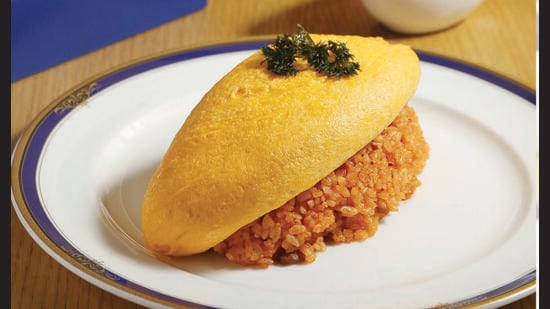
The Japanese omelette. No nation has done more in recent years to popularise eggs than Japan. Souffle pancakes, egg sandos and other Japanese egg dishes now feature on menus everywhere. But somehow you rarely see Japanese omelettes.
This could be because they are as difficult to make as French omelettes. The classic tamagoyaki has several layers of egg, and the only version you are likely to come across is the simpler facsimile that is used as a topping for nigiri sushi.
Tamagoyaki has a complex umami flavour which comes from the soya sauce and dashi (stock), which are often added along with such optional flavourings as sake and mirin rice wine. It’s delicious with rice but the real thing, made properly, is hard to find in India.
The Korean omelette. Korea and Japan have a fraught history so Koreans don’t like being told that their omelettes are derived from Japan. They tend to eat their omelettes with rice like the Japanese. But while the Japanese focus on the flavour of eggs, Koreans will add stuffings and other flavours like seaweed and scallions.
Of particular contention is the Tornado omelette, which has acquired global fame thanks to Instagram videos of the process of making it. The omelette requires skill to cook because you need to keep using chopsticks to twist the egg mixture into a swirling vortex in the pan. The Japanese say that this is a variation on omurice, a Japanese dish of omelette and rice. This is almost certainly unfair to the Koreans, who say they created the swirling technique that distinguishes a tornado omelette.
The Thai omelette. We make Thai omelettes at our house all the time but we tweak the technique. The Thais deep fry their omelettes so that they are crisp at the edges. The flavour comes from fish sauce, which may caramelise during cooking and change the colour of the omelette. At Thai restaurants, they like to stuff the omelettes with crab meat, though other flavourings are available (minced pork, for instance) and like nearly every other Thai dish, the omelettes are served with rice.
We shallow-fry Thai omelettes at home and avoid the crab. They taste just as good and are ideally suited to jasmine rice and a chilli sauce like Sriracha. In Thailand, you can even buy packaged ‘omelette sauce.’
These omelettes have very little connection to Thailand’s most famous omelette: The one that is served at Bangkok’s Jay Fai street stall, which has won a Michelin star. Jay Fai’s omelettes have more in common with Japan’s rolled, layered ones, and she uses more crab in each than most Thai chefs would.
The Spanish omelette. First things first: It’s not as glamorous as it sounds. When you hear about Spanish omelettes you think of ham and tomato fillings gently scented with saffron. Actually a Spanish omelette is basically an omelette with potatoes. That’s it. No delicious chorizo. No black olives. And certainly no saffron.
But that may be playing down what the Spanish do with eggs, because their own omelettes are essentially egg-and-potato pies that you can eat hot or cold. In many casual restaurants in Spain, the omelette will be kept at the counter and they will cut a slice for you.
There is a fair amount of technique involved because it’s not easy to create a deep pie (that will hold its shape when cold) on a frying pan, and the first few times you make the omelette, the process of flipping it so that both sides are cooked can be traumatic.
The potatoes cannot be raw and it may take a while to cook them before you even begin to make the omelette. The great Spanish chef Ferran Adria has suggested that home cooks should just use potato crisps (what the Americans call chips and what we used to call wafers). But this suggestion kicked up a storm in Spain when he made it.
It might be useful to remember that the Spanish call their omelette a tortilla. In Latin America, the same word is used to describe a roti-like bread. (The Italians call their open-face omelettes frittata but they are not as essential to their cuisine as omelettes are to the Spanish.)
Favourites. I love all omelettes. But honestly, a masala omelette is still my all-time favourite, even if I am not eating it on Platform 1.
From HT Brunch, August 29, 2026
Follow us on www.instagram.com/htbrunch