You know what makes a good gift? Remembering that your friend has been hunting for a particular book for six months. Knowing that your sister will always choose silver jewellery over gold. Finding the one thing your partner mentioned in passing and promptly forgot about. These are the little victories of knowing someone well.
So, what’s not a good gift? Generic claptrap made personal by slapping someone’s name, photo or random details on them. Gather ’round, everyone who’s ever unwrapped a present only to discover that it’s yet another water bottle with your name emblazoned on the side. Or another tote bag with cat or dog imagery. Or a bedsheet bearing a horrible print of whatever photos your team could nick off Facebook. Or a heart pendant with a short recording of their voice singing Happy Birthday – cute, but when are you ever going to play that? Or World’s Best Boss printed on a mug, a mousepad, a notebook and a cap?
Does no one want to think of presents that are actually personal, anymore? Not even stickers?
Face value
{{/usCountry}}Face value
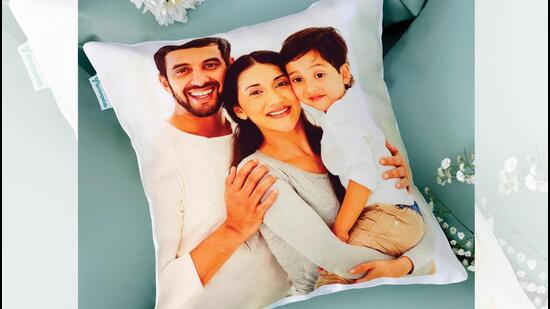
{{/usCountry}}Delhi sociologist Sangita Johri says she was at a relative’s house for a big family get-together recently, when a pillow shortage became evident at bedtime. “They reluctantly handed me a cushion that had been an anniversary gift, with their photo printed on it,” she recalls. “Resting my head on those beaming faces felt extremely creepy. I lay there wondering how absurd personalised gifts have become, and whether the couple was watching me drool.”
The problem isn’t adding a personal touch; it’s assuming every available personal touch deserves to be added. Few gifts travel well outside the room they were born in, says Hyderabad-based behaviourist Pranjal Mani Tripathi. “The meaning of anything, tangible or intangible, is driven largely by context.” What seems like a private punchline between two people will likely seem cringe when it’s embroidered on a polo T-shirt.
Sangita says that personalisation works “when the sender understands the recipient’s sentiments more than their own.” Not everyone wants to give over desk space to a calendar with 12 photos of themselves. A tumbler with their name on it may be too much for someone who has spent years escaping the school ID card and the company lanyard.
Logo, ergo sum
Office teams seem to love personalised presents. Ekatra, a women-led gifting studio in Kota, has 350 artisans who make gifts for 500-plus brands, and does around 90% of its work for companies. “About eight out of 10 of our orders are personalised,” says Aishwarya Jhawar, co-founder. What counts as personal has changed. “When we started in 2022, personalisation mostly meant a logo on the box. Today, not everybody wants to use a product stamped all over with a company’s logo. Nobody wants to carry a tote that looks like a billboard,” she says.
For a client that specialised in diamonds, Ekatra created a do-it-yourself block-printing kit with blocks that allowed recipients to print designs with their families and frame the results at home. It made for an activity, an introduction to a craft and a custom final product. Ekatra also included a tag with the name of the woman artisan. The recipients loved it.
Look to Insta for inspiration on how a gift can feel personal without a name or photo added to it. Zine-makers have created one-of-a-kind magazines celebrating a friend’s breakup. Buddies have paid a gym to play only the birthday girl’s playlist when she works out that day. Colleagues have chipped in to pay for someone’s home renovations to mark their work anniversary. College kids have crocheted separate little bits to sew into a scarf for that one friend.
Even jewellery is being customised differently. Dhruv Mehta of Chennai-based Mehta Jewellery says customers typically set aside an additional 10-15% of the base product cost for personalisation. One customer commissioned silver Raja-Rani elephants, with the exact latitude and longitude of the wedding mandap engraved on the wooden base. Some customers even have laser messages inscribed inside a solitaire diamond, invisible to the naked eye.
The TL;DR: If someone already has the item – a cap, a mug, a tote bag, a water bottle – adding their name to yet another of them is not going to elevate the gift. It’s only going to make it harder to regift.
From HT Brunch, October 31, 2026
Follow us on www.instagram.com/htbrunch