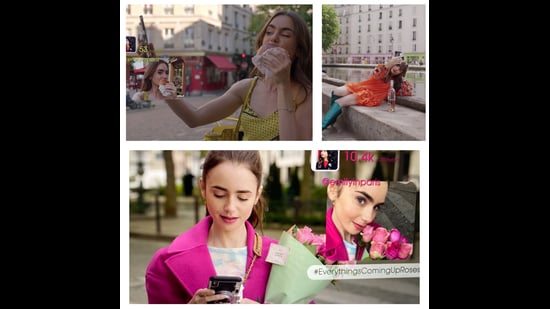
I still can’t get used to the idea of cameras being everywhere. I can’t get used to kids and adults performing, amid everyday life at home, for an invisible and anonymous audience.
We had an afternoon of this recently, when my friends Saloni and Akash came over for lunch. Suddenly, my daughters began an impromptu roast, focused on how I talk on the phone, engage with friends, walk, talk, and a lot else.
Saloni and I have known each other
I still can’t get used to the idea of cameras being everywhere. I can’t get used to kids and adults performing, amid everyday life at home, for an invisible and anonymous audience.
We had an afternoon of this recently, when my friends Saloni and Akash came over for lunch. Suddenly, my daughters began an impromptu roast, focused on how I talk on the phone, engage with friends, walk, talk, and a lot else.
Saloni and I have known each other since we were fresh out of college, so there was a lot to work with all around. Her husband and my wife were delighted. They acted as if they’d been given complimentary tickets to a show they’d been waiting for all their lives.
Truth be told, it was quite a lot of fun: affectionate, accurate, occasionally ruthless. A contemporary version, as Saloni put it later, of an old Indian custom: “Beta, aunty ko poetry sunao.”
But fun aside, it occurred to me, as the roasts continued, that conversation and catching up were being pushed aside. It felt, in some ways, a bit like when someone shoves plates and glasses out of the way to get the right picture of the food. (Another thing I doubt I’ll ever enjoy.)
What particularly jarred, for me, were the retakes. Some lines were redone. A few scenes were re-enacted entirely. Each time the camera went back on, all the faces at the table would arrange themselves for the camera too. We would wait until the light fell just right, and all angles had been adjusted.
It was clear that even as this afternoon unfolded, a parallel afternoon was being built for later.
What really bothered me was this: When we look back on this day, the curated, artificed version is all we’ll have. And we sacrificed the real moment to create it.
We have become people who need evidence our lives happened. Screenshots of messages. Metrics as we exercise. Videos of a live concert we’re at. Hourly photos of our vacations.
It feels like, for many of us, the experience is no longer enough. What we once feared pornography would do to sex, is now happening to our whole lives.
The significance of this wouldn’t be obvious until I spent time the following day with Amit Verma. A former colleague and an award-winning photographer, Amit believes that capturing the right image with the right lens is an art.
One doesn’t simply immortalise everything, in his world. One looks for the right moments to capture. Talking to him reminded me of the India we grew up in, where cameras were rare, and film roll was expensive. We photographed the important moments, 36 photos to a roll. And the albums they eventually filled felt precious.
We have gone so quickly from scarcity to excess. How do we cope with this? Amit placed things in perspective, as he tends to do.
When his mentor died, he inherited a collection, he said. He sat down to sift through it all, and realised the collection amounted to 30TB of data. He will eventually make his way through the trove, sorting as he goes. Curation is the work of life, he says.
But these are the works of a master. The rest of us are building the same kind of inheritance, in terms of volume, without the high levels of skill (or demand) that his mentor enjoyed.
Ours will not be the archives of a seeing life, as his is. They will be an archive of just everything. The same living room from slightly different angles. The joke that was barely funny, and is now a file.
We used to record because we feared we wouldn’t remember. It won’t be too long before we have the opposite problem: We will have recorded it all, without truly living any of it.
Ironically, as a writer, I am in the same business as a smartphone camera, in some ways. I take a perfectly fun afternoon and turn it into evidence for strangers to dissect. Some part of me is always wondering whether a moment can be converted into a narrative.
The phone and the byline are a little afraid that an undocumented life will thin out.
Something to riff on at the next roast, I guess.
(Charles Assisi is co-founder of Founding Fuel.He can be reached on assisi@foundingfuel.com.The views expressed are personal)
One Subscription.
Get 360° coverage—from daily headlines
to 100 year archives.
Archives
HT App & Website
Catch your daily dose of Fashion, Taylor Swift, Health, Festivals, Travel, Relationship, Recipe and all the other Latest Lifestyle News on Hindustan Times Website and APPs.
Catch your daily dose of Fashion, Taylor Swift, Health, Festivals, Travel, Relationship, Recipe and all the other Latest Lifestyle News on Hindustan Times Website and APPs.