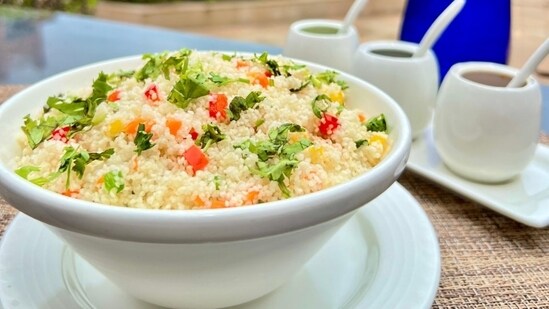
On Janmashtami, a Hindu festival celebrating the birth of Lord Krishna, many people fast. They avoid cereals, grains, onions, and garlic and stick to specific foods and fruits. A popular choice during this fast is samak rice, also called barnyard millet, 'vrat ke chawal', or 'sama ke chawal'. Let's explore the benefits of this superfood and how to prepare samak rice.
What is samak made from?
This dish is also made during other festivals and special occasions in the Hindu calendar, such as Navratri, Ekadashi, and Mahashivratri. On Janmashtami, people can eat samak rice as a meal on its own. This barnyard millet grows widely in countries such as India, Japan, and Korea. According to a survey, India is the world's top producer of small millet varieties, including samak rice.
How can you add samak rice to your diet?
Here are some healthy and wholesome recipes for Janmashtami:
1. Simple samak rice pulao
Ingredients:
- 1 cup of Samak rice
- Water and ghee
- Cumin: 1 teaspoon and cardamom: 3 pods
- Ginger: Chop a 1-inch piece, and chili: 2, sliced open
- Pepper: ½ teaspoon and peanut: 2 teaspoons
- Cut half of a potato into cubes and cut the carrot into half-inch cubes
- Almonds, cashew, dry coconut, makhana (fox nuts)
- Lemon juice and coriander
Procedure:
- Soak a bowl of samak rice in water for 20 minutes.
- Heat a pan and add 1 tablespoon of ghee. Add cumin, cardamom, and pepper. Cook on low heat until fragrant.
- Next, add finely chopped ginger and two slits of chili. Sauté them over medium heat.
- Add the potato and carrot. Sauté for 3 minutes, until half cooked.
- Add well-soaked samak rice to the mixture and sauté for 1 minute.
- Add 2 cups of water to the pan. Then, add half a teaspoon of rock salt and half a teaspoon of pepper powder. Mix well. Cover the pan and cook for 15 minutes.
- Take another pan and add 2 tablespoons of ghee. Add the peanuts and sauté on low heat until crunchy. Next, add 2 tablespoons of dry coconut and half a cup of makhana (fox nuts). Roast everything on low heat until it is crunchy.
- Mix the roasted nuts into the rice and garnish with coriander.
- Your samak rice pulao is ready. It is made with nuts and makhana.
2. Samak rice khichdi
If you are fasting, this dish could be a great choice.
Ingredients:
- Ghee and samak rice
- Cumin seeds and green chili
- Chopped potato and chopped tomato
- Black pepper powder and red chili powder
- Coriander leaves and fasting salt – to taste
Procedure:
- Heat 2 tablespoons of ghee in the pressure cooker.
- Add 1 teaspoon of cumin seeds and 1 tablespoon of chopped green chili. Let them sizzle for a moment.
- Add 1 chopped potato and 1 large chopped tomato.
- Add chopped coriander leaves. If you're not fasting, you can also add any vegetables you like.
- Add 1/4 teaspoon of black pepper, 1/2 teaspoon of red chili powder, or fasting salt. If you are not fasting, you can use regular salt.
- Stir the mixture for 2 minutes. Add 1 cup of washed samak rice or barnyard millet.
- Add 3 or 4 cups of water. For a thicker consistency, use 3 cups of water.
- Add chopped coriander leaves. Add 1 tablespoon of ghee.
- Put the lid on and cook for 2 whistles on medium heat. Sprinkle some chopped coriander leaves on top. Serve hot!
What are the benefits of samak rice?
Now that you have two special recipes for Janmashtami, let's look at the health benefits of samak rice. "Barnyard millet is a good source of protein compared to many other cereals. It is actually a seed, not a grain, and is rich in calcium, magnesium, and potassium. It is also gluten-free and offers various health benefits," nutritionist and author Kavita Devgan tells Health Shots.
1. It helps lower cholesterol
{{/usCountry}}Now that you have two special recipes for Janmashtami, let's look at the health benefits of samak rice. "Barnyard millet is a good source of protein compared to many other cereals. It is actually a seed, not a grain, and is rich in calcium, magnesium, and potassium. It is also gluten-free and offers various health benefits," nutritionist and author Kavita Devgan tells Health Shots.
1. It helps lower cholesterol
{{/usCountry}}Samak rice is rich in resistant starch, which acts like fiber. It helps reduce inflammation by supporting healthy gut bacteria. This leads to lower levels of LDL (bad cholesterol) and total cholesterol.
2. It helps keep blood sugar levels stable
Samak rice is good for people with diabetes because it helps keep blood sugar levels steady.
3. It helps lower the chance of getting anemia
Anemia is a condition in which the body doesn't have enough healthy red blood cells. This means the organs get less oxygen. Many women around the world struggle with anemia. Millet is rich in iron, which can help maintain balanced iron levels. It also helps the body carry out important tasks, such as regulating temperature and supporting breathing.
4. Helps avoid digestive issues
Samak rice can help with digestive problems like gas, bloating, stomach pain, and constipation. Eating this rice can keep your digestive system healthy and help prevent these issues.
5. Safe for people with celiac disease
Celiac disease is a condition where the body reacts to gluten, a protein found in wheat, barley, and rye. Barnyard millet is a good option because it is gluten-free and low in calories. People with Celiac disease or gluten sensitivity must avoid gluten completely. Samak rice is another healthy choice for these individuals because it is gluten-free.
(Disclaimer: This article is for informational purposes only and is not a substitute for professional medical advice. Always seek the advice of your doctor with any questions about a medical condition.)
Catch your daily dose of Fashion, Taylor Swift, Health, Festivals, Travel, Relationship, Recipe and all the other Latest Lifestyle News on Hindustan Times Website and APPs.
Catch your daily dose of Fashion, Taylor Swift, Health, Festivals, Travel, Relationship, Recipe and all the other Latest Lifestyle News on Hindustan Times Website and APPs.