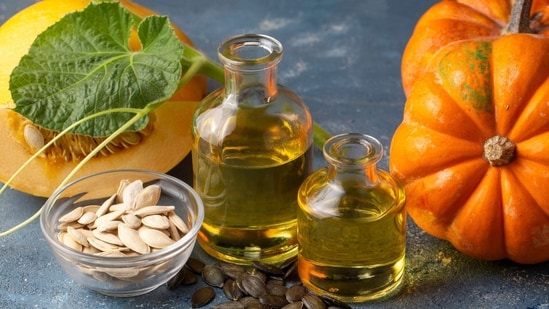
Who knew the pumpkin seed held a secret weapon for glowing skin and stronger hair? Pumpkin seed oil, extracted from the seeds of Cucurbita pepo, is a rich, deep green liquid packed with nutrients your everyday routine often misses. Its blend of omega-3 and omega-6 supports moisture balance and strengthens the skin barrier, helping to make dryness, flakiness, and a rough texture feel more manageable. Vitamin E and K provide strong antioxidant support, helping your skin better handle dullness and environmental stress. Zinc and magnesium also play a crucial role, supporting scalp comfort, promoting thicker strands, and helping to reduce excessive shedding.
Let us tell you what this oil actually does, how to use it correctly, and the small ways it can support issues like dryness, uneven tone, weak strands, or a stressed scalp. Whether you apply it directly, mix it with your skincare, or incorporate it into your hair care routine, pumpkin seed oil can seamlessly integrate into your daily care regime.
Pumpkin seed oil for skin
This humble oil offers targeted support for three common skin issues, as supported by both laboratory and clinical studies. Dr Vidushi Jain, Dermatologist & Medical Head, Dermalinks, says that being rich in essential fatty acids, antioxidants, zinc, and Vitamin E, pumpkin seed oil supports skin barrier repair, skin calming, and makes the skin more hydrated and smoother in texture. "The feature that really differentiates it from other oils is the abundance of phytosterols in it, which not only encourage collagen production but also help in giving a normal balance to skin that is too oily,” the expert tells Health Shots.
Dryness and Barrier Repair
- How it works: Linoleic acid and oleic acid mimic skin’s natural oils, sealing moisture and reducing transepidermal water loss, as reported by Journal Plants 2021 ( MDPI).
- Method: Apply 2–4 drops as the last step in your evening routine to lock in hydration.
Redness and Sensitivity
- How it works: Pumpkin seed oil contains antioxidants (vitamin E, phytosterols) that calm inflammation and neutralise free radicals. Animal and in vitro studies have reported a reduction in inflammatory markers after topical application, as noted in the International Journal of Pharmacognosy and Phytochemical Research.
- Method: Gently dab on irritated spots or mix a drop into your daily moisturiser to help soothe flare-ups.
Anti-Ageing and Firmness
- How it works: Trace minerals and unsaponifiables in pumpkin seed oil support collagen production and fibroblast activity, thereby aiding skin structure and resilience, as reported in the Journal of Pharmaceutical (MDPI, 2022).
- Method: Use it every night with a gentle facial massage for 60–90 seconds to boost circulation and absorption.
Tips to use pumpkin seed oil
- Patch-test first
- Choose cold-pressed pumpkin seed oil
- Combine with SPF during the day
- Regular, gentle use yields the best resultsClinical and laboratory studies indicate noticeable improvements in hydration, redness, and skin repair with consistent topical application.
Pumpkin seed oil for hair strength, shine, and growth
This oil can be used for targeted benefits for the hair.
Pumpkin seed oil for hair loss: Targeting DHT
{{/usCountry}}This oil can be used for targeted benefits for the hair.
Pumpkin seed oil for hair loss: Targeting DHT
{{/usCountry}}The problem: Thinning hair, especially from male or female pattern baldness.
How Pumpkin Seed Oil Helps: It contains phytosterols that inhibit the 5-alpha reductase enzyme, thereby reducing the conversion of testosterone into DHT. As a matter of fact, these very phytosterols, in hair, help to avert the reduction of hair follicle size, by providing nourishment to the scalp, and thus, hair growth can be sustained, which is thicker and longer, says Dr Vidushi Jain. Studies also have shown that pumpkin seed oil supplementation leads to a 40% increase in hair count in men over 24 weeks, as reported in the National Library of Medicine.
Actionable Tip: Warm a small amount of Pumpkin seed oil and massage it gently into your scalp 2–3 times a week, then shampoo as usual.
Pumpkin seed oil for dry, brittle hair: Conditioning and shine
The Problem: Dull, frizzy, or easily breakable hair strands.
How Pumpkin seed oil helps: The secret of pumpkin seed oil lies in its ability to balance the scalp's pH, making it a very helpful solution in cases of dandruff and a sensitive scalp, says Dr Jain. Rich in healthy fats and vitamin E, pumpkin seed oil smooths the hair cuticle and protects strands from environmental stress, per the Avicenna Journal of Phytomedicine.
Actionable Tip: Use a few drops of pumpkin seed oil as a leave-in serum on damp hair or apply it as an overnight mask before washing to boost shine and resilience.
Pumpkin seed oil for dry scalp: Fighting flakes
The problem: Itchy, dry, or flaky scalp without clinical dandruff.
How Pumpkin seed oil helps: Pumpkin seed oil is rich in fatty acids and minerals, including zinc, which supports skin cell turnover and may help regulate the scalp’s oil balance. While direct trials on flaky scalp are limited, its anti-inflammatory properties and nutrient profile make it a promising agent for soothing the scalp, as reported by the Avicenna Journal of Phytomedicine.
Research Insight: Zinc is known to support skin regeneration and maintain barrier function. Its deficiency is associated with dryness and impaired skin healing, as reported by the IJSRD.
Actionable Tip: Massage 2–3 drops of pumpkin seed oil onto your dry scalp 2–3 times a week. Leave it for 30 minutes before washing, or try it as a leave-on treatment for sensitive areas.
Pumpkin seed oil shows how a simple seed can support both skin and hair, from calming dry flakes to helping with thinning strands. Its mix of fatty acids, antioxidants, and minerals makes it a dependable addition to everyday care. Try replacing one synthetic product in your routine with this oil and notice how steady use improves texture, comfort, and strength over time. Dr Jain sums up its benefits by saying, "Pumpkin seed oil is indeed a multitasking ingredient that leads to visible changes when it is used regularly.”
FAQs: Pumpkin Seed Oil
Can pumpkin seed oil help with both skin and hair issues?
Yes. Its fatty acids support skin hydration and barrier repair, while its phytosterols and minerals help strengthen hair and support scalp health.
Is pumpkin seed oil suitable for oily or acne-prone skin?
It’s generally lightweight and non-greasy. Its linoleic acid content may help balance oil, but patch testing is recommended.
How often should I use pumpkin seed oil for visible results?
Consistency matters. Use it 3–4 times a week on skin or scalp to see improvements in hydration, softness, and overall texture.
Can I mix pumpkin seed oil with other skincare or haircare products?
Yes. You can layer it over moisturiser, add a few drops to creams, or blend it with your hair mask for deeper nourishment.
Note to readers: This article is for informational purposes only and not a substitute for professional medical advice. Always seek the advice of your doctor with any questions about a medical condition.
Catch your daily dose of Fashion, Taylor Swift, Health, Festivals, Travel, Relationship, Recipe and all the other Latest Lifestyle News on Hindustan Times Website and APPs.
Catch your daily dose of Fashion, Taylor Swift, Health, Festivals, Travel, Relationship, Recipe and all the other Latest Lifestyle News on Hindustan Times Website and APPs.