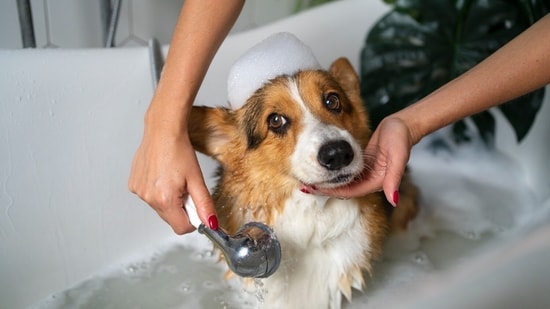
Your pet's grooming routine is not limited to a bath, a quick brush, or a towel-dry. You may be overlooking their skin and coat health. What should an everyday pet grooming routine include?ALSO READ: Pet hair and paw marks ruining your furniture? 5 expert-approved ways to protect your interiorsThere is much more to your pet's grooming than just giving them a bath. An industry expert weighed in on the shift in pet hygiene. Dr Dhananjay Pandit, president, research and development, Freossi - Petcare Division of Fredun Pharmaceuticals Ltd, said that pet care has moved beyond bath time.
He said, “When we talk about skin and coat health, we shouldn’t think only about what we apply topically on our pets. We also need to think about what’s happening nutritionally. It is extremely important to understand that skincare, in this frame, is not just about pampering; it is about early detection. Most of the time, it is during a proper grooming session that a parasite, a lump, or an irritation gets caught before it turns into something bigger”
A holistic, well-rounded grooming routine can help you spot changes in your pet's skin and coat, including potential warning signs such as an unusual lump or irritation, so you can seek veterinary advice early. A standard bathing routine won't cut it anymore.
{{/usCountry}}A holistic, well-rounded grooming routine can help you spot changes in your pet's skin and coat, including potential warning signs such as an unusual lump or irritation, so you can seek veterinary advice early. A standard bathing routine won't cut it anymore.
{{/usCountry}}Here's an easy grooming guideline for you, which outlines basic essentials, from pet behaviour to dos and don'ts:
1. Know what healthy skin looks like:
- Skin should be clean and intact, without redness, scaling, crusting, wounds or odour.
- The coat should be clean, smooth and glossy, without grease, dandruff or unusual hair loss.
- Skin colour and pigmentation vary by breed.
2. Watch their behaviour:
- Look out for constant licking, chewing, or scratching.
- Pay attention to signs of discomfort, beyond how shiny the coat looks.
3. Avoid excessive bathing:
- Over-bathing or unsuitable products can strip and dry out the skin.
- The exception is managing pet allergies or bacterial/yeast infections, which may need therapeutic bathing far more often, sometimes weekly, as directed by a vet.
4. Avoid human products:
- Human products can irritate pet skin and disturb its protective barrier.
- Pets may ingest products when licking their coats.
5. Dry thoroughly:
- Pay attention to the paws, ears and skin folds.
- Use towel or pet-safe dryer when needed.
- Trapped moisture can encourage yeast and bacterial growth.
6. Take persistent itching seriously:
- Itching may signal parasites, allergies or an infection.
- Seek vet advice if it continues.
7. Take extra care in humid weather:
- Trapped moisture and humidity are ideal conditions for yeast and bacterial overgrowth.
- Warm, damp weather calls for more attention to drying, not fewer baths.
8. Remember nutrition:
- Nutrition improves skin and coat health.
- Fatty acids, including omega-3 and omega-6, are important.
The expert cautioned, “Most pets don’t need a ten-step regimen. But ‘does he smell okay?’ is a pretty low bar for something that’s supposed to work as an early-warning system.”
This means checking whether your pet smells clean is only one part of grooming. You need to pay attention to their skin, coat and behaviour and spot for unusual changes to get early vet help.