Walking is something most people do without thinking about it. You move from one place to another, check your phone, think about your next task and keep going.
But what happens when you slow down and pay attention to every step?
A recent Harvard Health article is putting the focus on tai chi walking, a slower form of movement that combines deliberate steps, controlled weight shifts and attention to breathing. Published on September 14, 2026, the article describes tai chi walking as a simpler way to experience some of the benefits of tai chi without having to learn an entire routine.
For people interested in spirituality and mindfulness, there is another part of the practice worth noticing. Tai chi walking turns an ordinary activity into an exercise in presence. Instead of rushing through a walk, you focus on where your feet are, how your weight moves and how you breathe.
Also Read Why is Tai Chi called “meditation in motion”? Harvard explains how it may help to relieve stress
What is tai chi walking?
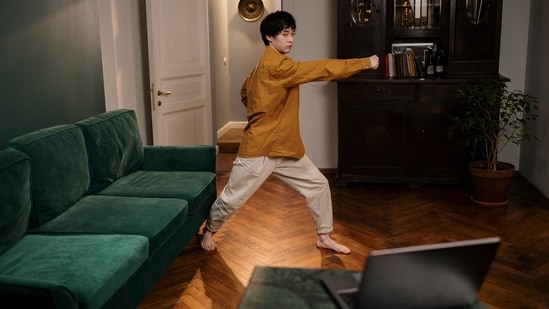
Tai chi is a centuries-old martial art and mind-body practice built around slow, flowing movements. Harvard Health explains that tai chi walking focuses on the footwork used in tai chi forms. This can make it easier for beginners because they do not have to memorize a complete sequence of movements.
{{/usCountry}}Tai chi is a centuries-old martial art and mind-body practice built around slow, flowing movements. Harvard Health explains that tai chi walking focuses on the footwork used in tai chi forms. This can make it easier for beginners because they do not have to memorize a complete sequence of movements.
{{/usCountry}}Harvard describes an “empty step,” where you place one foot forward without immediately putting your weight on it. You then gradually transfer your weight onto that foot before bringing the other foot forward.
It may look simple, but the slower pace asks you to pay attention to movements that normally happen automatically.
Why is tai chi walking a mindfulness practice?
According to Harvard Health, tai chi walking is a mindfulness practice because you deliberately resist the urge to move quickly and focus on the process of taking one step at a time. You also become more aware of your breathing.
Your mind may still wander while you walk. You may start thinking about work, an argument, dinner or something you saw online. The practice is not about forcing those thoughts to disappear.
Instead, you notice that your attention has moved and gently bring it back to your step and breath. For someone who finds traditional meditation difficult, that can feel more natural. You are still moving, but you are also practising awareness.
Can walking become a spiritual practice?
Walking does not have to be connected to a particular religion to become a reflective practice. Across different contemplative traditions, walking has been used as a way to develop attention and awareness. The spiritual idea is not that a particular walking technique will produce a supernatural result. It is about using an ordinary part of your day to become more present.
Tai chi itself has roots in Chinese tradition and includes the concept of qi, often translated as vital or essential energy. Harvard's article explains that tai chi is traditionally understood as supporting the circulation and balance of qi. These are traditional concepts, not established medical explanations.
What are the benefits of tai chi walking?
Harvard Health says that tai chi walking may help with balance, gait, mindfulness and lower-leg strength. The slow weight shifts engage the smaller muscles in the feet, ankles and lower legs, while the controlled movements challenge balance.
But Harvard also warns against exaggerated claims about the practice. The article specifically notes that claims that tai chi walking can lead to large amounts of weight loss or build large muscles are not supported.
Also Read A spiritual teacher shares a simple mindfulness practice for dealing with negative thoughts
How can you try mindful walking at home?
You do not need special equipment or a large outdoor space to begin.
Harvard says tai chi walking can be done on a sidewalk, pathway or hallway.
Start with a few slow steps. Place one foot down without immediately rushing your weight forward. Notice how your foot feels against the ground. Slowly shift your weight and become aware of your balance.
Pay attention to your breathing. When your mind wanders, do not get frustrated. Notice it and return your attention to the movement.
You can also begin with ordinary walking rather than trying the full tai chi technique. Walk slowly for five minutes and notice your feet, breathing, surroundings and body.
The point is not to walk perfectly. It is to be there while you walk.