After the Emergency and 2014 Lok Sabha elections, this year’s general election will see the Rashtriya Swayamsevak Sangh (RSS) take a direct political line for the third time — to actively support the Bharatiya Janata Party (BJP) to ensure Narendra Modi returns as prime minister.
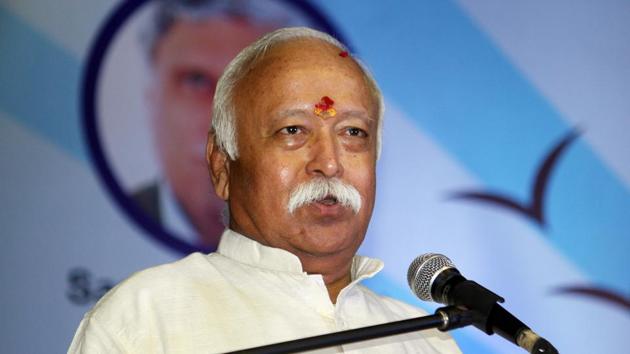
The RSS, which will celebrate its centenary in 2025, got its cadres to actively work for a BJP win in the 2014 general elections. Such boisterous rallying for its political wing was something unheard for an organisation, which had usually maintained a stoic distance from playing an active political role, while claiming to be an apolitical outfit. The BJP’s overwhelming victory in 2014 saw its leader, Mohan Bhagwat, make his presence felt in the political stage.
Last month, the annual meeting of the Akhil Bharatiya Pratinidhi Sabha – RSS’ policy-making body — at Gwalior, assured Amit Shah that it would support the BJP in the 2019 general elections as well.
When KS Sudarshan was its chief, Sangh leaders were reluctant to be seen hobnobbing with politicians and stayed aloof. For decades, RSS maintained it was a socio-cultural organisation wedded to cause of nationalism and Hindutva. However, there was also a rift between the RSS and the then BJP-led government of Atal Bihari Vaypayee on several issues. The saffron organisation did not work for the BJP in the 2004 elections.
“But Bhagwat changed many perceptions. He does not balk at reacting to a political development and is open about his meetings with bureaucrats and ministers. Last year, he held public meetings in Delhi to demystify Sangh functioning. No doubt, the Sangh now has better acceptability and even BJP leaders, who earlier shied of speaking about their RSS roots, now flaunt it openly,” pointed out Dilip Deodhar, a popular RSS analyst.
{{/usCountry}}“But Bhagwat changed many perceptions. He does not balk at reacting to a political development and is open about his meetings with bureaucrats and ministers. Last year, he held public meetings in Delhi to demystify Sangh functioning. No doubt, the Sangh now has better acceptability and even BJP leaders, who earlier shied of speaking about their RSS roots, now flaunt it openly,” pointed out Dilip Deodhar, a popular RSS analyst.
{{/usCountry}}What are the poll plans on the drawing board at Nagpur? Sangh functionaries said they have been tasked with ensuring a high voter turnout, mobilising voters to reach the poll booth before 10.30am (to avoid the soaring summer temperatures), convincing voters that national interest was paramount while casting their vote and that people should desist from using the NOTA option as it serves no purpose other than to favour the most ineffective candidate in the poll race.
Gajanan Nimdeo, editor-in-chief of RSS mouthpiece Tarun Bharat, said Sangh workers have already launched door-to-door campaigns to ensure a government that endorses saffron ideology is re-elected (read Modi government).
A senior RSS swayamsevak, who preferred to be anonymous, informed that more one lakh RSS group leaders, along with six-seven lakh swayamsevaks of more than 50,000 shakas across the country are working tirelessly to create a conducive atmosphere for both — the BJP and Modi. While doing it, they are making it clear that there is no dispute over the leadership of Modi if the BJP emerges as the largest party in the elections.
According to Deodhar, the RSS wants Modi back as PM as he has implemented an RSS agenda, including school curriculums and GST amendments. Deodhar also dismissed the idea of a section of BJP-RSS supporters that Nitin Gadkari would be an alternative choice to Modi.
Deodhar said Modi has a good rapport with Bhagwat as both are the same age and incidentally, Modi was groomed as a swayamsevak by Bhagwat’s father Madhukar. The Modi-Bhagwat bond is so visibly strong that Modi baiters within the “Sangh Parivaar” — Pravin Togadia of VHP and former BJP general secretary Sanjay Joshi — were dumped by the RSS, he pointed out.
During the last Vijay Dashami speech, Bhagwat had given an indirect call to its swayamsevaks that they should ensure the victory of the incumbent “sangh parivaar” government.
The RSS insiders claim that the BJP can easily win more than 270 seats on its own, essentially due to RSS’s proactive role. Based on 2014 statistics, RSS has chalked out a strategy to focus on 325-odd seats (where it won once or more than once) and other 75-odd seats where it stood second. “RSS workers are working in these areas for the past couple of years and it’s a virtual door-to-door campaign to mobilise Hindu voters,” a senior RSS leader claimed.
Sudhir Pathak, a senior swayamsevak and chief of RSS Vishwa Sanwad Kendra, informed that one swayamsevak is covering at least 10 families as part of the campaign. Besides, the RSS coordinators are prompting swayamsevaks to use social media to communicate and reach out to the voters, Pathak said.