A team of scientists at the Allahabad University engaged in finding clues to brain ageing and devising anti-ageing strategies is getting international recognition.
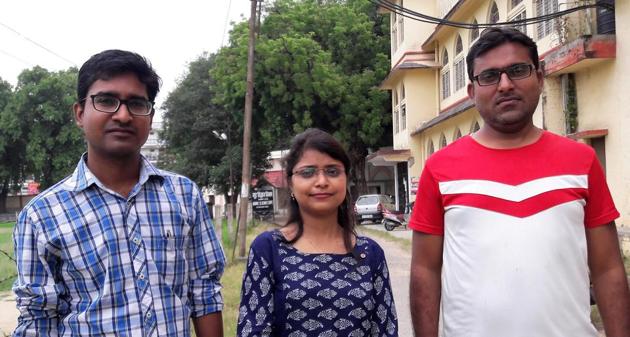
Three scientists from AU’s biochemistry department, who are a part of the study team led by Prof SI Rizvi, have been invited by the International Society of Neurochemistry to present their findings at the meeting of the European Society for Neurochemistry to be held in Paris (France) from August 20-24.
Abhishek Kumar Singh, a Kothari fellowship awardee, would present his research findings on the anti-aging effect of a compound rapamycin on rat brain through activation of a mechanism based on self-destruction of cells, scientifically known as autophagy.
Another researcher Sandeep Singh is slated to showcase his research findings on the use of a compound spermidine which is a caloric restriction mimetic.
Caloric restriction is a strategy to enhance lifespan by reducing food intake.
Since the strategy is difficult to implement on humans, scientists find ways to mimic this effect through specific drugs. Spermidine is one such drug which is being tested by the research team.
Researcher Geetika Garg will present her findings on possible anti-aging effect of whey protein. Recent scientific evidence has shown that whey comprising of protein obtained after milk is made into curd, has an abundance of sulphur containing amino acids which can be beneficial for human health, especially during the old age.
“Whey contains an amino acid cysteine which is not only an important constituent of proteins but is also important for the formation of an antioxidant molecule glutathione in the human cell,” she said.
{{/usCountry}}“Whey contains an amino acid cysteine which is not only an important constituent of proteins but is also important for the formation of an antioxidant molecule glutathione in the human cell,” she said.
{{/usCountry}}“Glutathione is the most abundant antioxidant in the body that protects us from damage due to toxins and free radicals. It is found in the highest concentration in brain and liver,” Geetika explained.
During aging, the capacity of red blood cells to transport cysteine to all parts of the body decreases. “This results in deficiency of cysteine for the synthesis of glutathione which makes the body prone to damages caused by oxidative stress leading to aging. A high cysteine diet can offset these alterations since the red blood cells would then transport more cysteine to other cells of the body,” she said.
“Our research findings opens up new strategy for formulation of anti-aging food supplementations based on high cysteine intake,” Geetika added.
The three scholars have been given fellowships from International Society of Neurochemistry and department of science and technology, Government of India.