Even the Ujwal Discom Assurance Yojana (UDAY), a whopping Rs 39,000 crore financial dose, appears to have failed to inject life in Uttar Pradesh’s ailing power sector so far.
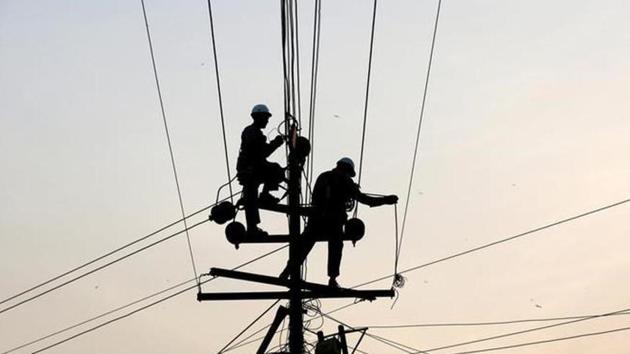
That is what the Centre’s latest analysis report on the distribution companies’ performance indicates.
The Centre has found the UP discoms to have further slipped on all the operational and financial parameters of performance since UP government took over their 75% of the Rs 53,2,11 crore debt with support of the Central government in January 2015.
Curiously, the only positive thing that has been found about the discoms is that they have been consistent in getting the power tariff increased for consumers every year with electricity having been costlier in the state by more than 40% in the last three-four years.
“As per the analysis, UP is the second largest state to take over the discoms’ debt (Rs 39,000 crore) and has also been successful in restructuring discoms’ debt of Rs 10,700 under UDAY,” says Ritu Maheshwari, executive director, Rural Electrification Corporation (REC) in her report (dated May 31) to UP’s principal secretary, energy, and Uttar Pradesh Power Corporation Ltd (UPPCL) chairman Alok Kumar.
She adds, “But the overall net loss of the discoms of the state has increased to Rs 7932 crore in financial year (FY) 17 from Rs 7,791 crore in FY 2016.
{{/usCountry}}She adds, “But the overall net loss of the discoms of the state has increased to Rs 7932 crore in financial year (FY) 17 from Rs 7,791 crore in FY 2016.
{{/usCountry}}On the operational front, the discoms’ aggregate technical and commercial (AT&C) losses have been found to have increased to 27.6% from 25.7% in the FY 2016, instead of decreasing as per the undertaking given by them under UDAI.
“The UP discoms’ AT &C losses at 27.6% are significantly higher than the national average of 19.8%,” she observes in her report ‘Analysis Report of Uttar Pradesh under UDAY for FY 2016-17’.
A component-wise break up as given in the report also shows negative trends. “For example, billing efficiency has reduced from 78.8% to 78.2% against UDAY states’ average of 83%, collection efficiency from 94.3% to 92.6% against UDAY states’ average of 97%,” it discloses.
Similarly, power purchase cost in the report has also shown a 4% increase in the FY 2017 (Rs 4.63 per KWh) in comparison to the 2016 level of Rs 4.45. The progress on feeder segregation during 2016-17 has been found zero which, according to the report, is in contrast to the fact that some of the discoms have a high proportion of agriculture sales.
It is also observed that there are still around 18% unmetered and 22% un-formalised domestic households in the state, the report says.
On the positive side, the report says, the state has been regular in tariff hike and overall revenue realised at the state level is stable. Revenue has increased steadily from Rs 2.81 per kWh in 2013 to Rs 3.99 per kWh (41.9%) at the end of FY 17. This probably the only ‘achievement’ the UPPCL/discoms can boast of.
Maheshwari, who is holding a high-level meeting with officials here on Tuesday, has in her report expected the state/utilities to look into the analysis and address concern areas immediately so that the trajectory agreed by the state in the UDAY MoU can be achieved at the end of the FY 2018-19.
Reacting to the report, UP Rajya Vidyut Upbhokta Parishad president Avadhesh Kumar Verma said it was ridiculous that discoms had been found good only at getting tariff increased while failing on all the fronts of operational and financial performance.
“The state government must fix the accountability of the officials who signed an agreement under UDAY committing to reducing losses and increasing collection efficiency, among other things,” Verma demanded.
Read more: After J&K, Uttar Pradesh is the most power deficit state