As efforts to review the National River Ganga (Rejuvenation Protection and Maintenance) Bill, 2017, have been started, it is expected that the Ganga will soon become the first river in the country to be protected by an Act.
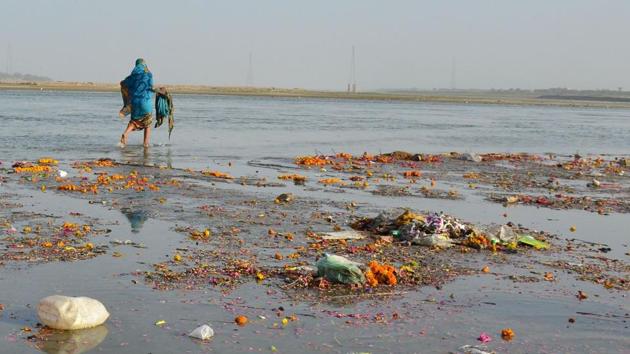
In July last year, a committee under justice (retd) Girdhar Malviya was entrusted with the task of preparing the draft act with provisions to ensure cleanliness and uninterrupted flow of the national river. Malaviya submitted the proposed draft law to union water resources and Ganga rejuvenation minister Uma Bharti in April this year.
Amicus curiae of the Allahabad high court Arun Kumar Gupta, an advocate, told HT that with the aim of protecting the Ganga through an Act, the union water resources and Ganga rejuvenation ministry has now constituted a four-member committee to review salient features of the bill for further action.
“I am one of the four members in the committee. The other three members include the director general of the National Mission for Clean Ganga, joint secretary, ministry of water resources, Sanjay Kundu and additional advocate general, Madhya Pradesh, Purushaindra Kaurav. The committee has to submit its report in two months,” Gupta said.
As per Gupta, stringent measures were proposed in the bill prepared by a committee headed by justice (retd) Girdhar Malaviya. “During the Congress rule, despite assurances from the then union environment minister Harish Rawat nothing concrete could be achieved. Now, with the four member committee asked to submit its report along with suggestions within two months, the proposed Ganga Act seems to be in its final stage,” he said. Gupta was instrumental in getting the national river status for the Ganga in 2010.
{{/usCountry}}As per Gupta, stringent measures were proposed in the bill prepared by a committee headed by justice (retd) Girdhar Malaviya. “During the Congress rule, despite assurances from the then union environment minister Harish Rawat nothing concrete could be achieved. Now, with the four member committee asked to submit its report along with suggestions within two months, the proposed Ganga Act seems to be in its final stage,” he said. Gupta was instrumental in getting the national river status for the Ganga in 2010.
{{/usCountry}}Read more: Bins go missing from boats in Varanasi; clean Ganga mission affected